

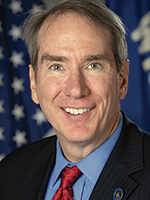
Photo of Jamie Wall
D Wisconsin Senate · District 30

Sen. Jamie Wall

Compare
Total votes
191
all sessions
Attendance
100%
of floor votes
Near the chamber average
With party
95%
of cast votes
Near the chamber average
Bipartisan score
3%
crosses aisle rarely
Near the chamber average
Sponsored
200
bills & resolutions
Near the chamber average
Committees
3
assignments
200 bills and resolutions

Sponsored bills

Total
200
Primary
200
Co-sponsor
0
This page
200
matching current filters
Primary SB 827
Failed · Wisconsin Senate · Lead sponsor
Relating to: creating a stretch energy code. (FE)

Maddy summarySB 827 creates a framework allowing counties, cities, villages, and towns to adopt stricter energy efficiency standards for buildings than the state's current baseline code. It establishes a state working group to develop a "stretch energy code" by December 2026, with separate residential and commercial requirements exceeding existing minimums. Local governments can then choose to adopt these stricter standards through local ordinances. The bill does not set specific energy requirements but enables future adoption of higher-efficiency building standards.

Failed Mar 23, 2026 0 co-sponsors
Primary SB 858
Failed · Wisconsin Senate · Lead sponsor
Relating to: on-bill financing of energy improvements and granting rule-making authority. (FE)

Maddy summarySB 858 creates a program allowing public utilities to finance energy improvements (like solar panels or insulation) at residential properties. Utilities would recover these costs over time by adding a periodic surcharge to customers' monthly utility bills for that specific home. The Public Service Commission must develop rules to implement this program. This directly affects homeowners who participate in the program and the utilities offering it, with no upfront costs required from residents.

Failed Mar 23, 2026 0 co-sponsors
Primary SB 815
Failed · Wisconsin Senate · Lead sponsor
Relating to: synthetic digital representations and providing a penalty.

Maddy summarySB 815 prohibits creating and sharing AI-generated content that mimics a real person's face, voice, or other identifying features without their consent, if intended to harass, intimidate, or defraud for financial gain. It establishes a Class A misdemeanor for misuse to coerce or harass, and a Class I felony for profit-driven misuse. The law includes key exceptions: tech companies, news content, and creators who clearly label AI-generated material (e.g., "This content generated by AI" in videos, images, or audio). It directly affects individuals whose likenesses are exploited without consent and sets clear penalties for malicious use of synthetic media.

Failed Mar 23, 2026 0 co-sponsors
Primary SB 801
Failed · Wisconsin Senate · Lead sponsor
Relating to: early canvassing of absentee ballots and providing a penalty. (FE)

Maddy summarySB 801 modifies Wisconsin election laws to require early canvassing of absentee ballots by municipal boards in certain jurisdictions, shifting processing from polling places to dedicated canvassing meetings. It sets a strict 8 p.m. election day deadline for delivering absentee ballots to election inspectors or canvassing boards, with specific procedures for military and overseas voters. The bill also establishes penalties for violations, though the exact penalties aren't detailed in the provided text. These changes directly affect municipal clerks, election boards, and voters requesting absentee ballots.

Failed Mar 23, 2026 0 co-sponsors
Primary SB 829
Failed · Wisconsin Senate · Lead sponsor
Relating to: funding for Buy Local, Buy Wisconsin grants, the “Something Special from Wisconsin” promotion, and making an appropriation. (FE)

Maddy summarySB 829 increases state funding for two Wisconsin economic development programs. It adds $200,000 annually for fiscal years 2025-26 and 2026-27 to promote "Something Special from Wisconsin" (advertising the state's products), and $300,000 annually for the same periods to fund "Buy Local, Buy Wisconsin" grants. These grants support Wisconsin businesses selling locally produced goods, while the promotion campaign helps market Wisconsin-made products. The bill directly affects Wisconsin businesses participating in these programs and the Department of Agriculture, Trade and Consumer Protection, which administers both initiatives.

Failed Mar 23, 2026 0 co-sponsors
Primary SB 841
Failed · Wisconsin Senate · Lead sponsor
Relating to: farmland preservation implementation grants, maximum acres of agricultural enterprise areas, indexing the farmland preservation tax credit for inflation, and making an appropriation. (FE)

Maddy summarySB 841 creates a program to fund local governments in Wisconsin to implement farmland preservation plans through grants. It establishes annual adjustments to the farmland preservation tax credit for inflation using agricultural price data, ensuring the credit amount increases with rising costs. The bill also sets maximum acreage limits for agricultural enterprise areas and authorizes funding for activities like zoning certification, farmland preservation agreements, and monitoring compliance. These changes directly affect Wisconsin farmers (through the tax credit) and local governments (through grant eligibility). The policy shifts focus to maintaining agricultural land by making preservation tools more adaptable to economic changes.

Failed Mar 23, 2026 0 co-sponsors
Primary SB 870
Failed · Wisconsin Senate · Lead sponsor
Relating to: Focus on Energy inclusion of programs promoting energy efficiency and renewable energy measures for low-income households and granting rule-making authority. (FE)

Maddy summarySB 870 requires Wisconsin energy utilities to spend at least 25% of their annual energy efficiency funds on programs for low-income households, including energy efficiency upgrades and renewable energy measures. The bill defines "low-income household" per state statute and mandates that these programs become a priority when setting energy efficiency goals. It also establishes minimum requirements for these programs and ensures utilities allocate funds annually toward reducing energy burdens for qualifying households. The law directly affects low-income residents and energy utilities across Wisconsin.

Failed Mar 23, 2026 0 co-sponsors
Primary SB 882
Failed · Wisconsin Senate · Lead sponsor
Relating to: sentencing for crimes committed by a person who is under the age of 18.

Maddy summarySB 882 amends Wisconsin sentencing laws to specifically address individuals under 18 convicted of crimes. It requires courts to consider designated mitigating factors and relevant information (such as youth-related circumstances) when determining release eligibility for "youthful offenders" under sections 973.014 and 973.018. The bill creates new procedural requirements for parole commissions, including mandatory consideration of these factors and written reasons for denials with reconsideration timelines. These changes apply to juvenile offenders sentenced under the specified statutes, focusing on release decisions rather than sentencing ranges.

Failed Mar 23, 2026 0 co-sponsors
Primary SB 820
Failed · Wisconsin Senate · Lead sponsor
Relating to: the state superintendent’s power to issue a subpoena in a license revocation investigation.

Maddy summarySB 820 gives the state superintendent of public instruction (or their designee) the authority to issue subpoenas during investigations into revoking professional licenses for incompetency or immoral conduct. The bill creates new statute sections (115.31(2c) and 885.01(6)) allowing the superintendent to compel witness testimony or document production using subpoenas in the same format as those authorized under section 885.02. This directly affects license holders facing potential revocation and streamlines investigations by providing clear subpoena authority. The bill does not change license standards or revocation criteria, only the process for gathering evidence during investigations.

Failed Mar 23, 2026 0 co-sponsors
Primary SB 867
Failed · Wisconsin Senate · Lead sponsor
Relating to: grants for planting trees to address urban heat islands, eligible recipients for urban forestry grants, providing an exemption from emergency rule procedures, and making an appropriation. (FE)

Maddy summarySB 867 creates a new grant program to help cities, towns, nonprofits, and tribal governments plant and maintain trees in urban areas to combat "urban heat islands" - places significantly warmer than surrounding natural areas. The bill provides grants covering up to $100,000 per project for tree planting, maintenance, and replacement to reduce heat effects, with $500,000 appropriated for fiscal year 2025-26. It also allows separate grants for replacing storm-damaged trees in declared emergency areas, exempting these recipients from cost-sharing requirements. The program directly benefits communities facing extreme heat, particularly in densely built neighborhoods.

Failed Mar 23, 2026 0 co-sponsors
Showing 51 to 60 of 200 bills
Previous 1 5 6 7 20 Next