

Maddy summarySB 539 removes legal barriers that previously prevented cities, towns, and counties from creating their own family and medical leave policies. It repeals restrictions (like Section 103.10 (1m)) that blocked local governments from requiring employers to provide such benefits. The bill amends Section 103.12 to explicitly allow local ordinances on employment benefits, meaning cities like Madison or Milwaukee could set their own rules for paid leave. This directly affects employers in municipalities that adopt such local ordinances, requiring them to comply with local standards instead of only state-level rules. The bill does not specify leave details but enables local governments to establish their own requirements.
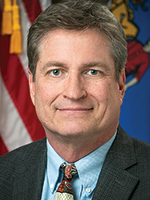
Sen. Tim Carpenter
Sponsored bills
Maddy summarySJR 95 is a symbolic resolution designating October as Domestic Violence Awareness Month in Wisconsin. It does not create new laws or allocate funds but formally recognizes the issue through a state-wide designation. The resolution aims to honor victims, support survivors, and acknowledge service providers working to address domestic violence. This designation applies to the entire state of Wisconsin and is intended to raise public awareness during October.
Maddy summarySB 660 creates a statewide public information campaign to reduce aggressive driving behaviors like excessive speeding, illegal racing, and fleeing police. The campaign, funded with $500,000 over two fiscal years, must run for 1-2 years and prioritize local governments with the highest rates of these incidents. It requires using billboards, radio, TV, and digital ads, while partnering with local creative agencies and community groups (like schools and churches) to share real stories from affected drivers and families. The law mandates that materials reflect the experiences of high-risk drivers and target communities most impacted by aggressive driving.
Maddy summarySB 414 requires animal testing facilities and breeders to offer dogs and cats for adoption to shelters or rescue groups for at least three weeks before euthanizing them, provided the animals pose no health or safety risk. Facilities must report annually on the number of animals they owned, used for testing, and transferred to adoption groups. Violations could result in fines up to $5,000 per animal. This bill directly affects facilities and breeders that handle dogs or cats for research, education, or breeding purposes.
Maddy summarySB 643 requires the Department of Safety and Professional Services to audit fire sprinkler systems in specific residential buildings - defined as apartment buildings, rowhouses, townhouses, or condos with 8+ attached units and at least 2 stories above ground (excluding some licensed facilities). The audit must determine if automatic sprinklers are installed, with a report due to the governor and legislature by September 30, 2026. The bill appropriates $75,000 for fiscal years 2025-26 and 2026-27 to fund two staff positions dedicated to conducting this audit. This affects building owners/managers of the specified properties by triggering a state review of existing fire safety systems.
Maddy summarySJR 101 is a symbolic resolution declaring November 2025 as Veteran Mental Health and Suicide Awareness Month in Wisconsin. It highlights Wisconsin's veteran suicide statistics (134 deaths in 2023, accounting for 15% of state adult suicides) and aims to raise awareness about mental health challenges veterans face during civilian transitions. The resolution does not create new programs or funding but encourages the state to recognize veterans' service and promote existing resources like the Veterans Crisis Line. It directly affects Wisconsin veterans by drawing attention to their mental health needs through official state recognition.
Maddy summarySJR 87 is a resolution by the Wisconsin Legislature to commemorate the U.S. Marine Corps' 250th anniversary on November 10, 2025, marking the date the Continental Congress authorized its founding in 1775. It recognizes the Corps' historical service and acknowledges Marines training at Fort McCoy in Wisconsin, including their role in activities like the Cold Weather Operations Course. The resolution expresses legislative appreciation but does not create new laws, funding, or legal obligations. It is a symbolic gesture celebrating military heritage without imposing concrete policy changes.
Maddy summarySB 524 would raise the legal age for purchasing, selling, and possessing cigarettes, nicotine products, tobacco, and electronic vaping devices from 18 to 21 years. It directly affects retailers, vendors, and individuals under 21 who would no longer be permitted to buy these products. Key provisions include requiring retailers to train staff on age verification, post warning signs, and restrict vending machine sales to locations where minors cannot access them without supervision. The bill also defines electronic vaping devices broadly but excludes FDA-approved nicotine cessation products. Violations could result in penalties, though specific fines are not detailed in the provided text.
Maddy summarySB 552 increases annual funding for Wisconsin's birth defect prevention and monitoring system from $95,000 to $500,000. It also authorizes 3.3 additional full-time staff positions at the Department of Health Services to maintain this system. The bill allocates an extra $405,000 for fiscal years 2025-26 and 2026-27 from the state health services budget. This directly affects the Department of Health Services, which will use the funds to strengthen birth defect monitoring and prevention efforts. The changes are purely fiscal, with no new policy requirements beyond the specified funding and staffing adjustments.
Maddy summarySB 661 creates a $6 million program to fund safety improvements at high-crash intersections in cities and counties. Local governments can apply for reimbursement or grants to upgrade signalized and stop-sign intersections identified as having excessive crash rates, using data from 2019-2024. The program prioritizes projects in the 10% of counties with the highest intersection crash rates. This is a direct appropriation from the transportation budget for fiscal year 2025-26, with no new legal requirements.