

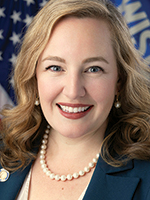
Photo of Kelda Roys
D Wisconsin Senate · District 26

Sen. Kelda Roys

Compare
Total votes
595
all sessions
Attendance
96%
24 missed
Near the chamber average
With party
95%
of cast votes
Near the chamber average
Bipartisan score
3%
crosses aisle rarely
Near the chamber average
Sponsored
1,084
bills & resolutions
Near the chamber average
Committees
5
assignments
1,084 bills and resolutions

Sponsored bills

Total
1,084
Primary
1,084
Co-sponsor
0
This page
1,084
matching current filters
Primary SB 379
Failed · Wisconsin Senate · Lead sponsor
Relating to: creating a refundable individual income tax credit for the parent of a stillbirth and making an appropriation. (FE)

Maddy summarySB 379 creates a $2,000 refundable individual income tax credit for Wisconsin parents who experience a stillbirth (defined as a birth requiring a fetal death report under state law). The credit applies to the taxable year of the stillbirth and is refundable, meaning parents who owe less in taxes than $2,000 will receive the difference as a cash payment from the state. Eligibility requires being a Wisconsin resident filing a joint or separate return, with specific limits: $2,000 total for married couples filing jointly, $1,000 each for unmarried parents or separate returns. Proof of eligibility, such as a fetal death report, must be submitted with the tax return.

Failed Apr 8, 2026 0 co-sponsors
Primary SB 1174
Failed · Wisconsin Senate · Lead sponsor
Relating to: incorporating awareness about fentanyl and the use of an opioid antagonist into school district educational goals. (FE)

Maddy summaryThis bill requires school districts to include education about fentanyl and the use of opioid antagonists as part of their drug abuse prevention goals. The law specifically amends state statutes to mandate that awareness of these topics be integrated into school curricula starting in the 2026-27 school year. It affects all public school districts by adding fentanyl and opioid antagonist information to their required educational objectives on drug abuse prevention. The measure does not prescribe specific teaching methods or content beyond requiring this awareness to be included in district educational goals.

Failed Apr 7, 2026 0 co-sponsors
Primary SB 1169
Failed · Wisconsin Senate · Lead sponsor
Relating to: a first-time home buyer purchasing assistance fund and loan program and making an appropriation. (FE)

Maddy summaryThis bill creates a new fund and loan program to help first-time home buyers in Wisconsin cover costs like down payments, closing costs, and mortgage insurance. The program is managed by the Wisconsin Housing and Economic Development Authority and provides interest-free loans up to $35,000 or 10 percent of the home's purchase price, whichever is less. Eligible borrowers must be first-time home buyers or those who lost their home to foreclosure, have household income at or below 100 percent of the area median income, complete a home buyer education course, and agree to live in the home as their primary residence. The loans are forgiven in installments over ten years if the borrower keeps the home as their primary residence, with larger forgiveness amounts at five and ten-year intervals. The bill also appropriates $150 million for the fund in the 2025-26 fiscal year and allows the authority to invest unused funds in safe, low-risk investments.

Failed Apr 7, 2026 0 co-sponsors
Primary SB 1137
Failed · Wisconsin Senate · Lead sponsor
Relating to: creating WisEARNS, granting rule-making authority, and making an appropriation. (FE)

Maddy summaryThis bill creates the WisEARNS program, a state-administered retirement savings plan designed for employees who do not have access to an employer-sponsored retirement plan. It establishes a new WisEARNS board attached to the state treasurer, composed of representatives from various sectors including investments, small business, employees, and employers, with specific requirements to ensure diverse expertise and independence from securities dealers. The board will oversee the selection of a vendor to manage the program, which will automatically enroll eligible employees and allow them to make contributions to retirement savings accounts. The legislation also grants the board rule-making authority and includes an appropriation to fund the program's initial implementation.

Failed Apr 7, 2026 0 co-sponsors
Primary SB 1167
Failed · Wisconsin Senate · Lead sponsor
Relating to: the school district revenue limit adjustment for energy efficiency projects. (FE)

Maddy summaryThis bill would allow Wisconsin school districts to increase their revenue limits when they spend money on energy efficiency projects. If a school board chooses to participate, the district's spending on energy-saving measures, including debt payments for bonds or loans used to finance those projects, would count toward raising the revenue cap for that school year. To qualify, projects must reduce energy or operational costs, follow a performance contract, and have financing terms of 20 years or less. The legislation also defines eligible projects as facility upgrades, training programs, or services that lower energy use, conserve water, or improve metering accuracy.

Failed Apr 7, 2026 0 co-sponsors
Primary SB 1064
Failed · Wisconsin Senate · Lead sponsor
Relating to: carbon monoxide detection systems on motorboats and providing a penalty. (FE)

Maddy summarySB 1064 requires all new motorboats with enclosed sleeping/galley compartments (defined as "enclosed accommodation compartments") to have certified marine carbon monoxide detection systems installed before sale. It also mandates that cabin motorboat owners display a visible carbon monoxide warning sticker and ensures the state department provides free safety information and stickers during boat registration. Violating these requirements carries a $300 penalty for repeat offenses. The law applies to new boats sold, registered, or operated after its effective date.

Failed Apr 7, 2026 0 co-sponsors
Primary SB 826
Failed · Wisconsin Senate · Lead sponsor
Relating to: vaccination of minors without parental consent. (FE)

Maddy summarySB 826 allows healthcare providers to vaccinate minors aged 16 or older without parental consent if the minor requests it. The bill requires providers to obtain the minor’s consent before billing insurance or other third parties for the vaccination. If the minor declines third-party billing, they are responsible for payment directly to the provider, following existing fee guidelines. This applies specifically to medically appropriate vaccines and affects minors aged 16+, healthcare providers, and third-party payers. The bill does not change parental rights for minors under 16.

Failed Apr 7, 2026 0 co-sponsors
Primary SB 729
Failed · Wisconsin Senate · Lead sponsor
Relating to: large energy customer fees; electric utility very large customer class; a renewable resource tariff; building requirements for data centers; water usage by large customers; required pay rate on large-scale data center projects; and granting rule-making authority. (FE)

Maddy summarySB 729 imposes annual fees on large energy customers (primarily large data centers) based on their peak electricity demand: $2 million for 100-250 MW, $3 million for 250-500 MW, and $1 million more for each additional 250 MW. Fifty percent of these fees fund the Green Innovation Fund via the Wisconsin Economic Development Corporation. The bill also requires data centers to report actual water usage annually and certify compliance with sustainable building standards (like LEED or BREEAM) within three years of operation. It defines "large-scale data centers" as projects costing $250 million+ in construction or equipment over 60 months.

Failed Apr 6, 2026 0 co-sponsors
Primary SB 1163
Failed · Wisconsin Senate · Lead sponsor
Relating to: prior authorization transparency, exemptions from prior authorization requirements, and granting rule-making authority. (FE)

Maddy summaryThis bill requires health care plans to publicly disclose which medical services require prior authorization and the specific rules governing those requirements. It mandates that these lists be posted on websites in plain language without requiring users to create accounts, and it sets standards for how clinical review criteria must be developed and updated. The legislation also grants the state insurance commissioner authority to create rules for certain limited service health organizations and includes provisions to prevent claims denials when prior authorization requirements were not in effect at the time of service.

Failed Mar 30, 2026 0 co-sponsors
Primary SB 1164
Failed · Wisconsin Senate · Lead sponsor
Relating to: preventing surprise bills for emergency medical services and other items and services under health insurance policies and plans. (FE)

Maddy summaryThis bill aims to protect patients from unexpected medical bills by establishing rules for how health insurance plans must handle emergency care and services provided by out-of-network providers. It requires insurance plans to cover emergency medical services without prior authorization and ensures that cost-sharing amounts for out-of-network emergency care are no higher than what would apply for in-network care. Additionally, the bill mandates that plans pay out-of-network providers directly for services rendered at participating facilities and counts patient cost-sharing payments toward in-network deductibles and out-of-pocket maximums. These provisions apply to defined network plans, preferred provider plans, and self-insured governmental plans that have networks of participating providers.

Failed Mar 30, 2026 0 co-sponsors
Showing 21 to 30 of 1,084 bills
Previous 1 2 3 4 109 Next