

Maddy summaryThis bill amends Wisconsin election laws to clarify how mass communications are defined and regulated in relation to political campaign spending. It creates new definitions for "mass distribution," "mass electronic communication," and "mass telephoning," each requiring 500 or more substantially identical messages, while excluding bona fide polls from these definitions. The legislation updates rules on when independent groups must report coordinated spending by clarifying that coordination occurs when a candidate or their party has control over or engages in substantial discussions about the content, timing, or other details of the communication. Additionally, it prohibits certain mass communications that reference clearly identified candidates during the 60-day period before an election if they are coordinated with the candidate or their party in violation of contribution limits.
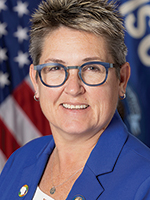
Sen. Kristin Dassler-Alfheim
Sponsored bills
Maddy summaryThis bill creates new authority for the Wisconsin attorney general to investigate and sue individuals or entities for civil rights violations in housing, employment, education, and public accommodations. It allows the attorney general to conduct investigations requiring sworn statements, access to documents, and subpoenas when there is reasonable cause to believe a pattern of rights violations or a denial of rights with public importance has occurred. If violations are found, courts can order injunctive relief, award damages, and impose civil forfeiture penalties of up to $50,000 for first violations or $100,000 for subsequent violations within seven years. The bill also permits the attorney general to accept voluntary compliance agreements instead of pursuing litigation, though violations of such agreements remain subject to penalties.
Maddy summaryThis bill proposes adding a clause to the state constitution that explicitly prohibits slavery and involuntary servitude, except as punishment for a crime where the person has been duly convicted. The amendment would modify the existing constitutional language to clarify that the exception for criminal punishment remains in place. If approved by voters, it would codify a long-standing legal principle into the state's fundamental law. The measure is currently in the legislative process and has not yet been adopted.
Maddy summaryThis bill proposes amending the state constitution to require that all stationery and printing contracts for state use be awarded to the lowest bidder operating within the state, unless federal law or international agreements prohibit it. It allows the legislature to set a maximum price for these contracts and prohibits any state legislators or officers from having a financial interest in such agreements. The measure would be submitted to voters at the next general election after a three-month public notice period.
Maddy summaryThis bill establishes reporting requirements for political committees that make mass communications, such as distributing 500 or more identical pieces of material, sending 500 or more identical emails, making 500 or more identical phone calls, or disseminating messages during the 60 days before an election. It requires political action committees, independent expenditure committees, political parties, and legislative campaign committees to file registration statements and detailed expenditure reports when they spend money on these mass communications. The bill defines specific thresholds and timing for when committees must register and report, ensuring transparency around spending on large-scale communications that appeal to voters to support or oppose candidates.
Maddy summaryThis bill requires employers in Wisconsin to provide reasonable break time and a private, shielded space for breastfeeding employees to express breast milk for children under one year of age. The law mandates access to electrical outlets, running water, and refrigeration for milk storage, while allowing unpaid break time unless the employee remains partially on duty. Employers with fewer than 50 employees may claim an undue hardship exemption if compliance would cause significant difficulty or expense. The bill also prohibits discrimination or retaliation against employees who take these breaks and establishes a complaint process through the state department for enforcement.
Maddy summaryThis bill modifies Wisconsin's property tax deferral loan program to increase the maximum loan amount from $3,525 to $5,000 annually. It also establishes an annual adjustment mechanism that ties the loan limit to changes in the consumer price index, ensuring the amount keeps pace with inflation. The legislation applies these changes to loans where applications are filed after the bill's effective date. Additionally, the bill allows the Wisconsin Housing and Economic Development Authority to use up to 5 percent of allocated funds for marketing the program. Eligible participants must still meet existing income requirements, earning no more than $20,000 or 80 percent of the area median income.
Maddy summaryThis bill defines "qualified applicants" for buyer identification cards as licensed motor vehicle dealers, wholesalers, salvage dealers, school districts, and their employees. The legislation clarifies that dealers licensed in other jurisdictions are also included in this definition. By amending the relevant statute, the bill establishes who is eligible to obtain these identification cards. The measure does not create new programs or change existing procedures beyond this definitional clarification.
Maddy summaryThis bill congratulates the U.S. Olympic Women's Ice Hockey Team on winning the gold medal at the 2026 Winter Olympics. It specifically highlights the achievements of Wisconsin-affiliated players and staff, including former and current University of Wisconsin athletes who competed on the team. The resolution formally commends the athletes, coaches, and support staff for their success and wishes them continued success. The bill is a ceremonial measure with no regulatory or policy changes.
Maddy summaryThis Senate resolution directs the Wisconsin Senate to schedule additional floor sessions between April 14 and April 16, 2026, and to hold extraordinary sessions through December 31, 2026, to consider bills aimed at reducing costs for Wisconsinites. The measure specifically calls for passing legislation introduced by minority party members that address affordability issues such as utility rates, health care premiums, child care costs, and agricultural expenses. It was introduced in March 2026 by a bipartisan group of senators and referred to the Committee on Senate Organization, where it later failed to adopt following a vote to withdraw from committee. The resolution does not create new laws itself but establishes procedural requirements for the Senate to convene additional voting periods during the 2025-26 legislative session.