

Maddy summarySB 615 appropriates $500,000 annually for the University of Wisconsin Missing-in-Action Recovery and Identification Project during the 2025-27 fiscal biennium. The project, managed by the University of Wisconsin System's Board of Regents, directly supports Wisconsin veterans missing in action by funding recovery and identification efforts. The bill requires the project to submit annual reports to state legislative committees, the governor, and veterans' agencies detailing mission outcomes and how funds were used. This funding provides concrete support for resolving cases of Wisconsin veterans who went missing during military service.
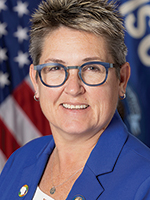
Sen. Kristin Dassler-Alfheim
Sponsored bills
Maddy summarySB 471 modifies unemployment insurance rules to require claimants to conduct at least four weekly job search activities (e.g., applying for jobs, networking) to maintain benefits, with the department setting specific guidelines. It directly affects individuals receiving unemployment benefits who must verify their job search efforts. The bill grants the department rule-making authority to adjust these requirements uniformly for similar claimants and establishes a process for verifying reemployment expectations with employers (considering layoff history, recall rights, and employer statements). It also updates waiver procedures for work search requirements and clarifies that benefits may be recovered if requirements aren’t met. The changes apply to new claims filed on the bill’s effective date.
Maddy summarySB 515 adjusts Wisconsin's unemployment insurance benefit amounts and wage limits. It sets a new maximum weekly benefit of $370 for claims starting before January 4, 2026, increasing to $497 for claims starting January 4, 2026, through January 2, 2027. The bill also establishes an annual inflation adjustment mechanism using the Consumer Price Index, starting January 3, 2027, to update both the maximum benefit and the $500 wage limit threshold (raised to $672 for 2026-2027). These changes directly affect unemployed workers receiving state unemployment benefits and those earning income while claiming benefits.
Maddy summarySJR 98 proposes adding a new constitutional amendment (Section 27) to guarantee equal rights under state law, prohibiting discrimination by state or local governments based on sex, gender identity, race, color, sexual orientation, disability, religion, national origin, marital status, family status, age, ancestry, or other immutable characteristics. It would allow any individual harmed by a violation to sue the state or local government entity responsible in court. The amendment would require all state and local governments to actively protect these guaranteed rights. This is a constitutional amendment proposal, not a law, and it is currently in the early stages of review after introduction in October 2025.
Maddy summarySB 457 modifies Wisconsin's unemployment insurance rules by repealing outdated provisions and clarifying how ineligibility periods work for claimants who conceal work or income. It specifically ensures claimants cannot earn "waiting period credit" during ineligibility periods caused by concealment, and if no current benefit rate applies, the department must use the next benefit year's rate to calculate reductions. This directly affects individuals who previously concealed work while receiving benefits, changing how their ineligibility is calculated and their future benefit eligibility. The bill takes effect after publication, impacting future unemployment benefit claims.
Maddy summarySB 462 updates the rules for permits allowing minors under 16 to work, directly affecting young workers and employers who hire them. The bill adds new exemptions to the permit requirement, including for minors working as election inspectors (as specified in state election law), in home settings, or for nonprofit organizations assisting elderly or disabled individuals. Employers must now maintain these permits on file and produce them for inspection upon request, with failure to do so being treated as evidence of unlawful employment. The bill also repeals an outdated section related to advertising for minor employment.
Maddy summarySB 639 allocates $5 million in state funds specifically for veterans' mental health services through the Department of Veterans Affairs. It requires the department to promote veterans' access to community-based mental health care and provide grants to organizations offering these services. The bill also streamlines rulemaking by allowing the department to issue emergency rules for administering these services without usual requirements for emergency rule justification. This directly affects veterans seeking mental health support and community organizations delivering those services. The funding and program structure are established for the 2026 biennium.
Maddy summarySB 579 standardizes collective bargaining processes for employees of the University of Wisconsin (UW) System, directly affecting faculty, staff, and other workers covered by existing union contracts. The bill requires that pay increases align with approved compensation plans or collective bargaining agreements, and it establishes funding mechanisms to cover costs for grievance arbitrations and training related to bargaining disputes. Key provisions update statutes to clarify that bargaining agreements govern pay decisions and define "governmental body" to exclude bargaining committees. The bill also creates new appropriation accounts to fund administrative functions of the state's employment relations system, including mediation and arbitration services.
Maddy summarySB 69 would allow school teachers to subtract certain work-related expenses from their taxable income, directly affecting teachers who pay for classroom supplies or professional development out of pocket. The bill creates a specific income tax subtraction provision, reducing the taxable income of eligible teachers by the amount of qualifying expenses they incur. This policy change aims to offset some costs teachers personally cover for their work, without altering tax rates or brackets. The bill passed committee with unanimous support and is now awaiting further legislative action.
Maddy summarySB 486 would revise unemployment insurance eligibility rules for workers terminated due to "misconduct" or who refuse suitable work. It defines "misconduct" more narrowly (e.g., excluding unexcused absences without prior written policy notice) and requires workers who lose benefits for misconduct to earn wages equal to 14 times their weekly benefit rate before requalifying. For refusing suitable work, it lowers the required earnings threshold from 6 times to 6 times the weekly benefit rate. These changes affect unemployed workers seeking benefits and employers responsible for paying unemployment insurance contributions.