

Maddy summarySB 62 modifies how Wisconsin's Health and Educational Facilities Authority (WHEFA) finances projects for nonprofit institutions like hospitals, schools, and research organizations. It creates new provisions to fund working capital for operating expenses and expands WHEFA's ability to make loans for facility projects, requiring security arrangements like mortgages. The bill also allows WHEFA to fund out-of-state projects only if they include a substantial Wisconsin component, as determined by the authority. These changes directly affect participating nonprofit institutions by altering how they access financing for operations and facilities. The bill adjusts salary limits for WHEFA staff but focuses primarily on restructuring the authority's financing mechanisms.
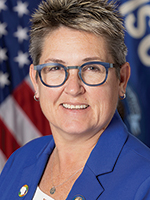
Sen. Kristin Dassler-Alfheim
Sponsored bills
Maddy summarySJR 74 is a ceremonial resolution recognizing June 19, 2025, as Juneteenth Day in Wisconsin. It formally declares this date to commemorate the end of slavery in the United States, referencing the historical event when Union troops announced freedom to enslaved people in Galveston, Texas, on June 19, 1865. The resolution highlights Wisconsin's longstanding Juneteenth celebration tradition, dating to Milwaukee's first observance in 1971, and acknowledges Juneteenth's national significance as a federal holiday since 2021. This resolution has no legal effect beyond symbolic recognition and does not create new laws or funding.
Maddy summarySB 320 creates $2 million in annual state funding for grants to school boards to provide LGBTQIA+ rights training for school counselors and social workers. The bill requires the Department of Public Instruction to award these grants for training programs developed or approved by the department. It directly affects school counselors, social workers, and school boards across the state, with the training focusing on supporting LGBTQIA+ students. The legislation specifies that "LGBTQIA+" includes lesbian, gay, bisexual, transgender, queer, intersex, and other nonheterosexual or noncisgender identities.
Maddy summarySB 322 creates a new Child Care Quality Improvement Program within the Department of Children and Families. It provides $221 million in annual funding (for 2025-26) to make monthly payments and per-child payments to certified child care providers, licensed child care centers, and school-based child care programs. The bill establishes rules for eligibility, payment amounts, and how funds must be used, while repealing outdated sections of law related to child care funding. The program is funded through specific appropriations in the state budget, with rules to be developed by the Department of Children and Families.
Maddy summarySJR 67 is a resolution honoring Anna Mae Robertson, a Milwaukee resident and member of the historic 6888th Central Postal Directory Battalion (the "Six Triple Eight") during World War II. It recognizes her service in clearing a 17-million-piece mail backlog in England in 1945, her post-war work as a nurse's aide in Milwaukee, and her legacy as one of the last surviving members of the all-Black, all-female battalion. The resolution formally acknowledges her contributions, extends condolences to her family following her death at age 101, and commemorates her recognition with service medals and the Congressional Gold Medal in 2025.
Maddy summarySB 347 creates a new state grant program to reimburse school districts and charter schools for comprehensive mental health services provided to students. It covers eligible costs like mental health literacy programs, telehealth services, parent training, mental health navigators, and equipment for telehealth, but excludes direct treatment costs or staff salaries for non-mental health roles. Reimbursement is capped at $100,000 per school or $100 per enrolled student annually, with a $83.888 million appropriation for fiscal years 2025-26 and 2026-27. The bill directly affects public schools and charter schools by providing funding for in-school and out-of-school mental health support.
Maddy summarySB 340 creates a dedicated $2 million annual appropriation for stipend payments to school social worker interns in Wisconsin public schools. It directly affects graduate students enrolled in school social work licensure programs who are placed as interns in public schools under school board governance. The bill establishes that the Department of Public Instruction must provide these stipends starting in the 2026-27 school year, using funds allocated under the new statutory section 20.255(3)(cm). This policy change formalizes funding for intern stipends without altering eligibility requirements for the program.
Maddy summarySB 344 creates a refundable income tax credit of up to $200 per dependent for bicycle (including electric bicycle) purchases by low-income residents. It directly affects families with dependents whose income does not exceed 200% of the federal poverty line, allowing them to claim the credit against their state income tax or receive a cash payment if the credit exceeds their tax liability. Key provisions require claimants to submit purchase documentation, restrict eligibility to full-year residents, and cap the credit at $200 per dependent annually. The credit applies to taxable years beginning after December 31, 2024, and is funded through a new appropriation.
Maddy summarySB 345 requires drivers to stop for pedestrians, cyclists, e-scooter riders, and personal delivery devices (like delivery robots) who have begun crossing at intersections with traffic signals or crosswalks. It clarifies that vehicles must remain stopped until these road users complete crossing, applying to both marked and unmarked crosswalks. The bill specifically amends traffic statutes to include new mobility devices and reinforces existing rules about yielding at signalized intersections. This directly affects drivers operating vehicles at intersections and crosswalks, particularly during green pedestrian signals.
Maddy summarySJR 68 proposes to repeal Section 13 of the state constitution, which currently defines marriage as only between one man and one woman and bans legal recognition of similar status for unmarried couples. If approved by voters, this constitutional amendment would eliminate the state's constitutional ban on same-sex marriage and allow all marriages to be recognized equally under state law. The bill directly affects all state residents by removing a legal barrier to marriage equality for same-sex couples. The amendment must be submitted to voters in the next general election following a three-month publication period, as required by the proposed process.