

Maddy summaryThis bill authorizes the creation of emergency services districts and grants them the authority to levy property taxes, impose special charges, and issue debt to fund local emergency response services. It directly affects local governments and residents within areas where these districts are established by modifying existing statutes related to district formation and financial powers. The legislation includes provisions for how emergency services district board members are elected, specifying ballot arrangements and candidate limits during primary elections. Additionally, it clarifies which entities are responsible for paying election-related costs, such as ballots and voting materials, when emergency services districts hold elections.
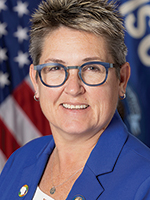
Sen. Kristin Dassler-Alfheim
Sponsored bills
Maddy summaryThis bill establishes a teacher longevity bonus program for Wisconsin school districts, providing a $7,000 payment to teachers who have been continuously licensed and employed by the same school board for five consecutive school years. The program begins in the 2031-32 school year and allows teachers to receive additional bonuses for each subsequent five-year period of continuous service, provided those years were not already used to qualify for a prior bonus. School boards must annually report eligible teacher names to the Department of Public Instruction, and the funding comes from a new state appropriation. The legislation amends existing statutes to create this new bonus structure and clarifies which school district provisions apply to first-class city school districts.
Maddy summarySB 949 prohibits carrying firearms within 100 feet of polling places during voting hours (one hour before opening to one hour after closing), defining this as a Class A misdemeanor. It directly affects voters, election workers, and anyone near polling locations during elections. Key exemptions include law enforcement officers, private property owners on their own land, and security personnel acting in their professional duties. The bill creates new criminal penalties for violations, specifically targeting firearm presence at voting sites to enhance polling place safety. This is a policy change focused on election security, not procedural or commemorative.
Maddy summarySB 569 requires private schools participating in the Special Needs Scholarship Program to implement each student's most recent individualized education program (IEP) or services plan, adjusted through agreement between the school and the student's parent. It also mandates that these schools share all IEP-related records with the student's public school district within 5 days of a formal request. The law directly affects private schools in the scholarship program, parents of students with disabilities, and public school districts seeking IEP documentation. These requirements will take effect for the 2026-27 school year. The bill focuses on ensuring consistent educational planning and record-sharing between private and public schools for scholarship program participants.
Maddy summaryThis bill requires Wisconsin school boards to provide age-appropriate, medically accurate instruction on human growth and development in grades K-12, covering topics like puberty, reproductive anatomy, gender identity, and healthy relationships. It mandates that schools teach abstinence as the most reliable way to prevent pregnancy and STIs while also including information on contraceptives, consent, and digital safety. The legislation defines key terms such as "age-appropriate" and "medically accurate" to ensure content is scientifically based and recognized by leading health organizations. School boards must decide whether to separate students by gender during instruction and include specific subjects like enthusiastic consent and parental communication. The bill also connects marriage and parenting to parental responsibility while addressing bullying and stereotyping prevention.
Maddy summarySB 1020 creates a $300,000 grant program to help specific healthcare facilities purchase patient lift devices. Eligible facilities include adult family homes, nursing homes, community-based residential facilities, and residential care apartment complexes. Grants cover devices approved by the department that can be operated independently by residents or with staff assistance, and mechanically lift people. Recipients must report usage data, with up to $100,000 of the appropriation reserved for data collection and analysis.
Maddy summarySB 837 creates a new state grant program providing $1.6 million annually to counties and tribes for mental health treatment alternatives to prosecution and incarceration. It directly affects low-to-medium risk individuals with mental illness who interact with the criminal justice system, excluding violent offenders as defined by law. Key provisions require grantees to establish programs using restorative justice principles, integrate mental health services, and meet evidence-based treatment standards while tracking outcomes like reduced jail populations and recidivism. Grantees must submit annual reports on program impact to the Department of Justice and an oversight committee, with data shared monthly for state evaluation. The bill mandates collaboration between courts, prosecutors, public defenders, and health agencies to coordinate care and services.
Maddy summaryThis bill creates a state grant program to help school districts pay student teachers an hourly wage of at least $15 for the hours they spend teaching in district schools. Beginning in the 2026-27 school year, school boards must compensate student teachers enrolled in approved teacher preparation programs, with the state reimbursing districts based on the number of hours taught. The legislation also gives the state department authority to create rules for administering the program and includes an appropriation to fund the payments.
Maddy summaryThis bill exempts electricity used for charging electric vehicles at home from the state tax, specifically for Level 1 and Level 2 chargers installed at residences on or after March 22, 2024. The exemption applies retroactively to electricity delivered starting January 1, 2025. It does not apply to Level 3 chargers or commercial charging stations. The policy directly affects residential homeowners who install qualifying EV chargers.
Maddy summarySB 366 amends rules for technical education equipment grants to clarify how funds can be used and require matching contributions. It allows grant recipients (primarily school districts) to use funds for facility improvements, tools, equipment, or instructional software in construction and advanced manufacturing programs. The bill requires recipients to provide matching funds equal to the grant amount, which can be cash or in-kind contributions like equipment or software. This change directly affects school districts seeking these grants by adding a funding match requirement.