

Maddy summarySB 845 repeals and amends specific sections of state law related to operating while intoxicated (OWI) and refusal to provide chemical tests, correcting provisions deemed unconstitutional by the U.S. Supreme Court. The bill removes penalties for refusal that were treated as separate offenses (e.g., repealing sections like 23.33 (4p) (a) 3. and 30.684 (1) (c)) and adjusts penalty structures for repeat OWI violations to align with the Court's ruling. It directly affects individuals charged with OWI or refusal, as well as law enforcement officers enforcing these laws, by ensuring refusal penalties are only applied alongside OWI violations rather than as standalone offenses. The changes clarify that refusal penalties now follow the same procedures as OWI violations, eliminating unconstitutional distinctions in the statutes.
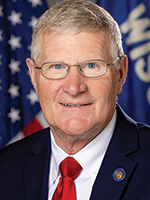
Sen. Howard Marklein
Sponsored bills
Maddy summarySJR 123 is a symbolic resolution designating March 2026 as Multiple Sclerosis (MS) Awareness Month across Wisconsin. It does not create new laws or allocate funds but formally encourages all Wisconsin residents to learn about MS and support those affected by the disease. The resolution recognizes the National Multiple Sclerosis Society’s work and aims to raise public awareness about MS, which impacts approximately 1 million people in the U.S. and typically affects individuals aged 20-50.
Maddy summarySB 819 modifies Wisconsin's local roads improvement program to streamline road project administration. It directly affects towns, counties, and the Department of Transportation by removing the requirement for registered engineer certification on projects costing $65,000 or less, and preventing counties from both preparing project cost estimates and contracting for road work in the same town. Key provisions establish new application deadlines for towns (November 15 for project submissions, January 15 for committee reviews), create a statewide committee to set funding criteria, and require competitive bidding for road construction projects. The bill also adds safeguards, such as prohibiting counties from contracting with towns for projects they estimated, and mandates a 10-day window for bidders to challenge cost estimates. These changes aim to simplify funding access while ensuring transparency in road improvement projects.
Maddy summarySB 688 amends Wisconsin's service award program to require 20 years of service (up from 15) and age 53 (down from 60) for full payment eligibility for volunteer firefighters, emergency medical responders, and emergency medical services practitioners. Those with 10-20 years of service who reach age 53 but are under 60 would receive a reduced payment, calculated by the department but less than the full award. The bill specifies that payments cover all municipal and state contributions plus earnings, minus investment expenses, and allows for lump-sum or rule-defined payment structures. The department must create implementing rules for these changes.
Maddy summarySB 705 regulates "nonrecourse civil litigation advances," which are cash payments made to individuals (consumers) involved in legal disputes (like lawsuits or settlements) in exchange for a share of future proceeds, without requiring repayment if the case is lost. The bill requires written contracts with specific disclosures (including APR, prepayment rights, and cancellation options), caps finance charges at the weekly prime rate plus 10%, and limits advances to $100,000 per consumer. It prohibits companies from paying referral fees to attorneys or health care providers and ensures consumers can prepay advances with proportional finance charge reductions. Violations incur fines of $25-$5,000 per violation, and willful violations prevent companies from recovering advances or finance charges.
Maddy summaryThis bill creates a state income tax credit for out-of-pocket medical expenses related to in vitro fertilization (IVF), including consultations, procedures, and prescribed drugs. Individuals filing state taxes can claim up to $5,000 annually in eligible costs, but only if their income is below $100,000 (single or married filing separately) or $200,000 (married filing jointly). The credit excludes insurance-covered costs, travel, lodging, and expenses paid through health savings accounts or similar programs. It applies to tax years beginning after December 31, 2025, and requires claims to be filed with the state tax return.
Maddy summarySB 732 updates licensing requirements for certified public accountants (CPAs) in the state. It requires new applicants to complete 150 semester hours of accounting/business education (replacing prior thresholds), with specific coursework determined by the Accounting Examining Board. The bill also revises work experience rules, mandating that experience must involve accounting, tax, or consulting services and be verified, while allowing government/industry roles to count. Existing out-of-state CPAs with verified licenses can continue practicing without reapplying. These changes apply to all individuals seeking CPA licensure or renewal under the state's accounting laws.
Maddy summarySB 700 increases fees for snowmobile registration and trail use stickers in Wisconsin. It raises the public-use registration fee from $30 to $45 (with a $5 fee for political subdivisions), and adjusts trail sticker costs: $69.25 for snowmobiles exempt from registration, $19.25 for members of qualifying snowmobile clubs, and $49.25 for others. The bill directly affects snowmobile owners, clubs, and local governments managing trails. Key provisions include updated fee structures for registration certificates and annual trail stickers, with specific discounts for club members and reduced fees for government-owned equipment. These changes apply to all snowmobiles operated on public or private trails under Wisconsin's current regulations.
Maddy summarySB 18 standardizes how schools and districts are rated in annual accountability reports by maintaining consistent scoring methods. It requires using the same cut scores, score ranges, and performance categories (like "Proficient" or "Advanced") that were applied in the 2019-20 school year for all schools and districts. For grades 3-8 English/language arts and math tests, it mandates alignment with National Assessment of Educational Progress (NAEP) standards, while grades 9-11 will use scoring from the 2021-22 school year. This bill directly affects public schools and districts in the state that receive these accountability reports. The changes apply starting with the 2025-26 school year.
Maddy summarySJR 9 is a ceremonial resolution honoring Justice David T. Prosser Jr., a former Wisconsin Supreme Court justice and state legislator who died in December 2024. It commemorates his 40+ years of public service, including 18 years in the Wisconsin Legislature and 18 years on the Supreme Court. The resolution, introduced by multiple legislators, expresses the Wisconsin Legislature's tribute to his career and legacy without creating any new laws or policy changes.