

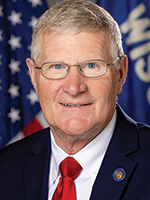
Photo of Howard Marklein
R Wisconsin Senate · District 17 On the 2026 ballot

Sen. Howard Marklein

Compare
Total votes
595
all sessions
Attendance
100%
of floor votes
Near the chamber average
With party
99%
of cast votes
Near the chamber average
Bipartisan score
1%
crosses aisle rarely
Near the chamber average
Sponsored
586
bills & resolutions
Near the chamber average
Committees
6
assignments
586 bills and resolutions

Sponsored bills

Total
586
Primary
586
Co-sponsor
0
This page
586
matching current filters
Primary SB 994
Passed · Wisconsin Senate · Lead sponsor
Relating to: public affairs network request for proposals.

Maddy summarySB 994 prohibits the public affairs network from charging fees for accessing live or archived state government proceedings when the network receives state funding for its operations. This applies directly to the state's public affairs network (which broadcasts government meetings) and the public seeking access to those recordings. The bill modifies existing rules to ensure fee-free access regardless of whether state funds are used, removing a prior condition that required explicit state funding for the fee ban. The key provision guarantees public access to government proceedings without cost under state-funded operations.

Passed Mar 23, 2026 0 co-sponsors
Primary SB 972
Failed · Wisconsin Senate · Lead sponsor
Relating to: recommendations made by the council on early literacy curricula.

Maddy summarySB 972 requires the Council on Early Literacy Curricula to recommend evidence-based literacy curricula and materials for kindergarten through third grade starting in the 2025-26 school year. The Department of Education must submit these recommendations, along with any departmental suggestions, to legislative committees within 14 days. If the legislature’s finance committee does not schedule a review meeting within 14 days, the recommendations automatically take effect for the next school year. This bill directly affects K-3 public schools by shaping the literacy resources they use, while establishing a clear timeline for legislative input or automatic adoption.

Failed Mar 23, 2026 0 co-sponsors
Primary SB 843
Failed · Wisconsin Senate · Lead sponsor
Relating to: certain requirements related to data centers.

Maddy summarySB 843 requires data centers in Wisconsin to use recycled water cooling systems and report annual water usage. It mandates that renewable energy facilities primarily serving a data center must be located on-site, and prohibits utility customers from paying for infrastructure built for data centers. Operators must post financial bonds equal to reclamation costs before operating and restore land to its original condition if construction stops. The bill applies to all data centers built or operated in Wisconsin under new construction or operational requirements.

Failed Mar 23, 2026 0 co-sponsors
Primary SB 873
Failed · Wisconsin Senate · Lead sponsor
Relating to: limitations on extraterritorial subdivision ordinances of incorporated municipalities.

Maddy summarySB 873 limits a municipality's ability to deny land subdivision approvals (plats) for areas outside its city limits but within its planning jurisdiction. It prevents cities from blocking such approvals based solely on the proposed land use, instead requiring denials to be based on four specific, pre-approved criteria: land use type, public improvement specifications, land division standards, or annexation agreements. The bill also allows municipalities to recover attorney fees if they successfully sue to enforce these rules. This directly affects developers seeking to build in areas adjacent to incorporated cities and the municipalities reviewing those projects.

Failed Mar 23, 2026 0 co-sponsors
Primary SB 875
Passed · Wisconsin Senate · Lead sponsor
Relating to: identification of the Platteville Veteran’s Memorial on state highway maps. (FE)

Maddy summarySB 875 requires Wisconsin state highway maps to specifically identify the Platteville Veteran’s Memorial located in Grant County. This procedural bill adds a permanent reference to the memorial's location in state statute (84.02 (5) (d) 2. r.), ensuring it appears on all future official highway maps published after the law takes effect. The bill directly affects state transportation mapmakers and users who rely on these maps for navigation. It makes no policy changes but formally documents the memorial’s location for public reference.

Passed Mar 23, 2026 0 co-sponsors
Primary SB 890
Failed · Wisconsin Senate · Lead sponsor
Relating to: eligibility for farmland preservation tax credits. (FE)

Maddy summarySB 890 modifies eligibility for farmland preservation tax credits by disallowing credits for acres with non-accessory photovoltaic solar energy systems installed during the taxable year. Specifically, it prevents tax credits on qualifying farmland where such solar systems (defined as not being accessory uses, like rooftop installations) are present. The bill creates new provisions to track both total qualifying acres and acres affected by these solar systems. This change directly impacts farmers seeking farmland preservation tax credits who have installed larger-scale solar installations on their land, effective for tax years beginning after December 31, 2025.

Failed Mar 23, 2026 0 co-sponsors
Primary SB 897
Failed · Wisconsin Senate · Lead sponsor
Relating to: threats to health care providers and providing a penalty.

Maddy summarySB 897 defines specific threats against health care workers as criminal offenses. It makes it illegal to threaten a current or former health care provider, staff member, or their family member when the threat occurs in response to work at a health care facility or actions taken in an official capacity. The law specifies two key conditions: the threatener must know the victim works in health care, and the threat must relate to the victim's professional role. This bill uses existing statutory definitions for "health care facility" and "health care provider" to clarify when such threats violate the law, creating a new criminal penalty for these specific circumstances.

Failed Mar 23, 2026 0 co-sponsors
Primary SB 899
Failed · Wisconsin Senate · Lead sponsor
Relating to: expressly prohibiting a foreign national from making a contribution to a referendum committee.

Maddy summarySB 899 prohibits foreign nationals from contributing to or influencing referendum committees that support or oppose ballot measures. It directly affects referendum committees (groups organizing campaigns for or against voter-approved measures) and their contributors. The bill requires committees to obtain written affirmations from contributors confirming they are not foreign nationals and have not received over $100,000 from foreign sources in the past four years. Committees must also attest in reports that they have not accepted foreign funds and will not do so before the referendum vote.

Failed Mar 23, 2026 0 co-sponsors
Primary SB 859
Failed · Wisconsin Senate · Lead sponsor
Relating to: adopting changes to the federal Internal Revenue Code for state tax purposes and modifying administrative rules related to such changes. (FE)

Maddy summarySB 859 updates Wisconsin's state tax code to align with specific federal tax changes. For taxable years starting after December 31, 2025, Wisconsin will use the federal Internal Revenue Code as amended through December 31, 2025, instead of current federal rules. The bill explicitly excludes certain federal tax provisions (like specific sections from recent laws) from Wisconsin's tax calculations and creates new rules to handle differences between state and federal tax treatments. This directly affects Wisconsin taxpayers and businesses by changing how state income tax is calculated based on updated federal rules.

Failed Mar 23, 2026 0 co-sponsors
Primary SB 896
Failed · Wisconsin Senate · Lead sponsor
Relating to: tax credit for small businesses offering individual coverage health reimbursement arrangements. (FE)

Maddy summarySB 896 creates a state tax credit for small Wisconsin businesses that offer individual coverage health reimbursement arrangements (ICHRAs) to employees. The credit provides up to $400 per covered employee annually for businesses with 1-50 employees, provided they contribute at least $400 per employee toward the ICHRA. To qualify, the ICHRA must meet federal requirements for health reimbursement arrangements. The credit reduces the business’s state income tax liability and applies to taxable years beginning after December 31, 2025. This directly affects small employers and their employees who accept the ICHRA as part of their health coverage.

Failed Mar 23, 2026 0 co-sponsors
Showing 31 to 40 of 586 bills
Previous 1 3 4 5 59 Next