

Maddy summarySB 233 prohibits offering or giving anything of value (like money or items worth over $1, or $5 for specific petitions) to influence someone to sign or avoid signing certain political petitions during election periods. It directly affects individuals circulating or signing petitions related to candidate nominations, recall efforts, referendums, or propositions during defined election windows (e.g., spring, general, or special elections). Key provisions define "election period" and specifically ban inducements for petitions supporting or opposing candidates, referendums, or recall efforts. The bill creates new statutory language (12.11(1m)(a) 5-6) to clarify these restrictions and applies to nomination papers and recall petitions. It aims to prevent financial incentives from influencing petition participation in elections.
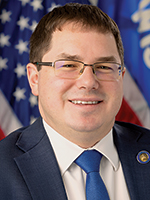
Sen. Mark Spreitzer
Sponsored bills
Maddy summarySB 251 requires specific health insurance plans - including those offered by state/local governments - to cover asthma prescription drugs and related medical supplies (like inhalers) without deductibles. It caps patient out-of-pocket costs at $25 per month for asthma medications and $50 per month for related supplies, preventing higher costs as treatment needs increase. This applies to limited service health organizations, preferred provider plans, and defined network plans covering asthma treatment. The bill takes effect for new policy years starting after its enactment, ensuring consistent affordability for covered asthma care.
Maddy summarySJR 69 is a non-binding joint resolution honoring the late Wisconsin State Representative Terrence A. "Terry" Willkom, who served in the Assembly from 1971-1976 and passed away in May 2025. It commemorates his public service, personal life, and career - including his roles as a business executive, family man, and advocate for bipartisan collaboration - without creating any new laws or affecting any policies. The resolution formally extends the Wisconsin Legislature’s condolences to his family and recognizes his legacy of "honesty, integrity, and ability to work with both sides of the aisle." As a commemorative resolution, it has no legal effect or direct impact on constituents or legislation.
Maddy summarySJR 74 is a ceremonial resolution recognizing June 19, 2025, as Juneteenth Day in Wisconsin. It formally declares this date to commemorate the end of slavery in the United States, referencing the historical event when Union troops announced freedom to enslaved people in Galveston, Texas, on June 19, 1865. The resolution highlights Wisconsin's longstanding Juneteenth celebration tradition, dating to Milwaukee's first observance in 1971, and acknowledges Juneteenth's national significance as a federal holiday since 2021. This resolution has no legal effect beyond symbolic recognition and does not create new laws or funding.
Maddy summarySB 320 creates $2 million in annual state funding for grants to school boards to provide LGBTQIA+ rights training for school counselors and social workers. The bill requires the Department of Public Instruction to award these grants for training programs developed or approved by the department. It directly affects school counselors, social workers, and school boards across the state, with the training focusing on supporting LGBTQIA+ students. The legislation specifies that "LGBTQIA+" includes lesbian, gay, bisexual, transgender, queer, intersex, and other nonheterosexual or noncisgender identities.
Maddy summarySB 322 creates a new Child Care Quality Improvement Program within the Department of Children and Families. It provides $221 million in annual funding (for 2025-26) to make monthly payments and per-child payments to certified child care providers, licensed child care centers, and school-based child care programs. The bill establishes rules for eligibility, payment amounts, and how funds must be used, while repealing outdated sections of law related to child care funding. The program is funded through specific appropriations in the state budget, with rules to be developed by the Department of Children and Families.
Maddy summarySB 350 creates state funding to help schools increase mental health staff. Starting in the 2026-27 school year, school districts, charter schools, and participating private schools can receive 50% reimbursement for additional spending on counselors, social workers, psychologists, and nurses compared to the prior year. The bill adds $16.5 million for 2025-26 and $18 million for 2026-27 to this program. This directly supports schools seeking to expand mental health services for students.
Maddy summarySJR 67 is a resolution honoring Anna Mae Robertson, a Milwaukee resident and member of the historic 6888th Central Postal Directory Battalion (the "Six Triple Eight") during World War II. It recognizes her service in clearing a 17-million-piece mail backlog in England in 1945, her post-war work as a nurse's aide in Milwaukee, and her legacy as one of the last surviving members of the all-Black, all-female battalion. The resolution formally acknowledges her contributions, extends condolences to her family following her death at age 101, and commemorates her recognition with service medals and the Congressional Gold Medal in 2025.
Maddy summarySJR 72 is a non-binding resolution that officially designates June 2025 as "Immigrant Heritage Month" in Wisconsin. It does not create new laws or policies but serves as a symbolic proclamation to honor the contributions of immigrants to Wisconsin's history, economy, and communities. The resolution highlights that immigrants contribute significantly to Wisconsin's workforce, economy (including $1.2 billion in annual state/local taxes), and key sectors like agriculture and technology. This designation applies statewide and aims to foster unity and recognition of immigrant contributions, without altering legal status or creating new programs.
Maddy summarySB 347 creates a new state grant program to reimburse school districts and charter schools for comprehensive mental health services provided to students. It covers eligible costs like mental health literacy programs, telehealth services, parent training, mental health navigators, and equipment for telehealth, but excludes direct treatment costs or staff salaries for non-mental health roles. Reimbursement is capped at $100,000 per school or $100 per enrolled student annually, with a $83.888 million appropriation for fiscal years 2025-26 and 2026-27. The bill directly affects public schools and charter schools by providing funding for in-school and out-of-school mental health support.