

Maddy summarySB 293 requires all state agencies to prioritize using native prairie and forage plants in their projects to support native bees, butterflies, and other pollinators. It creates a new statute (20.935) defining "state agency" broadly and mandating that agencies use these native plants where appropriate. The Department of Natural Resources must provide requested information to help agencies implement this requirement. The bill directly affects every state agency that manages land or projects, with no financial or regulatory changes beyond the preference for native plants.
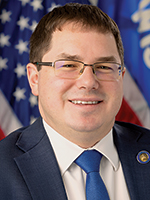
Sen. Mark Spreitzer
Sponsored bills
Maddy summarySB 319 designates the rusty patched bumble bee (*Bombus affinis*) as Wisconsin's official state native insect. The bill amends state statutes to add this designation to the list of official state symbols included in the Wisconsin Blue Book. This is a ceremonial change with no regulatory impact, affecting only the state's official documentation. It does not alter conservation policies or impose new requirements on any individuals or entities.
Maddy summarySJR 61 designates June 2025 as Pollinator Awareness Month in Wisconsin. This symbolic resolution does not create new laws or funding but aims to raise public awareness about the importance of pollinators like bees and butterflies to agriculture and ecosystems. It highlights Wisconsin's existing efforts, such as "No Mow May" initiatives, which have demonstrated positive impacts on bee populations. The resolution encourages community engagement in pollinator-friendly practices, such as planting native species and reducing pesticide use, without imposing new requirements on residents or organizations.
Maddy summarySB 298 prohibits Wisconsin's Department of Natural Resources from using neonicotinoid insecticides on state lands acquired and maintained under section 23.09(2)(d). This directly affects the department's land management practices on public parks, preserves, and conservation areas. The ban includes three key exceptions: existing farming agreements entered before the law's effective date, forest insect control on state forests/nurseries, and designated infestation zones under existing forest management rules. The bill creates a clear policy change by restricting a specific pesticide class on most state lands while preserving necessary forestry applications.
Maddy summarySB 2 expands veterans' burial benefits to cover individuals who served in Laos supporting U.S. efforts during the Vietnam War. It directly affects eligible veterans (including those covered by the federal Hmong Veterans Naturalization Act of 2000) who previously did not qualify for national cemetery burial under existing rules. The bill adds a new provision (45.61 (2) (e)) to state law, linking eligibility for burial benefits to the federal naturalization act for these veterans. This change creates a concrete policy update to include a specific group of veterans in existing burial benefit programs. The bill is currently referred to the Senate Rules Committee for further consideration.
Maddy summaryThis Senate Joint Resolution (SJR 65) is a ceremonial resolution congratulating Southwest Wisconsin Technical College for winning the 2025 Aspen Prize for Community College Excellence. It recognizes the college's national award, which honors its success in student outcomes - particularly for historically underserved groups - and its programs like work-based learning and employer partnerships. The resolution formally commends the college's faculty, staff, students, and community partners for their contributions to Wisconsin's higher education. As a symbolic gesture, it does not create new policy or affect any legal obligations.
Maddy summarySenate Bill 71 ratifies the Dietitian Licensure Compact, a multi-state agreement designed to streamline the licensing process for dietitians. This bill allows licensed dietitians in participating states to practice in other compact member states by obtaining a "compact privilege" instead of a full separate license. It establishes a dietitian licensure compact commission and amends various state statutes to recognize this new privilege, affecting dietitians and their ability to practice across state lines.
Maddy summarySB 314 modifies the enrollment cap for Wisconsin's state-funded private school choice program. It replaces the previous calculation method with a new rule setting the pupil participation limit at 10% of a school district's enrollment from the prior school year. This change directly affects all public school districts participating in the program, limiting the number of students they can send to private schools under the state's choice initiative. The bill updates the statute to apply this 10% cap through the 2025-26 school year, as specified in the amended sections.
Maddy summarySB 113 creates a pilot program to help farmers transition to managed grazing systems, which rotate livestock between pasture sections to reduce soil erosion and improve forage quality. It directly affects farmers adopting new managed grazing systems or improving existing ones, excluding support for current practices. The program provides grants covering infrastructure (fencing, water systems), technical assistance from specialists, and incentive payments for the first three years of transition, with a $40,000 annual cap per farmer. Funded by $500,000 annually from the environmental fund, grants are paid as 75% in year one and 12.5% each subsequent year. The bill also defines "marginal areas" (land unsuitable for crops like floodplains) as eligible for supplemental feed development.
Maddy summarySB 186 updates definitions in state law to align with federal standards for "volunteer fire department" as defined in 15 U.S.C. § 2229. The bill requires the state to report specific data about volunteer and paid firefighters, including the number of volunteers and the fire departments employing them. It directly affects state reporting systems and fire departments that track volunteer firefighter participation. The key change is clarifying terminology to ensure consistent reporting of volunteer firefighter statistics across state and federal frameworks.