

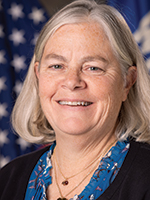
Photo of Tara Johnson
D Wisconsin Assembly · District 96 On the 2026 ballot

Rep. Tara Johnson

Compare
Total votes
213
all sessions
Attendance
87%
32 missed
Near the chamber average
With party
95%
of cast votes
Near the chamber average
Bipartisan score
2%
crosses aisle rarely
Near the chamber average
Sponsored
312
bills & resolutions
Near the chamber average
Committees
2
assignments
312 bills and resolutions

Sponsored bills

Total
312
Primary
312
Co-sponsor
0
This page
312
matching current filters
Primary AB 638
Failed · Wisconsin Assembly · Lead sponsor
Relating to: student financial protection at certain private postsecondary schools. (FE)

Maddy summaryAB 638 requires private postsecondary schools seeking state approval (or renewal) to maintain a reserve fund equal to 25% of their highest annual revenue over the past five years (or projected first-year revenue for new schools). This fund protects students if schools commit fraud, fail to deliver promised education services, or close unexpectedly. Schools must also pay a $3 student protection fee for every $1,000 of their annual revenue, with fee collection stopping once the fund exceeds $5 million. The bill directly affects private colleges operating in the state, creating a financial safety net for students through mandatory reserves and a fee-based fund.

Failed Mar 23, 2026 0 co-sponsors
Primary AB 551
Failed · Wisconsin Assembly · Lead sponsor
Relating to: chronic wasting disease sampling and making an appropriation. (FE)

Maddy summaryAB 551 establishes a program allowing hunters to drop off deer carcass parts at designated sampling stations - such as self-service kiosks - for chronic wasting disease (CWD) testing. The Department of Natural Resources will administer these stations, which may contract with private entities to process samples. The bill appropriates $500,000 for fiscal year 2025-26 and another $500,000 for 2026-27 to fund this program. It directly affects hunters who use the stations and the Department of Natural Resources, which will manage the sampling operations.

Failed Mar 23, 2026 0 co-sponsors
Primary AB 632
Failed · Wisconsin Assembly · Lead sponsor
Relating to: issuance of permits for the mining of sulfide ore bodies.

Maddy summaryAB 632 imposes a moratorium on issuing permits for mining sulfide ore bodies (mineral deposits where metals mix with sulfide minerals) until two conditions are verified. Specifically, the department must confirm that similar mining operations in the U.S. or Canada have operated for at least 10 years without polluting groundwater or surface water from acid drainage or heavy metals, and that similar closed mines have remained pollution-free for 10 years. This applies to all permit applications, regardless of when they were submitted, and remains in effect until the verification requirements are met. The bill directly affects mining companies seeking permits for sulfide ore mining projects in the state.

Failed Mar 23, 2026 0 co-sponsors
Primary AB 626
Failed · Wisconsin Assembly · Lead sponsor
Relating to: electronic copies of operators’ licenses and identification cards. (FE)

Maddy summaryAB 626 allows drivers and ID card holders to obtain electronic copies of their licenses and identification cards from the state department. It permits displaying these electronic copies on phones or devices during traffic stops, while ensuring officers cannot view other phone content. The bill adds a $10 fee for electronic copies (separate from standard card fees) and clarifies that physical copies remain subject to different fee rules. This directly affects drivers who choose electronic formats and the state department managing license issuance.

Failed Mar 23, 2026 0 co-sponsors
Primary AB 577
Failed · Wisconsin Assembly · Lead sponsor
Relating to: funding for the birth defect prevention and monitoring system and making an appropriation. (FE)

Maddy summaryAB 577 increases annual funding for Wisconsin's birth defect prevention and monitoring system from $95,000 to $500,000, plus adds 3.3 full-time staff positions for the Department of Health Services to maintain the system. The bill allocates an additional $405,000 for fiscal years 2025-26 and 2026-27 to support this program. It directly affects the Department of Health Services, which will use the funds to operate the birth defect surveillance system. The bill makes concrete changes to existing funding levels without altering program requirements or eligibility.

Failed Mar 23, 2026 0 co-sponsors
Primary AB 552
Failed · Wisconsin Assembly · Lead sponsor
Relating to: funding for chronic wasting disease research and making an appropriation. (FE)

Maddy summaryAB 552 allocates $3 million annually from the state general fund for research, management, and testing of chronic wasting disease (CWD) in deer and elk. The bill creates a dedicated funding line item under the Natural Resources Department’s budget specifically for CWD management, authorizing the department to conduct research and testing. This funding applies to both the 2025-26 and 2026-27 fiscal years, directly supporting wildlife management agencies tasked with addressing this disease in cervid populations. The bill does not change existing CWD management policies but provides dedicated annual funding for these activities.

Failed Mar 23, 2026 0 co-sponsors
Primary AB 570
Failed · Wisconsin Assembly · Lead sponsor
Relating to: payments for pupils who withdraw from a parental choice program, the Special Needs Scholarship Program, or an independent charter school. (FE)

Maddy summaryAB 570 redirects remaining scholarship funds to public school districts when students switch schools. If a student withdraws from a private school under a parental choice program, the Special Needs Scholarship Program, or an independent charter school during a school year and enrolls in a public school district, the state department must pay the unused scholarship amount to that district instead of the original school. This applies to all specified programs and covers the remainder of the school year's funding. The bill takes effect on July 1, 2026. It directly affects students transferring programs, public school districts receiving funds, and the state's scholarship payment process.

Failed Mar 23, 2026 0 co-sponsors
Primary AB 656
Failed · Wisconsin Assembly · Lead sponsor
Relating to: the age for marriage and eliminating spousal exceptions for certain sex crimes against children.

Maddy summaryAB 656 eliminates a legal exception that previously protected spouses from prosecution for sex crimes against child spouses. It amends statutes 948.09 (sexual intercourse with a child age 16+) and 948.093 (underage sexual activity) to remove the provision stating these laws "do not apply if the child is the defendant’s spouse." This change directly affects individuals in marriages where one spouse was a minor at the time of marriage, making spousal relationships no longer a defense for sex crimes against children. The bill also updates marriage-related provisions, including allowing minors under 18 to file for divorce (767.185) and clarifying consent requirements for minors seeking marriage licenses.

Failed Mar 23, 2026 0 co-sponsors
Primary AB 433
Failed · Wisconsin Assembly · Lead sponsor
Relating to: newspaper publication and typeface for certain legal notices.

Maddy summaryAB 433 changes the required typeface for legal notices published in newspapers from Times New Roman to Arial. It mandates that all legal notices use a standard 6-point Arial sans-serif font with specific spacing, while allowing larger Arial sizes (up to 12-point) with proportional fee adjustments based on column area. This directly affects newspapers publishing legal notices and the agencies or individuals placing those notices. The bill repeals the previous typeface requirement and clarifies fee adjustments for non-standard font sizes.

Failed Mar 23, 2026 0 co-sponsors
Primary AB 185
Passed · Wisconsin Assembly · Lead sponsor
Relating to: property tax exemption for nonprofit theaters. (FE)

Maddy summaryAB 185 modifies property tax exemption rules to expand eligibility for nonprofit theaters. It creates a new provision (70.11 (29m)(b)) requiring qualifying theaters to be operated by an IRS 501(c)(3) nonprofit (with a determination letter by October 1, 1990), use all property for theater arts, and have a total seating capacity of at least 240 persons. The bill repeals the previous exemption section (70.11 (29p)) and applies to property tax assessments starting January 1, 2025. This change directly affects nonprofit theaters meeting these specific criteria, potentially reducing their property tax burden.

Passed Mar 23, 2026 0 co-sponsors
Showing 271 to 280 of 312 bills
Previous 1 … 27 28 29 … 32 Next