

Maddy summaryAB 274 establishes a 7-year expiration cycle for Wisconsin administrative rules, requiring state agencies to formally request "readoption" before rules expire. It directly affects state agencies that create and maintain administrative rules, mandating they submit detailed notices to the legislature with specific information about each rule's purpose, legal basis, and compliance status. Key provisions include new requirements for readoption notices (including statements on rule compliance), a process for legislative committees to review these notices, and a schedule for expiring rules that were in effect before 2025. The bill also creates a rules procedures manual to guide agencies on drafting and legislative review. These changes streamline rule expiration and renewal while increasing transparency for lawmakers.
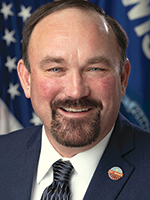
Rep. Clint Moses
Sponsored bills
Maddy summaryAB 687 requires the state wildlife department to establish a statewide wolf population goal when wolves are not protected under federal or state endangered species laws. This law directly affects the department, hunters, and trappers by mandating a management plan that sets a specific population target. The key provision allows the department to regulate wolf hunting and trapping through licensing limits - such as restricting the number of hunters, trappers, or wolves taken - based on the established population goal. The bill does not change current protections but creates a framework for future management if wolves are removed from endangered lists.
Maddy summaryAB 682 increases fees for nonresident hunting, trapping, and fishing permits and vehicle admissions in Wisconsin. The bill raises specific fee amounts across multiple categories, such as increasing the annual deer license fee from $197.25 to $237.25 and the annual small game license fee from $87.25 to $107.25. These fee increases will take effect on March 1, 2026, and primarily affect nonresidents who wish to engage in hunting, fishing, or trapping activities within Wisconsin. The bill does not introduce new programs but adjusts existing fee structures for nonresident users.
Maddy summaryAB 683 prohibits telecommunications providers from using equipment manufactured by entities designated as "foreign adversaries" in key network infrastructure (like cell towers or fiber lines). It directly affects telecom companies operating in Wisconsin, requiring them to stop purchasing or leasing such equipment and remove existing installations by following federal removal programs. Providers must annually certify compliance and publicly report locations of affected equipment, including replacement plans, while the state commission will publish a public map and annual report. The bill aligns with federal rules banning equipment from specific foreign entities, focusing on network security without specifying political outcomes.
Maddy summaryAB 677 creates a new criminal offense for "grooming a child for sexual activity," defined as manipulating a child to facilitate sexual abuse. This law directly affects individuals convicted of such grooming behavior, adding it as a punishable offense under Wisconsin statutes like 948.02 (sexual exploitation of a child) and 948.072 (grooming). Key provisions amend multiple laws to include grooming as a disqualifying factor for home placements, licensing for childcare, and reporting requirements, while defining it as a "serious crime" for entities serving minors. The bill does not change existing penalties for actual sexual abuse but establishes grooming itself as a distinct criminal violation with specific legal consequences.
Maddy summaryAJR 96 is a symbolic resolution designating October 2025 and October 2026 as "Breast Cancer Awareness Months" in Wisconsin. It does not create new laws, funding, or obligations; it is a ceremonial proclamation to promote public awareness of breast cancer. The resolution cites Wisconsin-specific breast cancer statistics and screening recommendations to justify the designation. As a procedural joint resolution, it has no direct policy impact but serves to highlight this public health issue.
Maddy summaryAB 273 amends Wisconsin statute 15.405(5g) to update the membership of the Controlled Substances Board. It adds the secretary of agriculture, trade and consumer protection (or their designee), chairpersons of several medical boards (pharmacy, medical, physician assistant, dentistry, nursing), and two appointed experts (a psychiatrist and pharmacologist) serving 3-year terms. The bill does not change the board's duties but specifies who serves on it. This directly affects the composition of the board, which reviews controlled substances regulations. The change is procedural, focusing on board structure rather than policy.
Maddy summaryAB 271 allows commercial motor vehicles operating in Wisconsin (intrastate commerce) to use camera monitor systems instead of traditional mirrors, provided the systems meet federal safety standards. The bill specifically permits systems exempted under federal regulations (49 CFR 393.80) or approved as mirror alternatives in federal safety standards. This change directly affects commercial truck and bus operators by removing a requirement for physical mirrors when using federally compliant camera systems. The law aligns Wisconsin statute with existing federal approvals, without creating new safety standards.
Maddy summaryAB 388 creates a one-time grant program to fund Rogers Behavioral Health for constructing an integrated mental health facility in Wisconsin's Chippewa Valley region. The facility will provide inpatient, residential, partial hospitalization, intensive outpatient, and outpatient services for adolescents and adults. To receive the grant, Rogers must submit detailed certification plans for each service type (e.g., inpatient, residential) and report annually on facility operations and Medical Assistance patient access. The bill establishes specific requirements for facility certification under state health codes and mandates annual reporting to the Department of Health Services.
Maddy summaryAB 265 strengthens Wisconsin's penalties for human trafficking by requiring minimum prison terms: 15 years for child trafficking and 10 years for general human trafficking convictions. It creates new felony charges for individuals who profit from trafficking (Class D C felony) or receive compensation from commercial sex acts or debt bondage (Class F E felony). The bill directly affects convicted traffickers, their financial beneficiaries, and those who facilitate trafficking through recruitment or harboring of children for commercial sex. These sentencing changes apply to offenses committed after the bill's effective date.