

Maddy summaryAB 454 establishes a statewide "workforce home loan" revolving loan program to help low-to-moderate income workers purchase homes. It creates a new fund that will provide loans to first-time homebuyers whose household income is at or below 100% of the local area median income, with requirements including no prior residential property ownership in the past three years and meeting specific debt-to-income and credit score standards (minimum 580 FICO score for deferred payment options). The program uses repayments from existing loans to replenish the fund, allowing it to serve more borrowers over time. This directly affects eligible workforce households in housing markets across the state who qualify under the defined income and underwriting criteria.
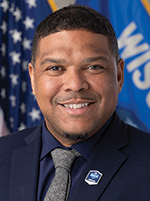
Rep. Amaad Rivera-Wagner
Sponsored bills
Maddy summaryAB 916 creates a state-funded home repair program to address habitability issues and improve energy efficiency in affordable housing. It provides grants of up to $25,000 per unit to eligible homeowners (income ≤100% of area median income who own or occupy their homes) and interest-free loans of up to $25,000 to eligible landlords (owning ≤5 properties/15 units of affordable housing). The program prioritizes repairs for homes with health/safety hazards, energy efficiency upgrades, and accessibility improvements for individuals with disabilities or young children. Properties must be between 10 and 40 years old to qualify, and funds are administered by the state authority or contracted counties/nonprofits with strict reporting requirements.
Maddy summaryThis bill modifies how the Wisconsin Blue Book and highway maps are distributed to state legislators, changing from automatic distribution to a request-based system. Under the new rules, legislative offices must request copies of the Blue Book before printing, with each Senator allowed up to 600 copies and each Assembly Representative up to 350 copies. Highway service maps will be provided free of charge to each legislator and officer, with a limit of 50 copies per person, while folded highway maps will be distributed without charge to each legislator and officer with a limit of 500 copies per person. The bill also requires the department to contact legislators to determine their specific needs before distributing these documents, ensuring that distribution matches actual demand rather than being automatically sent to all members.
Maddy summaryAB 722 imposes annual fees on large energy customers in Wisconsin based on their peak electricity demand, starting at $2 million for those using 100-250 megawatts and increasing by $1 million for each additional 250-megawatt increment. Fifty percent of these fees will fund the Green Innovation Fund, managed by the Wisconsin Economic Development Corporation. The bill also requires data centers to report annual water usage to local governments, certify adherence to sustainable building standards (like LEED or BREEAM) within three years of operation, and pay workers the prevailing wage rate for large-scale construction projects exceeding $250 million in cost. These provisions directly affect large energy users, data center operators, and local governments managing water reporting.
Maddy summaryAB 785 establishes a program to cap electricity and gas costs at 2% of a household's annual income for energy burdened households (spending 2-4% of income on utilities) and severely energy burdened households (spending 4% or more, or having no income with utility bills). It prohibits utility disconnections for residential customers with income up to 300% of the federal poverty level due to nonpayment and creates an "energy burden relief fund" to finance the program. The bill requires automatic enrollment for eligible households, an online application portal, and annual reporting by the Public Service Commission on program administration and barriers to participation.
Maddy summaryThis bill prohibits disability insurance policies and self-insured health plans from using artificial intelligence to deny prior authorization requests for medical necessity or experimental treatments. Instead, it requires that a licensed human healthcare provider must review these specific requests before any denial can occur. The law applies to limited service health organizations, preferred provider plans, and defined network plans, with exceptions for plans covered by collective bargaining agreements. If passed, the restrictions would take effect at the start of the fourth month following the bill's publication.
Maddy summaryThis bill creates a revolving loan program to provide gap funding for workforce housing projects that have already received some financial assistance but still need additional funds to complete construction. It authorizes the state housing authority to issue up to $50 million in bonds to establish a dedicated fund for these loans, which will be repaid by developers and reused to fund future projects. The program targets residential housing where costs do not exceed 30% of 120% of the area median income, benefiting developers and local governments that partner on eligible workforce housing initiatives. The bill also amends existing statutes to exempt these new bonds from certain spending limitations and requires coordination with the state building commission before issuing any bonds.
Maddy summaryThis bill proposes to increase state funding for passenger rail operations by $10 million and allocate an additional $5.2 million for feasibility studies on rail expansion projects. The funds would be directed to the department of transportation for fiscal year 2026-27 to support existing rail services and evaluate potential new routes. The legislation affects state transportation budgets and rail service providers by authorizing these specific appropriations. The bill is currently in the early stages of the legislative process and has not yet been enacted into law.
Maddy summaryThis bill updates Wisconsin state law to clarify how vacancies on county boards should be filled. It requires the board chairperson to publish a public notice inviting applications when a vacancy occurs, with the appointment made no earlier than 14 days after the notice is issued. The bill also establishes specific rules for when special elections may be ordered to fill vacancies, depending on the timing of the vacancy relative to the end of the term. These changes affect county board members, their chairs, and the residents of supervisory districts who may apply for or be appointed to fill vacant positions.
Maddy summaryAB 1061 legalizes recreational cannabis possession and establishes a regulatory framework for cannabis production, sales, and medical use in Wisconsin. It directly affects individuals with past marijuana-related convictions (by creating a review unit to expunge these records), cannabis businesses (through new licensing and regulations), and state agencies (by creating a Division of Cannabis Regulation under the Department of Agriculture). Key provisions include allocating $30 million annually for regulatory operations, establishing medical cannabis registry fees, creating a $5 million fund for conviction reviews, and repealing outdated marijuana criminal penalties. The bill also introduces new taxes on cannabis sales to fund these programs and public health research.