

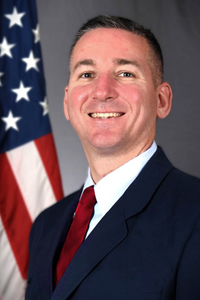
Photo of Ben Franklin
R Wisconsin House · District 88 On the 2026 ballot

Rep. Ben Franklin

Compare
Total votes
245
all sessions
Attendance
100%
of floor votes
Near the chamber average
With party
100%
of cast votes
Near the chamber average
Bipartisan score
0%
crosses aisle rarely
Near the chamber average
Sponsored
100
bills & resolutions
Near the chamber average
Committees
7
assignments
100 bills and resolutions

Sponsored bills

Total
100
Primary
100
Co-sponsor
0
This page
100
matching current filters
Primary AB 194
Signed into law · Wisconsin House · Lead sponsor
Relating to: modifications to housing programs under the Wisconsin Housing and Economic Development Authority. (FE)

Maddy summaryAB 194 modifies Wisconsin's housing programs under the Wisconsin Housing and Economic Development Authority. It redefines "developer" to include tribal housing authorities (Section 3) and clarifies "residential housing" to include tax-exempt reservation or trust lands (Section 4). The bill reduces maximum loan limits for housing projects from 33% to 20% of development costs (Section 10) and from 25% to 10% (Section 11). It also requires local governments to submit cost-reduction analyses showing how zoning or fee changes lowered housing costs (Section 7), directly affecting developers, tribal entities, and local governments administering housing programs.

Signed into law Apr 9, 2026 0 co-sponsors
Primary AB 373
Signed into law · Wisconsin House · Lead sponsor
Relating to: creating a refundable individual income tax credit for the parent of a stillbirth and making an appropriation. (FE)

Maddy summaryAB 373 creates a refundable $2,000 individual income tax credit for parents who experience a stillbirth in the state, as documented by a fetal death report. The credit is refundable, meaning parents who owe less in income tax than the credit amount will receive the difference as a cash payment from state funds. Eligibility requires the stillbirth to meet state reporting criteria (per §69.18), and rules specify $2,000 for joint filers per stillbirth or $1,000 each for unmarried parents or separate filers. The credit must be claimed within the standard tax filing deadline and cannot be used by nonresidents or for partial tax years.

Signed into law Apr 9, 2026 0 co-sponsors
Primary AB 219
Signed into law · Wisconsin House · Lead sponsor
Relating to: a tax credit for rail infrastructure modernization. (FE)

Maddy summaryAB 219 creates a 50% tax credit for eligible rail infrastructure spending in Wisconsin. It directly affects Class II/III railroads operating in the state and owners/lessees of rail sidings or industrial spurs, covering both new track construction (like spurs and sidings) and track maintenance (such as rail, ties, and safety systems). The credit applies to expenditures made after December 2024, with annual limits of $5,000 per mile of track owned and $2 million per project. Unused credits can be carried forward for up to five years, and credits may be transferred to other businesses subject to Wisconsin taxes.

Signed into law Apr 9, 2026 0 co-sponsors
Primary AB 131
Signed into law · Wisconsin House · Lead sponsor
Relating to: programs and requirements to address PFAS.

Maddy summaryAB 131 establishes a municipal grant program to test for PFAS (perfluoroalkyl and polyfluoroalkyl substances) in public water systems and fund source reduction measures. It allows water utilities to use customer service fees to cover up to half the cost of PFAS source reduction for connected customers, if cheaper than facility upgrades. The bill also creates eligibility rules for disadvantaged communities extending service due to PFAS contamination and directs PFAS contamination claims to an existing landowner grant program. These provisions directly affect municipal water systems, public utilities, and communities addressing PFAS in drinking water.

Signed into law Apr 6, 2026 0 co-sponsors
Primary AB 130
Signed into law · Wisconsin House · Lead sponsor
Relating to: exempting certain persons from PFAS enforcement actions under the spills law. (FE)

Maddy summaryAB 130 exempts specific groups from certain PFAS enforcement actions under Wisconsin's spills law if they allow the state to clean up contaminated land at no cost to them. It directly affects landowners, fire departments, airports, wastewater spreaders, and waste facilities that handled PFAS-contaminated materials legally. The bill creates exemptions for those who spread permitted biosolids, owned land where such spreading occurred, used PFAS in emergency response (per federal rules), accepted PFAS waste, or own property not responsible for the contamination origin. This applies only to enforcement sections related to PFAS contamination under the spills law, not all PFAS regulations.

Signed into law Apr 6, 2026 0 co-sponsors
Primary AB 217
Signed into law · Wisconsin House · Lead sponsor
Relating to: local government competitive bidding thresholds. (FE)

Maddy summaryAB 217 raises competitive bidding thresholds for local government contracts in the state. It increases the general public work bidding threshold from $25,000 to $50,000 and the notice threshold from $5,000 to $10,000. For highway contracts specifically, it sets a $25,000 bidding threshold and $5,000 notice threshold. The bill also requires these thresholds to automatically adjust every five years based on inflation, using the U.S. Consumer Price Index. This directly affects towns and local governments when contracting for public projects above these new dollar amounts.

Signed into law Apr 3, 2026 0 co-sponsors
Primary AB 530
Signed into law · Wisconsin House · Lead sponsor
Relating to: the operation of drones over school property and providing a penalty.

Maddy summaryAB 530 restricts drone operations over school properties, directly affecting anyone flying drones near public, private, or tribal schools. The bill prohibits drones over school grounds without authorization, except for specific law enforcement or emergency purposes like search/rescue, locating escaped prisoners, or preventing imminent danger. Violations carry a maximum $5,000 penalty, and evidence from drone recordings related to violations must be handled by law enforcement or correctional authorities. The law clarifies definitions for "school" and "public protective services agency" to ensure consistent application.

Signed into law Apr 3, 2026 0 co-sponsors
Primary AB 657
Signed into law · Wisconsin House · Lead sponsor
Relating to: a sales and use tax exemption for nuclear fusion technology projects. (FE)

Maddy summaryAB 657 exempts sales and use taxes for specific equipment and materials used exclusively in qualified nuclear fusion technology projects. It covers over 70 listed items, including plasma heating systems, superconductors, diagnostic tools, specialized materials like lithium and tungsten, and safety equipment. The exemption applies to businesses conducting fusion projects focused on energy generation, medical isotope production, research, or other fusion-related applications as defined in the bill. This policy directly reduces costs for companies developing nuclear fusion technology by eliminating taxes on qualifying purchases.

Signed into law Apr 2, 2026 0 co-sponsors
Primary AB 659
Signed into law · Wisconsin House · Lead sponsor
Relating to: tuition and fee remission or grants for certain veterans and their dependents enrolled in the University of Wisconsin System, a technical college, or a private nonprofit institution of higher education; and the University of Wisconsin System nonresident tuition exemption for certain veterans. (FE)

Maddy summaryAB 659 modifies Wisconsin's tuition benefit policies for veterans and their families. It reduces the required residency period from 5 to 3 consecutive years in the state before enrollment for veterans themselves and their dependents (spouses or children) to qualify for tuition exemptions or grants at University of Wisconsin System schools, technical colleges, or private nonprofit institutions. The bill applies to veterans who served honorably, died on duty or from service-connected disabilities, or have a 30% service-connected disability rating, and to dependents who meet the revised residency requirement. It does not change eligibility for veterans who were Wisconsin residents at the time of military entry. The policy change takes effect for the first semester or session beginning after the bill's effective date.

Signed into law Apr 2, 2026 0 co-sponsors
Primary AB 596
Signed into law · Wisconsin House · Lead sponsor
Relating to: a state matching grant program for recipients of federal per diem payments and making an appropriation. (FE)

Maddy summaryAB 596 creates a state matching grant program that allocates $950,000 to provide state funds matching federal per diem payments received by eligible non-state entities. It directly affects organizations or programs receiving federal per diem payments (such as those supporting veterans) by allowing them to access additional state funding. The bill establishes this program under the Veterans Affairs department budget, requiring the state to match federal payments without changing eligibility criteria or adding new requirements for recipients.

Signed into law Apr 2, 2026 0 co-sponsors
Showing 11 to 20 of 100 bills