

Maddy summaryAB 92 creates a Spinal Cord Injury Council in Wisconsin's Department of Health Services to oversee research funding. It allocates $2.5 million biennially for grants supporting research into new treatments for spinal cord injuries, including pharmaceutical, medical device, and rehabilitative approaches. The council - composed of researchers, patients, veterans, and family members - sets grant criteria, reviews applications, and recommends awardees. Grant recipients must present findings at department-hosted symposia (held no more than once every two years) and report annual results to the legislature. This directly affects Wisconsin-based researchers and medical institutions conducting spinal cord injury research.
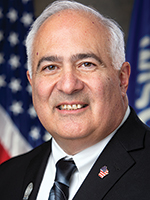
Rep. John Spiros
Sponsored bills
Maddy summaryAB 23 establishes a 22-member Palliative Care Council within the Department of Health Services to advise on palliative care policy. The council includes physicians, nurses, patient advocates, insurers, and legislators, with specific requirements for geographic and program-type representation (e.g., community-based vs. hospital-based care). It will evaluate palliative care programs, advise on reimbursement mechanisms, and report biennially to the legislature on access and impact. The bill explicitly excludes physician-assisted suicide and similar topics from the council’s advisory scope. This bill directly affects palliative care providers, patients, insurers, and state health agencies through structured policy guidance.
Maddy summaryAB 7 requires local governments (cities, villages, or towns) to approve large-scale wind and solar projects (15 megawatts or more) before the Public Service Commission can approve them. Developers must seek municipal approval, which must be granted or denied within 90 days (with possible 90-day extensions for specific reasons). If a municipality fails to act within the deadline, the project is automatically approved. This bill directly affects renewable energy developers and local governments, shifting approval authority to municipalities for qualifying projects.
Maddy summaryThis Wisconsin joint resolution (AJR 101) honors Charlie Kirk, founder of Turning Point USA and a prominent advocate for liberty, following his assassination. It recognizes his work promoting "faith, liberty, and truth," his role as a devoted family man, and his impact on inspiring young Americans. The resolution includes three key parts: honoring his life and legacy, commending his memory to future generations, and joining in prayer for his family and the nation. As a symbolic tribute with no policy changes or funding, it does not affect laws or individuals.
Maddy summaryAB 278 creates a grant program for law enforcement agencies to purchase data-sharing platforms that integrate real-time data from multiple systems, eliminate duplicate records, and provide secure, customizable search and analytics tools. The bill specifies that platforms must meet 11 detailed requirements, including secure access controls, compatibility with existing systems, compliance with data security standards, and retention of agency data ownership. The Department of Justice will award grants using up to $2 million annually from state funds to support this initiative. This bill directly affects local and state law enforcement agencies seeking to upgrade their data-sharing capabilities.
Maddy summaryAB 77 prohibits the use of devices designed to conceal, alter, or obstruct license plates on vehicles. It defines such devices as any manual, electronic, or mechanical tool that switches plates, moves them, or makes registration numbers unreadable. The bill bans possessing, selling, installing, or using these devices, and allows police to impound vehicles equipped with them (with costs paid by the owner). Violators face fines up to $1,000 or 90 days in jail. This directly affects vehicle owners who might use such devices to obscure license plates.
Maddy summaryAB 587 requires ticket sellers (including operators, resellers, and online platforms) to clearly display all fees during purchase and prohibits reselling tickets above face value without event operator approval. It applies to all commercial ticket resales, with small sellers earning under $10,000 annually exempt. Violations incur $1,000 fines per violation plus forfeiture of profits from illegal sales. The bill aims to increase transparency and prevent price gouging in entertainment ticket markets.
Maddy summaryAB 135 requires vehicle manufacturers to provide owners and repair shops with free, unrestricted access to vehicle data (like diagnostics) and critical repair information (tools, manuals, parts specs) needed to fix cars. It prohibits manufacturers from using technological barriers (like encrypted data) or legal barriers (such as forcing owners to use dealer-approved parts) to limit repair choices. The bill directly affects car owners, independent repair shops, and aftermarket parts companies by ensuring they can access necessary information without fees or manufacturer-imposed restrictions. Manufacturers must also stop mandating specific brands of parts or tools in repair guides, though they can still recommend options with clear disclaimers. This law aims to make vehicle repairs more accessible and affordable by removing artificial barriers.
Maddy summaryAB 627 modifies licensing fees for animal-related businesses in Wisconsin. It creates three new market license classes: Class A ($420 annual fee) for markets selling livestock and wild animals, Class B ($220) for livestock-only sales with limited auctions, and Class E ($280) for equine-only sales (no wild animals or non-equine livestock). The bill also establishes a $20 annual fee for each animal transport vehicle and clarifies a $150 reinspection fee for violations. These changes directly affect animal market operators, dealers, truckers, and transport vehicle owners by adjusting their required annual fees and reinspection costs.
Maddy summaryAB 10 creates a sales and use tax exemption for gun safes specifically designed to store firearms, excluding general gun storage items like locking cabinets or racks. This exemption applies to buyers purchasing qualifying safes, meaning they won’t pay state sales or use tax on these items. The bill amends tax statutes to explicitly list gun safes under exempt categories, ensuring retailers don’t need to collect tax for these purchases. It directly affects consumers and retailers selling purpose-built gun safes, with no impact on other firearm-related products or tax policies.