

Maddy summaryAB 156 requires public school districts in the 2026-27 school year to provide age-appropriate child sexual abuse prevention education to all students from 4-year-old kindergarten through 12th grade. The curriculum must include specific topics like correct body part names, setting personal boundaries, identifying safe adults, distinguishing safe/unsafe touch, and reporting abuse, using research-based methods. Schools must notify parents about the program schedule and content annually, and parents can opt their child out with a written request. This law directly affects all K-12 students and their families in public schools across the state.
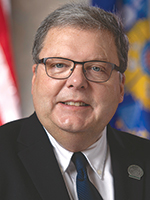
Rep. Pat Snyder
Sponsored bills
Maddy summaryAB 617 updates election procedures in key areas. It requires election officials to test voting machines 15 days before elections (up from 10 days) and publicly verify they reject invalid votes like excess ballots. The bill also creates new rules for handling voter ineligibility: if a court determines someone cannot vote, the election commission must update voter records within 3 business days and notify the voter and local clerk. These changes affect voters (particularly those with court-ordered voting restrictions), municipal clerks, and election officials managing ballot processing and machine testing. The bill passed the Assembly in November 2025 but awaits governor action.
Maddy summaryAB 416 provides Domtar Paper Company, LLC, with a one-time $42 million grant to modernize a dam on the Wisconsin River near its Rothschild mill. The bill requires Domtar to begin the project by December 31, 2026, and repay the full grant if they miss this deadline, sell the Rothschild or Nekoosa mill before completion, or exceed two-thirds of the project cost from all funding sources. Domtar must also invest $100 million in north central Wisconsin manufacturing facilities by 2029 and source all roundwood/wood chips from Wisconsin producers during the project. Failure to meet these conditions triggers repayment of the grant amount.
Maddy summaryAB 193 ratifies Wisconsin's participation in the Respiratory Care Interstate Compact, an agreement allowing respiratory care practitioners licensed in one participating state to practice in Wisconsin without obtaining a new license. This bill amends Wisconsin statutes to recognize "respiratory care compact privileges," enabling out-of-state practitioners to work across state lines under the compact's terms. It affects respiratory care practitioners seeking to work in Wisconsin from other compact states, streamlining licensure for those already certified elsewhere. The bill does not create new practice standards but facilitates cross-state practice through existing interstate agreement terms.
Maddy summaryAB 573 clarifies which costs related to sexual assault forensic examinations are covered under compensation programs for victims. It specifically defines "examination costs" to include evidence-gathering procedures, STI testing/prevention, HIV prophylaxis (medication to prevent HIV exposure), and STI treatment medications provided during the exam. The bill explicitly excludes administrative fees, attorney costs, and other non-medical expenses from coverage. Additionally, it requires applicants to submit only medical records directly related to the covered services, such as examinations, treatments, or preventive medications, and prohibits submitting unrelated documentation. This bill adjusts eligibility criteria for compensation without creating new benefits or funding.
Maddy summaryAB 635 requires the state environmental department to notify county health departments, tribal health departments, and county land conservation departments within 7 business days whenever groundwater protection standards or PFAS standards are exceeded. The bill creates a formal notification system to alert affected local governments and adjacent counties that might face negative impacts, with notices available for public review under state law. This law directly affects local health and land management agencies in counties where water contamination breaches are confirmed, ensuring timely public awareness of groundwater safety issues.
Maddy summaryAB 347 addresses fees charged for specific coroner or medical examiner services, though the provided context does not specify the exact fee changes, affected services, or direct beneficiaries. The bill's title indicates it targets fiscal aspects of these services, but no details about its provisions, mechanisms, or policy changes are included in the available information. Recent actions show it advanced through committee amendments and was scheduled for a vote in November 2025, but it was later "laid on the table" without further progress. Without substantive content on the bill's provisions, a detailed summary of its policy impact cannot be provided. The context lacks sufficient detail to describe who it affects or how it would change current fee structures.
Maddy summaryAB 97 extends health coverage under Wisconsin's Medicaid program (Medical Assistance) for postpartum women from 60 days to 365 days after pregnancy, directly affecting pregnant and postpartum women who qualify for the program. The bill changes eligibility rules to ensure coverage continues without regard to income changes during this extended period. It also adds a provision allowing women with family incomes above 300% of the poverty line to qualify if their income is spent on medical care or health insurance premiums. This policy update aims to provide longer-term health coverage for new mothers during a critical postpartum period.
Maddy summaryAB 547 establishes a new Office of Medical Cannabis Regulation within Wisconsin's Department of Health Services to oversee medical cannabis programs. It defines "medical cannabis product" consistently across state laws and adds protections preventing courts from denying child custody based solely on lawful medical cannabis use or registry enrollment. The bill also updates local ordinances to clarify restrictions on marijuana possession, ensuring penalties don't apply to medical cannabis users under specific circumstances. These changes aim to create a clearer regulatory framework while addressing legal inconsistencies in existing statutes.
Maddy summaryAB 598 allows patient representatives to consent to health care facility admissions for incapacitated individuals without requiring a court-appointed guardian or protective placement petition. The bill creates a defined "patient representative" role, requiring two medical professionals (e.g., two physicians or one physician plus an advanced practice clinician) to certify incapacity based on medical need - not age, disability, or eccentricity. Patient representatives gain authority to make health care decisions, enroll individuals in Medical Assistance, and authorize health care expenses similar to a guardian, but only for non-developmental disability and non-mental illness cases. This change streamlines admissions for incapacitated patients while mandating 72-hour notifications to county agencies about the certification.