

Maddy summaryAB 677 creates a new criminal offense for "grooming a child for sexual activity," defined as manipulating a child to facilitate sexual abuse. This law directly affects individuals convicted of such grooming behavior, adding it as a punishable offense under Wisconsin statutes like 948.02 (sexual exploitation of a child) and 948.072 (grooming). Key provisions amend multiple laws to include grooming as a disqualifying factor for home placements, licensing for childcare, and reporting requirements, while defining it as a "serious crime" for entities serving minors. The bill does not change existing penalties for actual sexual abuse but establishes grooming itself as a distinct criminal violation with specific legal consequences.
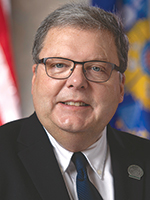
Rep. Pat Snyder
Sponsored bills
Maddy summaryAJR 95 designates October as Domestic Violence Awareness Month in Wisconsin. This symbolic resolution does not create new laws or funding but formally recognizes the importance of addressing domestic violence. It aims to honor survivors, remember those lost to domestic violence, and acknowledge the work of advocates and service providers across the state. The bill passed unanimously and is now official, aligning Wisconsin with national observances to promote awareness.
Maddy summaryAJR 91 is a ceremonial joint resolution recognizing the U.S. Navy's 250th birthday on October 13, 2025, marking the anniversary of the Continental Congress vote to establish the Navy on October 13, 1775. It expresses the Wisconsin Legislature's appreciation for the Navy's historical service and its legacy of defending U.S. freedoms, values, and interests over 250 years. The resolution has no binding effect or policy changes; it solely serves to honor the Navy's history and its connections to Wisconsin through shipbuilding, named vessels, and military contributions.
Maddy summaryAJR 92 is a ceremonial resolution recognizing the U.S. Marine Corps' 250th birthday on November 10, 2025. It formally celebrates the Marine Corps' history, beginning with its founding by the Continental Congress on November 10, 1775, and acknowledges its ongoing service, including active-duty personnel and training at Fort McCoy in Wisconsin. The resolution contains no new policies, funding, or legal requirements - it solely expresses the Wisconsin Legislature's symbolic appreciation for the Marine Corps' 250 years of service. As a procedural resolution, it does not directly affect any individuals or change existing laws.
Maddy summaryAB 388 creates a one-time grant program to fund Rogers Behavioral Health for constructing an integrated mental health facility in Wisconsin's Chippewa Valley region. The facility will provide inpatient, residential, partial hospitalization, intensive outpatient, and outpatient services for adolescents and adults. To receive the grant, Rogers must submit detailed certification plans for each service type (e.g., inpatient, residential) and report annually on facility operations and Medical Assistance patient access. The bill establishes specific requirements for facility certification under state health codes and mandates annual reporting to the Department of Health Services.
Maddy summaryAB 265 strengthens Wisconsin's penalties for human trafficking by requiring minimum prison terms: 15 years for child trafficking and 10 years for general human trafficking convictions. It creates new felony charges for individuals who profit from trafficking (Class D C felony) or receive compensation from commercial sex acts or debt bondage (Class F E felony). The bill directly affects convicted traffickers, their financial beneficiaries, and those who facilitate trafficking through recruitment or harboring of children for commercial sex. These sentencing changes apply to offenses committed after the bill's effective date.
Maddy summaryAB 201 modifies Wisconsin law to require sex offender registration for individuals convicted of sexual extortion or certain related offenses. It directs courts to mandate registration under Wisconsin Statute 301.45 if the underlying conduct was "sexually motivated" (as defined in Statute 980.01(5)), including violations of statutes related to sexual extortion (e.g., 942.09, 942.095). The bill affects offenders convicted of sexual extortion or sexually motivated crimes under Chapters 940, 942, 943, 944, or 948. Courts may later release individuals from registration if they meet conditions set by the court. This is a policy change to expand registration requirements for specific sexual offenses, not a new criminal penalty.
Maddy summaryThis symbolic resolution designates May 2025 and May 2026 as Mental Health Awareness Months in Wisconsin. It recognizes the importance of mental well-being and aims to raise public awareness about mental health challenges across all age groups and communities. The resolution does not create new policies or funding but serves as a formal acknowledgment by the legislature to support ongoing efforts addressing mental health needs.
Maddy summaryAJR 50 is a ceremonial resolution recognizing the U.S. Army's 250th anniversary on June 14, 2025. It formally celebrates the Army's history of service and sacrifice since its founding in 1775, highlighting its role in defending the nation. The resolution specifically acknowledges Wisconsin's connection to the Army, including over 10,000 soldiers and civilians stationed in the state and Fort McCoy's economic impact. As a symbolic gesture with no policy changes, it does not affect any laws or groups beyond expressing legislative appreciation.
Maddy summaryAJR 48 is a ceremonial resolution designating May 14 annually as Hmong-Lao Veterans Day in Wisconsin. It honors Hmong-Lao veterans who served alongside U.S. forces during the Vietnam War, particularly those recruited by the CIA and U.S. military, and recognizes their post-war displacement and resettlement in Wisconsin. The resolution builds on 2021 Wisconsin Act 31, which already established May 14 as a day to thank these veterans, and encourages schools to include their service in Vietnam War education. As a commemorative resolution, it has no binding policy changes and serves solely to recognize their contributions.