

Maddy summaryAB 250 allocates $9 million annually from the Veterans Affairs budget to fund war memorials in populous counties. Memorial boards must provide a full matching contribution to request funds, which can cover operations, maintenance, construction, or facility improvements. Boards must report annually to the legislature on fund usage and remaining balances. The bill creates a formal process for memorial boards to access state funding while requiring transparency in how funds are spent.
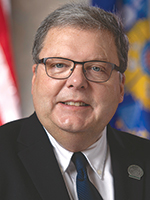
Rep. Pat Snyder
Sponsored bills
Maddy summaryAJR 38 is a ceremonial resolution that proclaims 2025 as the "Year of the Snake" in Wisconsin. It recognizes the cultural significance of the Lunar New Year and the snake symbol in Asian traditions, specifically honoring Asian American communities across the state. The resolution does not create new laws or policies; it is a symbolic gesture to celebrate cultural diversity and community connections. It directly acknowledges Wisconsin's Asian American populations, including long-time residents and recent immigrants, without imposing any requirements or changes.
Maddy summaryAB 161 prohibits state agencies and local governments from restricting the sale, use, or purchase of motor vehicles or other devices based on their energy source (e.g., electric, gasoline, hydrogen). It specifically allows governments to set their own purchasing policies for their own fleets but bans restrictions on consumer or commercial use. The bill directly affects state/local governments, businesses selling vehicles/devices, and residents using such products. It creates a clear rule that energy source cannot be a factor in regulatory decisions.
Maddy summaryAB 23 establishes a 22-member Palliative Care Council within the Department of Health Services to advise on palliative care policy. The council includes physicians, nurses, patient advocates, insurers, and legislators, with specific requirements for geographic and program-type representation (e.g., community-based vs. hospital-based care). It will evaluate palliative care programs, advise on reimbursement mechanisms, and report biennially to the legislature on access and impact. The bill explicitly excludes physician-assisted suicide and similar topics from the council’s advisory scope. This bill directly affects palliative care providers, patients, insurers, and state health agencies through structured policy guidance.
Maddy summaryAB 412 would require certain professionals, such as teachers and healthcare workers, to directly report suspected child abuse cases to law enforcement instead of child protective services. This changes the current reporting process by mandating immediate referrals to police for safety concerns. The bill applies to individuals already designated as mandated reporters under existing law. It was introduced in August 2025 and referred to the Criminal Justice Committee for review.
Maddy summaryAB 37 eliminates fees for Gold Star families who maintain or reissue special license plates displaying the Gold Star family symbol. It specifically removes the $15 annual or $30 biennial maintenance fees and $15 annual or $30 reissuance fees that would otherwise apply to these plates. The bill directly affects families of military members who died in service, ensuring they pay no additional costs for these plates beyond the initial application. This policy change modifies existing fee structures under Wisconsin statute 341.145(3) to provide fee-free plate maintenance and reissuance for this designated group.
Maddy summaryAB 183 creates new standard tax classification codes (7213 for "Linen supply" and 7218 for "Industrial launderers") to clarify which businesses qualify for manufacturing and agriculture tax credits. It specifically adds qualifying laundry services to these tax credits, including uniforms, linens, workwear, and cleaning supplies sold to commercial, industrial, or government clients. The changes apply to property tax exemptions starting January 1, 2025, and tax credit claims for taxable years beginning January 1, 2025. This bill directly affects industrial laundry businesses that provide these services to commercial or government entities.
Maddy summaryAB 256 designates April 24 as Armenian Genocide Awareness Day in Wisconsin public schools, to be observed annually as part of Genocide Awareness Month. The bill requires schools to recognize this day on their calendars but does not mandate specific curriculum or activities. It directly affects all public K-12 schools in Wisconsin, beginning with the school year after the law takes effect. The legislation creates a new statutory provision (118.02 (7d)) to formalize this observance without altering existing educational requirements.
Maddy summaryAJR 94 is a symbolic resolution that would officially recognize January as "Human Trafficking Awareness and Prevention Month" across Wisconsin. It directly affects all Wisconsin residents by designating a specific month for statewide awareness efforts focused on human trafficking. The resolution has no binding legal requirements but serves as a formal declaration to encourage educational events, community outreach, and resource sharing related to human trafficking prevention during January. It does not create new laws or allocate funding.
Maddy summaryAB 463 would change the rules for people with four or more convictions for driving under the influence (DWI). If passed, it would permanently revoke driving privileges for these individuals instead of allowing a temporary work-related license after 180 days (previously available after 45 days for three convictions). The bill amends statutes to remove eligibility for occupational licenses after 180 days of revocation for those with four or more DWI convictions, while requiring ignition interlock devices for any licensed driving. This applies specifically to individuals with multiple DWI convictions, not to first-time offenders or other traffic violations.