

Maddy summaryThis Wisconsin bill proposes to lower individual income tax rates for residents in the third tax bracket while simultaneously expanding the retirement income subtraction available to retirees. The legislation would allow more retirees to exclude a larger portion of their pension and retirement account withdrawals from state taxable income, with specific provisions added for those who are permanently and totally disabled. Although the bill passed the legislature, it was vetoed by the Governor and ultimately failed to become law.
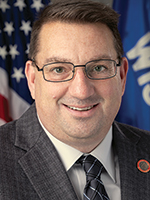
Rep. Dave Maxey
Sponsored bills
Maddy summaryThis Wisconsin bill prohibits health care providers from performing gender-affirming surgeries, administering puberty-blocking drugs, or prescribing high-dose hormones to minors under 18. The law specifically bans procedures intended to change a minor's body to match a sex different from their biological sex, with exceptions only for treating medically verifiable genetic disorders or life-threatening conditions. If a provider violates these rules, the state medical board must investigate and can revoke their license without the possibility of reinstatement. Additionally, the bill prevents courts from issuing injunctions to stop the enforcement of these medical restrictions.
Maddy summaryThis bill prohibits state agencies and local governments in Wisconsin from restricting the sale or use of any device based on the energy source it uses, such as electricity or fossil fuels. The law defines a device as powered by an energy source if that source is necessary for any significant function of the device. Although the bill was passed by the legislature, it was vetoed by the Governor and ultimately failed to become law.
Maddy summaryThis Wisconsin bill updates election procedures to address absentee ballot handling and fraud prevention. It requires absentee ballot certificates to include specific elector information and mandates that ballots be placed in unsealed envelopes with the clerk's details printed on them. The legislation also allows employees of residential care facilities to serve as personal care voting assistants during public health emergencies. Additionally, it clarifies rules for appointing election officials and establishes penalties for election fraud.
Maddy summaryThis Wisconsin bill expands the state tax deduction for retirement income, allowing more people to exclude certain pension and savings withdrawals from their taxable income. It specifically increases the annual deduction limit and adds new categories of eligible payments, including those from the U.S. Coast Guard, the National Oceanic and Atmospheric Administration, and the Public Health Service. The legislation also clarifies the definition of disability for individuals under 65 who receive disability payments from non-retirement plans. Although the bill passed the legislature, the Governor vetoed it, and the state legislature did not override that veto, meaning the proposed changes did not become law.
Maddy summaryThis bill, which did not become law, would have prohibited state and local governments in Wisconsin from restricting the use or sale of motor vehicles based on their power source, such as whether they run on electricity or gasoline. The legislation aimed to prevent officials from banning electric vehicles or favoring specific fuel types in public policies, though it allowed agencies to set their own rules for purchasing vehicles for official government use. By defining "motor vehicle" broadly, the bill sought to ensure that no governmental entity could discriminate against vehicles powered by different energy sources in general regulations.
Maddy summaryThis bill establishes specific rights for parents and guardians regarding their children's upbringing, education, and healthcare, while creating a legal cause of action for violations of these rights. It requires schools to notify parents about controversial subjects taught in classrooms, such as gender identity or systemic racism, and grants parents the ability to opt their children out of related classes based on religious or personal convictions. Additionally, the legislation mandates that parents be informed about disciplinary actions, medical records, and school security systems, and it allows them to file complaints with school boards or sue for up to $10,000 if they believe their rights have been infringed. The law explicitly states that these provisions do not override existing court orders or authorize parents to neglect or abuse their children.
Maddy summaryThis Wisconsin bill proposes expanding the state's individual income tax brackets to apply to higher income levels. It would create two new tax tiers for single filers, heads of households, and married couples, taxing income between $14,320 and $112,500 at 4.40 percent and income above $315,310 at 7.65 percent. The legislation also includes provisions to adjust these tax brackets annually based on changes in the consumer price index to account for inflation. Although the bill passed the legislature, the Governor vetoed it, and the measure failed to override that veto.
Maddy summaryThis bill would update Wisconsin's voter registration rules to ensure that people living in certain residential care facilities and retirement homes can request absentee ballots. It also establishes a process for the state election commission to automatically restore voting rights for individuals whose previous court rulings declared them ineligible to vote, provided a later court review overturns that decision. Under the proposed changes, the commission must notify affected voters of their eligibility within three business days and provide them with the necessary forms to re-register if needed. The legislation aims to streamline administrative procedures and correct past determinations without requiring voters to navigate complex legal hurdles to regain their right to vote.
Maddy summaryThis bill prohibits cities, villages, towns, and counties in Wisconsin from using their own funds to pay individuals under guaranteed income programs. It defines these programs as those providing regular, unearned cash payments that recipients can use for any purpose, while explicitly excluding initiatives that require work or training. The law restricts the use of local tax revenues, shared state funds, and fees for these payments, effectively banning municipal funding for such initiatives.