

Maddy summaryThis bill aims to protect health insurance enrollees from unexpected medical bills by establishing rules for how insurance plans must handle emergency care and services provided by out-of-network providers. It requires insurance plans to cover emergency medical services without requiring prior authorization and ensures that cost-sharing amounts for out-of-network emergency care are no higher than what would apply for in-network care. Additionally, the bill mandates that plans pay out-of-network providers directly for emergency services and certain non-emergency services provided at in-network facilities, preventing patients from being billed for the difference between the out-of-network rate and the recognized amount. These provisions apply to defined network plans, preferred provider plans, and self-insured governmental plans that have networks of participating providers.
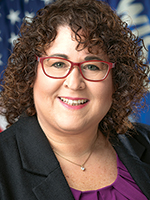
Rep. Lisa Subeck
Sponsored bills
Maddy summaryThis bill prohibits cosmetic manufacturers from conducting or contracting for animal testing on cosmetics within the state after December 31, 2026, and restricts the sale of products developed using such testing after July 1, 2027. It applies to any person whose name appears on a cosmetic label and bans the import or sale of cosmetics or ingredients known to have been tested on live nonhuman vertebrates after the specified date. Exceptions allow testing required by federal or state regulatory agencies under specific conditions, including when no alternative testing methods exist, or for compliance with foreign jurisdiction requirements where test results are not used to substantiate product safety in the state. Violations of the prohibition carry a penalty of $5,000 for each offense plus an additional $1,000 for each day the violation continues.
Maddy summaryThis bill establishes a tuition loan program for Wisconsin residents enrolled in higher education who commit to working full-time in teaching, firefighting, or law enforcement for at least 10 years after completing their training. The program provides loans covering total tuition costs for up to four years of undergraduate study at University of Wisconsin System institutions or two years at technical colleges, with funds allocated equally among the three career fields. Eligible students must maintain satisfactory academic progress, apply annually, and repay loans at a 5 percent annual interest rate, though repayment is deferred while they work in their chosen profession and 50 to 100 percent of the loan is forgiven if they remain in the state and profession for seven or ten years respectively. The bill also grants the Higher Educational Aids Board authority to create rules for administering the program and includes a $1.5 million appropriation for the 2025-26 and 2026-27 fiscal years.
Maddy summaryThis bill requires unregulated pregnancy centers to obtain written authorization from individuals before disclosing their personal health information, with specific requirements for what the authorization must include and how long it remains valid. The law defines unregulated pregnancy centers as facilities that do not provide abortions or emergency contraception and are not covered by existing medical privacy laws, while also establishing rules for when information can be shared without consent, such as for legal compliance or law enforcement cooperation. Centers must notify individuals if their health data is breached and face penalties for violating these privacy protections, while also being prohibited from discriminating against people who refuse to authorize information sharing. The bill creates a new section in the state statutes to establish these requirements and specifies that the law takes effect three months after publication.
Maddy summaryAB 953 requires retail firearm sellers to provide a clear written warning about child safety risks and a secure storage option during each sale. The warning, in block letters at least one-fourth inch tall, states that leaving a loaded firearm accessible to a child may result in fines or jail time if the child discharges it. Sellers must also provide either a lockable container designed for firearms or a trigger lock. Violating these requirements carries a penalty of up to $500 or 30 days in jail.
Maddy summaryAB 954 requires firearm owners to report lost or stolen weapons to local law enforcement within 24 hours, and to report recovery as soon as possible. Law enforcement agencies must forward these reports to a state database for tracking stolen firearms, which will be shared with other agencies. Owners who fail to report lost/stolen firearms face fines or jail time (Class A misdemeanor for first offense, Class I felony for repeat violations), and false reports are punishable under existing law. The bill also mandates sellers provide written notice of these reporting requirements to buyers at the time of sale.
Maddy summaryAB 446 requires all state agencies and local governments (including cities, counties, and school districts) to use the International Holocaust Remembrance Alliance's 2016 definition of antisemitism when evaluating evidence in discrimination cases based on race, religion, color, or national origin. This applies to both civil policies prohibiting discrimination and criminal cases where bias against a victim's identity is a factor for enhanced penalties. The bill explicitly states it does not affect First Amendment rights or conflict with existing federal or state antidiscrimination laws.
Maddy summaryThis bill creates a new state tax credit to help Wisconsin residents pay for health insurance premiums. It allows individuals who purchase qualified health plans to claim a credit on their state income tax return for the amount they would have received under federal premium assistance rules between 2021 and 2025. The credit is available only to full-year state residents who file their own tax returns and cannot be claimed if the taxpayer already qualifies for similar federal assistance. The legislation also authorizes state funds to pay any portion of the credit that exceeds the taxpayer's state tax liability.
Maddy summaryThis bill establishes a 20 percent procurement goal requiring state agencies and local governments in Wisconsin to purchase at least 20 percent of their products and services from businesses with a principal place of business located in the state. It creates a preference for local products and American-made materials in state purchasing specifications and mandates that agencies track and publicly report their progress toward meeting this goal. The legislation includes exemptions for items purchased for commercial resale, stationery and printing materials, and situations where foreign vendors face discrimination in their home countries. Local governments may opt out of the reporting requirements through a formal ordinance or resolution.
Maddy summaryThis bill requires health insurance plans and self-insured state and local health plans to cover vaccines for children from birth to age six that are recommended by the Centers for Disease Control and Prevention. If the CDC withdraws a vaccine recommendation, the bill mandates that these plans continue to cover the vaccine based on recommendations from the American Academy of Pediatrics or the American Academy of Family Physicians. The legislation also directs the state immunization program to consider recommendations from these medical organizations when deciding which diseases to target for elimination. Additionally, the bill requires healthcare providers to maintain records of vaccine administration, including the manufacturer, lot number, and administering provider information.