

Maddy summaryAB 719 replaces Wisconsin's existing "expenditure restraint incentive program" with a new "municipality payment program" that guarantees annual payments to eligible municipalities. The bill directly affects municipalities that received payments under the old program in 2024, 2025, or 2026, ensuring they receive each year a payment equal to their highest historical amount from those three years. Key provisions include creating a new payment account in the local government fund, setting payment schedules for July and November, and phasing out the old program after 2026 (effective July 2027). This change provides long-term budget certainty for municipalities while modifying the state's funding mechanism.
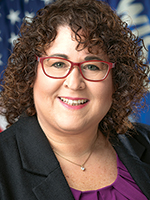
Rep. Lisa Subeck
Sponsored bills
Maddy summaryAB 735 creates a centralized online clearinghouse for Wisconsin small businesses, requiring the state Department to compile and publish key information on a single website. The clearinghouse will include details on government contract bidding opportunities, economic development programs, business training/events, licensing/permit requirements, and tax/fee obligations from state and local agencies. This bill directly affects Wisconsin small businesses by making it easier to access government resources and compliance information in one place. The clearinghouse will be coordinated with agencies like the Wisconsin Economic Development Corporation and the Department of Revenue.
Maddy summaryAB 809 prohibits state and local government funding for investigations into pregnancy outcomes (like miscarriage or stillbirth) when treating the person as a crime suspect. It bans law enforcement from investigating individuals as suspects solely due to their own pregnancy outcomes, requiring consent before investigating cases involving others' pregnancy outcomes. The bill exempts women from civil or criminal liability for pregnancy outcomes (including miscarriage, abortion, or stillbirth) and amends statutes to clarify that abortion-related legal protections apply. It directly affects women experiencing pregnancy outcomes, law enforcement agencies, and health services (with limited exceptions for health investigations). The bill creates new legal protections by restricting investigations and eliminating liability for pregnancy-related events.
Maddy summaryAB 811 creates a $25 million annual grant program for businesses opening new locations or expanding into vacant commercial spaces, administered by the Wisconsin Economic Development Corporation (WEDC). It directly affects eligible businesses in commercial districts, continuing a similar program from June 2023 while explicitly excluding nonprofit organizations from receiving grants. The bill allocates $25 million for the 2025-26 and 2026-27 fiscal years to fund these "Main Street Bounceback Grants" through WEDC's existing grant framework. Key provisions require WEDC to follow eligibility rules nearly identical to the prior "Wisconsin Tomorrow" program, focusing on revitalizing underutilized commercial properties.
Maddy summaryAJR 125 is a symbolic legislative resolution congratulating the Grafton Black Hawks high school football team for winning the 2025 Wisconsin State Football Championship. It specifically recognizes their perfect 14-0 season record, championship victory at Camp Randall Stadium, and individual honors for players and coaches. The resolution does not create new laws or policies but formally expresses the Wisconsin Legislature's support for the team's achievement. It directly affects the Grafton community and the team members by acknowledging their athletic success.
Maddy summaryAB 798 requires the Department of Transportation (DMV) to ask applicants for driver's licenses or ID cards whether they want to provide contact information for up to three primary caregivers during the application process. If provided, the DMV stores this information securely in the applicant's file. Law enforcement agencies can electronically request and access this caregiver information (along with emergency contacts from another law section) during emergencies, but the DMV cannot share it with anyone else. The bill aims to improve emergency contact access while maintaining privacy protections for applicants.
Maddy summaryAB 797 creates a $2.5 million grant program to help counties, cities, and towns test privately owned wells for water quality and map well locations. It provides up to $10,000 per grant for well testing, groundwater assessment, and geologic studies, plus separate grants for county health departments to offer well-testing education. The bill also requires municipalities with private wells to inform residents about testing importance and exempts the department from standard emergency rule procedures for implementing this program. The law appropriates funds for fiscal years 2025-26 and 2026-27 to support these concrete actions.
Maddy summaryAB 804 establishes two new grant programs: a $200,000 annual "Farm to Fork" grant for non-school entities (like businesses, hospitals, or universities with cafeterias) to connect local farms with food service operations, and a $250,000 annual "Farm to School" grant for school districts to expand local food sourcing. The bill prioritizes innovative proposals, high-need schools (where many students qualify for free/reduced meals), and projects supporting value-added agricultural products. It requires the Agriculture Department to administer the grants, provide annual legislative reports, and create rules for implementation. The legislation also adds one dedicated staff position to manage the Farm to Fork program.
Maddy summaryAB 791 makes it illegal to intentionally send false text messages to 911 reporting a non-existent emergency. It directly affects individuals who send such deceptive messages, imposing fines ($100-$600) or up to 90 days in jail for a first offense. For repeat offenses within four years, the penalty escalates to a Class H felony charge. The bill targets misuse of emergency services by adding specific penalties for text-based false reports, which previously lacked clear legal consequences. This law aims to deter non-emergency text spam that wastes critical resources.
Maddy summaryAB 800 standardizes procedures for handling absentee ballots in Wisconsin municipalities. It requires absentee ballots to be delivered to election inspectors or the municipal board of absentee ballot canvassers by 8 p.m. on election day, clarifying that in some communities, ballots must be canvassed by a designated board rather than at polling places. The bill also specifies that municipal clerks must securely handle ballots in carrier envelopes and ensures military and overseas voters can submit applications up to election day. These changes directly affect municipal clerks and election officials managing absentee voting processes.