

Maddy summaryAB 783 repeals statute 66.0419, which previously governed local regulations on certain containers. This bill removes an existing legal provision but does not create new regulations or directly affect residents, businesses, or local governments. It is a procedural repeal with no new policy changes or implementation mechanisms.
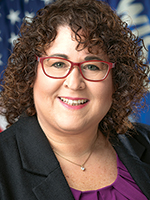
Rep. Lisa Subeck
Sponsored bills
Maddy summaryAB 720 requires health insurance plans - including defined network plans, preferred provider plans, and government self-insured plans - to cover emergency ambulance services provided by non-participating ambulance providers. It mandates payment at the lowest of three rates: a mutually agreed rate, a local governmental rate, or 350% of the Medicare rate for the same area. Plans must pay ambulance providers directly within 30 days for clean claims, cannot impose additional costs on enrollees beyond standard cost-sharing, and must provide clear explanations for denied claims. The bill excludes air ambulance services and applies to all health insurance plans covering emergency medical services.
Maddy summaryAB 710 expands Wisconsin's child care subsidy program (Wisconsin Shares) to include tribal-regulated child care providers operating under tribal authority in Indian country. It creates a new eligibility category for providers who meet federal child care standards, have a tribal regulatory attestation, and have an agreement with the state. This change allows families to choose these tribal providers when accessing state-funded child care assistance, directly affecting tribal child care programs and families seeking subsidized care. The bill modifies existing statutes to ensure these providers can receive state payments under the same terms as other licensed providers.
Maddy summaryAB 773 requires correctional facilities to provide specific care for incarcerated pregnant and postpartum individuals (within 6 weeks of birth). It prohibits unnecessary restraints on these individuals except in extreme safety circumstances, mandating written documentation and staff training. Facilities must offer pregnancy testing, STI/HIV screening, continuing medication, doula/lactation support (if available at no cost), mental health assessments, and breastfeeding supplies. The bill directly affects all pregnant or postpartum people held in state prisons or jails, ensuring access to healthcare and support services during incarceration.
Maddy summaryAB 708 extends the lifespan of tax incremental districts (TIDs) used for housing improvements by up to three years after a city pays off project costs. It directly affects cities that have established TIDs for housing development, allowing them to continue using tax increment financing beyond the district's original expiration. The bill requires cities to submit extension resolutions to the Department of Revenue and obtain joint review board approval for extensions longer than one year. This change aims to provide more flexibility for cities to complete housing projects without losing access to dedicated funding streams.
Maddy summaryAB 749 requires all public high schools to include instruction about organ and blood donation in at least one grade between 9 and 12. The law mandates that this instruction cover the purpose of donations, the statewide and nationwide need for them, and how students can participate. This applies to all high school curricula starting with the 2026-27 school year. The bill directly affects high school students and school districts by adding this specific health education requirement to their curriculum.
Maddy summaryAB 711 increases funding for the Family Foundations home visitation program by $1.2 million in fiscal year 2026-27. This appropriation directly supports the Department of Children and Families' program under section 48.983, which provides home visits to families with young children. The bill modifies the existing budget allocation without changing program eligibility or requirements. It was introduced in December 2025 with multiple co-authors and is currently under review by the Committee on State Affairs.
Maddy summaryAB 760 raises the monetary threshold for certain small claims court cases from $5,000 to $10,000. It directly affects individuals filing third-party complaints, personal injury claims, or tort actions with claims of $10,000 or less. The bill changes the statute to allow these specific claim types to be handled in small claims court instead of regular civil court when the amount sought is $10,000 or less. This policy change simplifies access to a faster, less formal court process for qualifying cases.
Maddy summaryAB 721 creates a new income tax credit for beginning farmers and owners of farm assets in Wisconsin. Beginning farmers who lease or purchase agricultural assets (like land, equipment, or livestock) and asset owners who lease those assets to them can claim a credit equal to 5% of the lease or sales price paid each year. The credit is capped at $75,000 annually and only applies to the first three years of a lease. To qualify, claimants must provide eligibility certification and meet residency requirements, with partnerships and LLCs passing credit amounts to individual members.
Maddy summaryAB 706 modifies Wisconsin's tax increment district (TID) rules by reducing the local tax base limit from 18% to 12% of a city's total taxable value for certain districts. It restricts residential use in mixed-use TID projects to 35% of the district area and expands allowable TID spending to include park development costs. These changes directly affect cities and towns operating TIDs by altering how they calculate tax base limits and fund eligible projects. The bill aims to clarify TID management while controlling tax impacts on non-district areas.