

Maddy summaryThis bill expands eligibility for Wisconsin's child care subsidy program (Wisconsin Shares) by allowing families with incomes above 200% of the federal poverty line but below 100% of the state median income to continue receiving subsidies. It creates a new eligibility pathway (20.437 (2) (ct)) to cover families previously disqualified due to income thresholds and adjusts copayment rules for those exceeding income limits. The policy directly affects low-income working families who lost subsidies due to modest income increases but remain below the new 100% state median income cutoff. A $1.25 million appropriation for fiscal year 2026-27 funds this expansion.
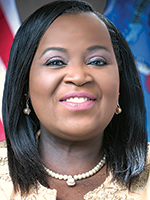
Rep. Shelia Stubbs
Sponsored bills
Maddy summaryAB 1016 allocates $2,166,600 annually for two fiscal years (2025-26 and 2026-27) to fund workforce training for child care providers and prospective providers. The bill creates a new funding line (20.437(2)(d)) under the Department of Children and Families, directing these funds toward contracts focused specifically on training child care staff. It directly affects licensed child care providers and those seeking to enter the field by providing financial support for their professional development. The bill establishes a dedicated funding stream but does not change eligibility rules or create new regulatory requirements.
Maddy summaryAB 1017 creates a new child care subsidy program specifically for custodial parents who work as employees in child care facilities. It allows these parents to qualify for subsidies under revised eligibility rules, bypassing standard income and asset requirements that typically apply to other subsidy recipients. The bill appropriates $1.2 million in fiscal year 2025-26 for administrative costs related to this new program. This directly affects parents employed by child care providers who have primary custody of children under 13 (or 19 if disabled) and meet the new eligibility criteria.
Maddy summaryAB 1009 creates a framework for local governments to establish "tourism promotion improvement districts" to fund tourism marketing and infrastructure. It directly affects hotels and motels within designated districts, requiring at least 50% of room owners to petition for creation and approve an operating plan detailing improvements, activities, and financing. Key provisions include setting a 5-year maximum assessment period (10 years for renewals), capping fees for payment processing at 5%, and mandating public hearings before district approval. The bill enables districts to fund tourism promotions and infrastructure (like visitor centers) through business assessments, with all details of costs and benefits outlined in the approved operating plan.
Maddy summaryAB 1020 designates specific highway segments in Wisconsin as "Memorial Highways" honoring eight fallen state troopers, naming each route after a trooper (e.g., STH 23 near Green Lake for Trooper Donald C. Pederson). The bill requires the state transportation department to install commemorative signs on these routes only if sufficient private contributions cover all costs - no state funds may be used. This is a purely commemorative measure with no policy changes to transportation or law enforcement, directly affecting the named highways and the troopers' families.
Maddy summaryAB 1007 amends the definition of "veteran at risk" in Wisconsin law to explicitly include active-duty members of the U.S. armed forces, National Guard, or military reserves who have service-related physical or mental health conditions. The bill clarifies that a person qualifies as "at risk" based on information provided in a report about such conditions. This change directly affects military service members and veterans who may be identified through the existing veterans at risk alert system. The amendment refines the eligibility criteria for the system without creating new programs or funding.
Maddy summaryAB 1006 amends Wisconsin law to create a new definition of "veteran" specifically for state veterans benefits eligibility. It defines a veteran as a current or former National Guard member who completed their initial obligated service term and received an honorable or general discharge under honorable conditions. This change directly expands eligibility for state veterans benefits to include qualifying National Guard members who previously might not have met the existing definition. The bill does not alter benefit amounts or other eligibility criteria beyond this definition update.
Maddy summaryAB 1010 allows adult and minor children to claim damages for loss of society and companionship if a parent is injured or dies due to medical malpractice. It specifically covers three situations: adult children with disabilities who relied on parental support, adult children in post-secondary education dependent on parental financial support, or children who incurred out-of-pocket medical, funeral, or legal costs. The bill creates new legal grounds for these claims while clarifying they do not replace other existing malpractice claims under Wisconsin law. It applies to cases arising after the bill's effective date.
Maddy summaryAB 1011 raises the cap on total noneconomic damages (such as pain, suffering, and loss of enjoyment of life) in medical malpractice cases from $750,000 to $3,000,000 per incident. This directly affects patients who win malpractice lawsuits and healthcare providers or insurers who pay these damages. The bill amends statutes to set this new $3 million limit for all claims against health care providers or their employees for negligence occurring on or after April 6, 2006. It also updates the legislative findings to state that this amount balances victim compensation with maintaining affordable healthcare access. The bill does not change limits for economic damages (like medical costs) or alter liability rules.
Maddy summaryAJR 139 is a symbolic resolution (not a law) reaffirming Wisconsin’s longstanding sister-state relationship with Taiwan, marking its 40th anniversary in 2026. It supports the U.S. Taiwan Relations Act, encourages Wisconsin to explore establishing a representative office in Taiwan to boost trade and cultural exchanges, and backs efforts to advance a U.S.-Taiwan Bilateral Trade Agreement. The resolution highlights Wisconsin’s economic ties with Taiwan, including $380 million in exports to Taiwan in 2023. It does not create new legal obligations but formally expresses legislative support for strengthening Wisconsin-Taiwan relations.