

Maddy summaryThis bill defines who qualifies as a "qualified applicant" for buyer identification cards, which are used to purchase motor vehicles without paying sales tax. It expands the list of eligible individuals to include licensed dealers, wholesalers, salvage dealers from other jurisdictions, school districts, and their employees. The changes are administrative and clarify existing categories without altering tax rates or creating new programs. The bill was introduced in the 2026 legislature but failed to pass during committee review.
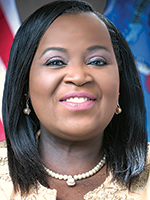
Rep. Shelia Stubbs
Sponsored bills
Maddy summaryAB 1178 amends Wisconsin statutes to update definitions and procedures for regional transit authorities, ensuring they are recognized as eligible entities for various state programs including highway relocation orders, right-of-way applications, and employer classifications for employee benefits. The bill creates new funding mechanisms by establishing appropriation accounts to collect and distribute taxes imposed by transit authorities that choose to levy them, with a portion of those revenues retained for administrative costs. Additionally, the legislation clarifies which organizations qualify as municipalities and employers under existing laws, explicitly including transit authorities created under the specified chapter while excluding cultural arts districts from certain employer definitions. This bill does not mandate tax collection but provides the legal framework for transit authorities to adopt resolutions imposing taxes if they choose to do so.
Maddy summaryThis bill updates weight limit rules for vehicles transporting maple sap or syrup in Wisconsin. It allows these vehicles to carry heavier loads on certain state highways, with specific axle weight limits of 21,000 pounds per axle or 37,000 pounds for closely spaced axles, while excluding interstate highways from these relaxed limits. The changes aim to support maple producers by permitting more efficient transportation of their products from collection sites to storage or markets. The bill also includes a procedural provision exempting it from a standard transportation department review requirement.
Maddy summaryThis bill allows licensed respite care provider homes to temporarily house runaway children with the consent of both the child and their parent or guardian. It establishes procedures for notifying child welfare agencies when a runaway is found in such a home without parental consent and outlines how courts can designate these homes for temporary care after a child is taken into custody. The legislation applies to homes licensed under specific state statutes and requires oversight by county departments or child welfare agencies.
Maddy summaryThis bill requires public and private elementary and secondary schools and licensed child care centers with fuel-burning appliances to install carbon monoxide detectors in rooms containing those appliances. The law specifies that detectors must be battery-powered or permanently wired with monitoring for older buildings, while newer buildings must have permanently wired, monitored detectors certified by an independent safety organization. Schools can apply for up to $3,000 grants to purchase and install these detectors, and the Department of Justice will provide annual reports on grant usage. The bill also updates maintenance requirements and allows authorized inspectors to check detector functionality in covered facilities.
Maddy summaryThis bill requires operators of licensed runaway homes to notify child welfare agencies and a child's parents, guardians, or legal custodians when a child is sheltered there without consent. The law mandates that intake workers inform parents within 72 hours, while home operators must attempt contact every six hours until successful if the child's safety is deemed best served by notification. Additionally, if parents do not consent to the child's placement, a court hearing must be held within 24 hours to determine whether the child can remain in the home. These provisions apply specifically to licensed facilities sheltering runaway children and aim to establish clearer communication protocols between operators, welfare agencies, and families.
Maddy summaryThis bill authorizes cities, villages, towns, and counties to establish fair housing departments to educate residents about housing discrimination rights and enforce local fair housing ordinances. It creates a grant program that provides up to $10 million in state funding to help local governments set up these departments, with grants distributed across state regions to ensure equitable access. The legislation includes specific rules for grant applications, limits each region to receiving no more than 12.5 percent of available funds, and restricts grant usage to supporting fair housing department operations. The bill also establishes a sunset provision that prevents new grants from being awarded after June 30, 2029.
Maddy summaryAB 1008 clarifies eligibility for Wisconsin's child care subsidy program (Wisconsin Shares) by expanding "relative" definitions to include "like-kin" caregivers. It allows non-relatives who provide care as family (e.g., close family friends) to qualify for subsidies if they meet specific criteria, such as having a court order and receiving payments under certain statutes. The bill also adjusts income calculations for eligibility, including court-ordered support payments exceeding $1,250 monthly. This directly affects caregivers of children under 13 (or 19 if disabled) who seek child care assistance through Wisconsin Shares.
Maddy summaryAB 1023 creates a dedicated $500,000 annual appropriation (for 2025-26 and 2026-27) specifically for training and technical assistance for tribal child care providers. The bill directs the Department of Children and Families to use this funding to contract with agencies or award grants aimed at improving the quality of child care services provided by tribal organizations. This funding is separate from other child care funding streams and must be used exclusively for these tribal provider support activities. The bill directly affects tribal child care programs in Wisconsin by providing a new, dedicated resource for their professional development and operational support.
Maddy summaryAB 999 clarifies that employees of the University of Wisconsin Hospitals and Clinics Authority (UWHCA) are covered under collective bargaining agreements. The bill amends specific statutes (including 40.02, 40.05, and 111.02) to explicitly include UWHCA employees in provisions governing union dues, sick leave conversion, and bargaining unit structures. This ensures UWHCA staff have the same collective bargaining rights as other state employees covered under Chapter 111. The changes directly affect UWHCA employees by integrating them into existing labor frameworks without creating new rights. The bill focuses on administrative alignment within current state labor laws.