

Maddy summaryAB 999 clarifies that employees of the University of Wisconsin Hospitals and Clinics Authority (UWHCA) are covered under collective bargaining agreements. The bill amends specific statutes (including 40.02, 40.05, and 111.02) to explicitly include UWHCA employees in provisions governing union dues, sick leave conversion, and bargaining unit structures. This ensures UWHCA staff have the same collective bargaining rights as other state employees covered under Chapter 111. The changes directly affect UWHCA employees by integrating them into existing labor frameworks without creating new rights. The bill focuses on administrative alignment within current state labor laws.
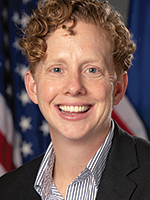
Rep. Angela Stroud
Sponsored bills
Maddy summaryThis bill expands eligibility for Wisconsin's child care subsidy program (Wisconsin Shares) by allowing families with incomes above 200% of the federal poverty line but below 100% of the state median income to continue receiving subsidies. It creates a new eligibility pathway (20.437 (2) (ct)) to cover families previously disqualified due to income thresholds and adjusts copayment rules for those exceeding income limits. The policy directly affects low-income working families who lost subsidies due to modest income increases but remain below the new 100% state median income cutoff. A $1.25 million appropriation for fiscal year 2026-27 funds this expansion.
Maddy summaryAB 1016 allocates $2,166,600 annually for two fiscal years (2025-26 and 2026-27) to fund workforce training for child care providers and prospective providers. The bill creates a new funding line (20.437(2)(d)) under the Department of Children and Families, directing these funds toward contracts focused specifically on training child care staff. It directly affects licensed child care providers and those seeking to enter the field by providing financial support for their professional development. The bill establishes a dedicated funding stream but does not change eligibility rules or create new regulatory requirements.
Maddy summaryAB 1017 creates a new child care subsidy program specifically for custodial parents who work as employees in child care facilities. It allows these parents to qualify for subsidies under revised eligibility rules, bypassing standard income and asset requirements that typically apply to other subsidy recipients. The bill appropriates $1.2 million in fiscal year 2025-26 for administrative costs related to this new program. This directly affects parents employed by child care providers who have primary custody of children under 13 (or 19 if disabled) and meet the new eligibility criteria.
Maddy summaryAJR 136 is a proposed constitutional amendment that would add a new Section 1m to Article I of the state constitution, stating: "As a necessary part of a free society, the people have an individual and fundamental right to privacy." This resolution, introduced by multiple assembly members and senators, would establish this privacy right as a fundamental constitutional protection for all residents. The bill requires voter approval at the next general election, as it must be referred to voters following a three-month publication period. It does not create immediate legal requirements but proposes a foundational constitutional change.
Maddy summaryAB 1015 adjusts Wisconsin Shares child care assistance copayment rules and increases funding. It limits copayments to no more than 7% of a family’s gross income (49.155 (5) (ag)) and waives copayments entirely for families earning below 150% of the federal poverty line (49.155 (5) (ar)). The bill also increases annual funding for child care subsidies by $22.93 million for fiscal years 2025-26 and 2026-27. These changes directly affect low-income families using Wisconsin Shares child care assistance.
Maddy summaryAB 1055 creates a grant program to fund crime victim protective services, including temporary housing, for law enforcement agencies and prosecutors' offices. It allocates $2,572,900 for the 2025-26 fiscal year (with $2,574,100 for 2026-27) from the Justice Department's budget. The Department of Justice will administer the program, developing grant criteria without needing formal rulemaking, and will add one full-time staff position to manage it. This bill directly affects agencies providing support to individuals who have been victims of crime.
Maddy summaryAB 1056 is a comprehensive rewrite of Wisconsin's criminal justice laws that creates new funding streams for community policing ($10 million), officer recruitment/retention ($5 million), and violence prevention ($5 million). The bill reorganizes legal provisions related to firearm transfers, domestic violence, sexual assault, hate crimes reporting, and victim services, while establishing specific funding amounts for the address confidentiality program ($180,200). It modifies reimbursement processes for counties providing victim-witness services and creates new alternatives to prosecution for individuals with substance use disorders. The legislation directly affects law enforcement agencies, victims' services providers, and individuals seeking substance use treatment instead of traditional criminal prosecution.
Maddy summaryAB 1077 updates Wisconsin's firearms laws by requiring courts to notify the Department of Justice when ordering firearm restrictions, ensuring accurate background checks for buyers. It creates new funding for firearm dealer permits and mandates law enforcement agencies to submit recovered firearms for tracing via the eTrace system within 48 hours. The bill directly affects firearms dealers (through permit fees), courts (in handling firearm restriction orders), and law enforcement (in firearm tracing procedures). Key provisions include standardized court notifications to the DOJ for firearm restrictions and new requirements for law enforcement to trace recovered weapons.
Maddy summaryAB 1074 creates an Office of the Student Loan Ombudsman within the Department of Financial Institutions to assist borrowers with student loan issues. The office will handle complaints, analyze borrower data, and provide guidance on loan terms, working directly with student loan servicers and educational institutions. It establishes specific duties including resolving disputes, monitoring laws affecting borrowers, and requiring servicers to cooperate with the ombudsman. This bill directly affects student loan borrowers in the state and the student loan servicers who must now engage with this new oversight office.