

Maddy summaryAB 811 creates a $25 million annual grant program for businesses opening new locations or expanding into vacant commercial spaces, administered by the Wisconsin Economic Development Corporation (WEDC). It directly affects eligible businesses in commercial districts, continuing a similar program from June 2023 while explicitly excluding nonprofit organizations from receiving grants. The bill allocates $25 million for the 2025-26 and 2026-27 fiscal years to fund these "Main Street Bounceback Grants" through WEDC's existing grant framework. Key provisions require WEDC to follow eligibility rules nearly identical to the prior "Wisconsin Tomorrow" program, focusing on revitalizing underutilized commercial properties.
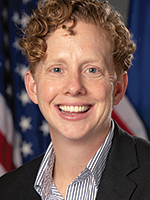
Rep. Angela Stroud
Sponsored bills
Maddy summaryAB 797 creates a $2.5 million grant program to help counties, cities, and towns test privately owned wells for water quality and map well locations. It provides up to $10,000 per grant for well testing, groundwater assessment, and geologic studies, plus separate grants for county health departments to offer well-testing education. The bill also requires municipalities with private wells to inform residents about testing importance and exempts the department from standard emergency rule procedures for implementing this program. The law appropriates funds for fiscal years 2025-26 and 2026-27 to support these concrete actions.
Maddy summaryAB 804 establishes two new grant programs: a $200,000 annual "Farm to Fork" grant for non-school entities (like businesses, hospitals, or universities with cafeterias) to connect local farms with food service operations, and a $250,000 annual "Farm to School" grant for school districts to expand local food sourcing. The bill prioritizes innovative proposals, high-need schools (where many students qualify for free/reduced meals), and projects supporting value-added agricultural products. It requires the Agriculture Department to administer the grants, provide annual legislative reports, and create rules for implementation. The legislation also adds one dedicated staff position to manage the Farm to Fork program.
Maddy summaryAB 800 standardizes procedures for handling absentee ballots in Wisconsin municipalities. It requires absentee ballots to be delivered to election inspectors or the municipal board of absentee ballot canvassers by 8 p.m. on election day, clarifying that in some communities, ballots must be canvassed by a designated board rather than at polling places. The bill also specifies that municipal clerks must securely handle ballots in carrier envelopes and ensures military and overseas voters can submit applications up to election day. These changes directly affect municipal clerks and election officials managing absentee voting processes.
Maddy summaryAB 754 requires most health insurance plans and disability policies covering preventive care to cover home test kits for sexually transmitted diseases (STIs), including HIV. It mandates coverage when a healthcare provider deems the test medically necessary and orders it directly or through a standing order. The law defines "home test kits" as products meeting CDC or FDA guidelines, allowing self-collection outside clinical settings. This applies to plans covering primary care or preventive services, including laboratory processing costs for approved kits.
Maddy summaryAB 775 limits out-of-pocket costs for epinephrine delivery systems (like EpiPens) under specific health insurance plans. It caps cost-sharing at $60 for two doses of these devices, applying to disability insurance policies and self-insured health plans covering government entities (such as state agencies, schools, or local governments). Insurers cannot charge more than $60 per two-dose supply regardless of the device type, though they may charge less. The law takes effect for plan years beginning after its publication date.
Maddy summaryAB 755 requires health insurance plans to cover sterilization procedures and related patient education/counseling services, just like other contraceptive benefits. This directly affects health insurers and patients seeking these specific reproductive health services. The bill amends existing law to explicitly include sterilization procedures and counseling under the same coverage requirements applied to other contraceptive services. It applies to new policy years beginning after the effective date, with some exceptions for collective bargaining agreements.
Maddy summaryAB 762 creates the WisKids Savings Account Program, automatically depositing $25 into college savings accounts for Wisconsin children born or adopted in the state who reside there before age 10. The program uses birth records to identify eligible children, with parents able to opt out within 30 days of receiving notice. The state limits total annual deposits to $2 million across all accounts. This new initiative operates separately from existing college savings programs under Wisconsin law.
Maddy summaryAB 776 allocates $5 million in state funds to expand veterans' access to mental health services. It requires the Department of Veterans Affairs to promote community-based mental health care and provide grants to organizations offering these services to veterans, including emergency crisis support. The bill streamlines implementation by allowing the department to issue emergency rules without standard public notice requirements. This directly affects veterans seeking mental health care and the community organizations delivering these services. The legislation creates new statutory provisions (45.49) to formalize this program.
Maddy summaryAB 761 redirects $2 million annually from the college savings program trust fund to the Department of Financial Institutions. It directs the department to deposit funds into college savings accounts for children born or adopted in the state, residing there, and designated as beneficiaries under existing law. These deposits cover qualified higher education expenses for the children. The bill also appropriates additional funds ($446,900 for 2025-26, $317,900 for 2026-27) to administer this program and fund an additional full-time position.