

Maddy summaryAB 64 creates a state income tax subtraction for eligible K-12 teachers who pay out-of-pocket for classroom supplies and materials. It allows teachers to subtract up to $300 annually from their taxable income for expenses covered under federal tax code (26 USC 62(a)(2)(D)), using the federal definition of "eligible educator." This provision directly affects teachers who incur these costs, reducing their state tax burden without requiring them to itemize deductions. The bill mirrors a federal tax break but applies specifically to Wisconsin's income tax system. The law would take effect for tax years beginning after December 31, 2024.
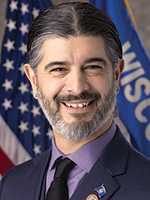
Rep. Vinnie Miresse
Sponsored bills
Maddy summaryAJR 107 is a symbolic joint resolution designating November 2025 as "Veteran Mental Health and Suicide Awareness Month" in Wisconsin. It directly affects Wisconsin veterans by raising public awareness of their elevated mental health challenges and suicide rates, citing that 134 veterans died by suicide in Wisconsin in 2023 (15% of all adult suicides despite veterans comprising only 5% of the adult population). The resolution does not create new programs or funding but aims to highlight existing resources like the Wisconsin Veterans Crisis Line and honor veterans' service. It was introduced by multiple legislators and cosponsored by numerous senators, reflecting legislative recognition of veteran mental health as a priority.
Maddy summaryThis bill (AJR 113) proposes that Wisconsin officially recognize the second Monday in October as "Indigenous Peoples Day" each year. It does not create new laws or programs but formally acknowledges the historical and ongoing presence of Wisconsin's 11 federally recognized tribes and their contributions to the state. The resolution aims to promote appreciation, reconciliation, and partnership with Indigenous communities through this annual observance. As a symbolic gesture, it directly affects all Wisconsinites by encouraging reflection on Indigenous history and contributions.
Maddy summaryAB 636 requires private postsecondary schools (proprietary schools) in Wisconsin to include veteran enrollment data in their existing quarterly reports to the state department. These schools must report how many veterans are enrolled, alongside other details like total enrollment, graduates, and employment rates. The bill amends current reporting rules to specifically add veteran enrollment as a required data point, without creating new funding or penalties. This affects all private colleges operating in Wisconsin that are subject to state approval and reporting requirements.
Maddy summaryAB 590 revises the statutory definition of "physical activity" in section 448.95(7) to include moderate or greater participation in exercise, sports, recreation, wellness, fitness, or employment activities. It specifically clarifies that "moderate participation" means activities increasing heart and breathing rates without making conversation difficult. This is a definitional change to the statutes, not a new policy affecting specific groups or programs. The bill was introduced in October 2025 and referred to the Health Committee.
Maddy summaryAB 568 requires most health insurance plans and self-insured employer health coverage to cover infertility diagnosis, treatment, and standard fertility preservation services (like egg freezing before cancer treatment). It mandates coverage for at least four egg retrieval procedures and unlimited embryo transfers per American Society for Reproductive Medicine guidelines, with no extra costs or restrictions compared to other medical treatments. The bill directly affects health insurers, self-insured employers (including government entities), and people seeking infertility care or fertility preservation. It prohibits plans from imposing unique cost-sharing, waiting periods, or exclusions specifically for infertility services. The law applies to disability insurance policies and self-insured plans, excluding certain health benefit plans under existing statutes.
Maddy summaryAB 628 allows renters who are veterans or surviving spouses to claim the property tax credit previously only available to homeowners. It amends state law to define "rent constituting property taxes" and lets eligible renters deduct their rent payments toward this credit when filing taxes. The credit can offset income tax liability, with unused portions paid directly by the state. This change applies to taxable years beginning January 1, 2026, and directly affects qualifying renters in Wisconsin.
Maddy summaryAB 498 provides $1 million in biennial funding to help licensed child care centers purchase and maintain automated external defibrillators (AEDs). The bill creates a grant program administered by the Department of Children and Families, allowing centers to apply for funding to cover AED costs. To qualify, centers must contribute at least 33% of the grant amount in matching funds. This policy directly affects licensed child care centers by making AEDs more accessible for emergency cardiac care.
Maddy summaryAB 386 creates a $30 million agricultural purchase program to fund grants for organizations buying food made or grown in the state. It directly affects nonprofit food banks, pantries, and local food distributors that provide food assistance, allowing them to use these grants to purchase state-grown products. The program is administered by the Department of Agriculture, which will also add two new staff positions (program specialist and grants specialist) funded by this appropriation. The bill establishes a continuing appropriation under statute 20.115 and outlines specific grant eligibility under new statute 93.62.
Maddy summaryAB 620 requires teachers and administrators in Wisconsin's parental choice programs and Special Needs Scholarship Program to hold state teaching licenses starting July 1, 2027. Schools may employ educators with at least five years of prior experience (as of July 1, 2027) under a temporary, nonrenewable waiver until July 1, 2032. The law creates a process for these educators to apply for waivers while working toward full licensure, with the state department developing implementing rules. It applies specifically to private schools participating in these state-funded education choice programs.