

Maddy summaryAssembly Resolution 12 designates February 28, 2026, as Rare Disease Day in Wisconsin to raise awareness about rare diseases, which affect millions of Americans including Wisconsin residents. The resolution acknowledges challenges like delayed diagnosis and limited treatment access for conditions impacting fewer than 200,000 people. It aligns with a national observance organized by the National Organization for Rare Disorders (NORD) and serves as a symbolic gesture without creating new laws or funding.
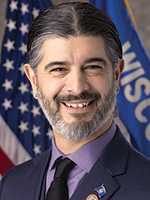
Rep. Vinnie Miresse
Sponsored bills
Maddy summaryAJR 134 is a joint resolution recognizing Eid al-Fitr and Eid al-Adha as official holidays in Wisconsin. It directly affects Wisconsin's Muslim community (approximately 70,000 people) by encouraging schools and employers to acknowledge these religious holidays, which mark the end of Ramadan and the Hajj pilgrimage. The resolution does not create new policies or mandate changes but aims to raise awareness of these holidays' cultural and religious significance. It is currently pending in committee after being introduced on February 6, 2026.
Maddy summaryThis bill expands eligibility for Wisconsin's child care subsidy program (Wisconsin Shares) by allowing families with incomes above 200% of the federal poverty line but below 100% of the state median income to continue receiving subsidies. It creates a new eligibility pathway (20.437 (2) (ct)) to cover families previously disqualified due to income thresholds and adjusts copayment rules for those exceeding income limits. The policy directly affects low-income working families who lost subsidies due to modest income increases but remain below the new 100% state median income cutoff. A $1.25 million appropriation for fiscal year 2026-27 funds this expansion.
Maddy summaryAB 1016 allocates $2,166,600 annually for two fiscal years (2025-26 and 2026-27) to fund workforce training for child care providers and prospective providers. The bill creates a new funding line (20.437(2)(d)) under the Department of Children and Families, directing these funds toward contracts focused specifically on training child care staff. It directly affects licensed child care providers and those seeking to enter the field by providing financial support for their professional development. The bill establishes a dedicated funding stream but does not change eligibility rules or create new regulatory requirements.
Maddy summaryAB 1017 creates a new child care subsidy program specifically for custodial parents who work as employees in child care facilities. It allows these parents to qualify for subsidies under revised eligibility rules, bypassing standard income and asset requirements that typically apply to other subsidy recipients. The bill appropriates $1.2 million in fiscal year 2025-26 for administrative costs related to this new program. This directly affects parents employed by child care providers who have primary custody of children under 13 (or 19 if disabled) and meet the new eligibility criteria.
Maddy summaryAJR 136 is a proposed constitutional amendment that would add a new Section 1m to Article I of the state constitution, stating: "As a necessary part of a free society, the people have an individual and fundamental right to privacy." This resolution, introduced by multiple assembly members and senators, would establish this privacy right as a fundamental constitutional protection for all residents. The bill requires voter approval at the next general election, as it must be referred to voters following a three-month publication period. It does not create immediate legal requirements but proposes a foundational constitutional change.
Maddy summaryAB 1019 allows vehicle owners to purchase an annual state park admission receipt when registering or renewing their vehicle license. It adds a line on vehicle registration forms where owners can choose to pay an additional fee (with discounts for seniors or those with existing park passes). The collected fees are deposited quarterly into the conservation fund, specifically for state parks, recreation areas, and forest lands. This affects all vehicle owners in the state during registration, streamlining park access without requiring separate purchases.
Maddy summaryAB 1030 increases the state earned income tax credit for low-income working families with fewer than three children. Starting in 2026, eligible individuals will receive a credit equal to 34% of the federal earned income credit (if they have children) or 15% (if they have no children), up from previous rates. This policy directly benefits qualifying working adults and families who earn below certain income thresholds. The change applies to tax returns filed for years beginning after December 31, 2025.
Maddy summaryAB 1007 amends the definition of "veteran at risk" in Wisconsin law to explicitly include active-duty members of the U.S. armed forces, National Guard, or military reserves who have service-related physical or mental health conditions. The bill clarifies that a person qualifies as "at risk" based on information provided in a report about such conditions. This change directly affects military service members and veterans who may be identified through the existing veterans at risk alert system. The amendment refines the eligibility criteria for the system without creating new programs or funding.
Maddy summaryAJR 135 is a commemorative resolution honoring Wisconsin's Polish community for 180 years of residence and contributions. It formally recognizes the historical significance of Polish immigrants who arrived seeking freedom after Poland's partition, and acknowledges their cultural enrichment of Wisconsin. The resolution pays tribute to the community's enduring legacy, including figures like Polish-American heroes and refugees from historical events like the January Uprising and the Września Children's Strike. This non-binding resolution does not create new laws or policies but serves as a symbolic acknowledgment of the community's historical impact.