

Maddy summaryAB 283 expands Wisconsin's business development tax credit to include specific child care costs incurred by employers for their employees. It allows businesses to claim a tax credit covering up to 15% of eligible expenses, such as capital costs to start a child care program, operational costs, reimbursements for employee child care, purchased child care slots, and contributions to dependent care flexible spending accounts. This directly affects businesses operating in Wisconsin that provide child care benefits to employees, making these costs deductible under the existing tax credit program. The bill modifies tax code sections to define these eligible expenses and sets the effective date for taxable years beginning after December 31, 2024.
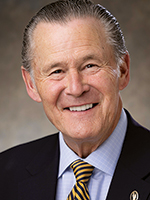
Rep. Bob Donovan
Sponsored bills
Maddy summaryAB 624 increases penalties for distributing methamphetamine or similar drugs near homeless shelters. If someone distributes these substances within 1,000 feet of a homeless shelter (and knows or should know the location), the maximum prison sentence for that offense rises by 5 years. The bill defines "near a homeless shelter" as being on or within 1,000 feet of the shelter premises, including when the shelter is readily recognizable. This directly affects individuals convicted of drug distribution offenses in these specific locations. The policy change modifies existing sentencing rules without altering the core definition of drug offenses.
Maddy summaryAB 581 creates two new disaster assistance grant programs funded through the state budget: a $10 million annual program for individuals affected by disasters and a $20 million annual program for businesses impacted by disasters. The bill establishes new statutory sections (20.465(3)(bf) and 20.465(3)(bg)) to formalize these biennial funding streams. These grants will directly assist residents and small businesses recovering from declared disasters by providing direct financial support. The legislation specifies the exact funding amounts for each program in the state's budget schedule without detailing eligibility criteria or application processes.
Maddy summaryAB 580 creates a state grant program to help individuals and businesses recover from disasters declared by the governor. It provides up to $25,000 per household for individuals to cover home repairs, damaged property, or temporary housing, and up to $50,000 per business for repairs, payroll, or operating costs. Applications must be submitted within 90 days of the disaster declaration, and grants cannot duplicate federal aid if available. The program is administered by the Department of Military Affairs, with eligibility requiring proof of disaster-related expenses and a commitment to repay if other aid is received.
Maddy summaryAB 301 creates a new grant program providing up to $300,000 annually for mental health clubhouses - nonresidential support programs for individuals with mental health conditions (not medical treatment providers). Eligible clubhouses must meet specific criteria, including having members diagnosed with or awaiting diagnosis for mental illness, raising matching funds equal to the grant amount, operating in a separate physical space, and allowing member participation in operations. Grants are capped at $50,000 per clubhouse per year, with all funding expiring by June 30, 2030. This bill directly affects qualified clubhouses seeking financial support to maintain their services.
Maddy summaryAB 410 provides state funding through grants to community organizations for falls prevention awareness programs and initiatives. It directly affects local health agencies, senior service providers, and community groups working with at-risk populations, particularly older adults. The bill establishes a specific appropriation from the state budget to support these prevention efforts. This is a funding measure, not a regulatory change, and focuses on allocating resources for education and outreach programs.
Maddy summaryAB 138 modifies Wisconsin Retirement System rules for retirees who return to work. It specifically allows former jailers and protective occupation retirees (who previously received retirement benefits) to opt out of rejoining the retirement system if they are rehired by a participating employer within 75 days of leaving their prior job. To qualify, they must not have a pre-existing agreement to return and must formally decline re-enrollment using a department-provided form. This change applies only to those retiring from these specific roles and does not alter other retirement eligibility rules.
Maddy summaryAB 615 requires all public school districts and independent charter schools (K-8) to implement math screening tests three times yearly to identify students at-risk of not meeting grade-level math standards. Schools must then provide "quality math tutoring" (aligned with classroom instruction, offered 3 days weekly or 50 hours annually by state-approved providers) and develop personalized math plans for at-risk students within 30 days of identification. The bill also mandates schools with low 4th-grade math proficiency to create evidence-based achievement plans by 2026, including professional development for teachers. This law directly affects K-8 students identified as needing math support and schools serving those students.
Maddy summaryAB 64 creates a state income tax subtraction for eligible K-12 teachers who pay out-of-pocket for classroom supplies and materials. It allows teachers to subtract up to $300 annually from their taxable income for expenses covered under federal tax code (26 USC 62(a)(2)(D)), using the federal definition of "eligible educator." This provision directly affects teachers who incur these costs, reducing their state tax burden without requiring them to itemize deductions. The bill mirrors a federal tax break but applies specifically to Wisconsin's income tax system. The law would take effect for tax years beginning after December 31, 2024.
Maddy summaryAJR 107 is a symbolic joint resolution designating November 2025 as "Veteran Mental Health and Suicide Awareness Month" in Wisconsin. It directly affects Wisconsin veterans by raising public awareness of their elevated mental health challenges and suicide rates, citing that 134 veterans died by suicide in Wisconsin in 2023 (15% of all adult suicides despite veterans comprising only 5% of the adult population). The resolution does not create new programs or funding but aims to highlight existing resources like the Wisconsin Veterans Crisis Line and honor veterans' service. It was introduced by multiple legislators and cosponsored by numerous senators, reflecting legislative recognition of veteran mental health as a priority.