

Maddy summaryAB 601 amends the statute to exclude certain sports wagers from the legal definition of "bet." Specifically, it exempts wagers made by people physically in the state using mobile devices if the server is on tribal lands and the wager follows an Indian gaming compact entered before April 1, 1993. This directly affects tribal gaming operations that operate under pre-1993 compacts. The bill clarifies that such wagers - conducted via tribal servers under existing agreements - are not considered "bets" under state gambling laws. This is a technical definition change, not a new policy or tax.
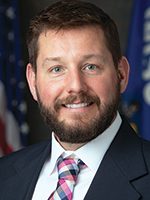
Rep. Elijah Behnke
Sponsored bills
Maddy summaryAB 374 updates election procedures to align with the federal Electoral Count Reform Act. It modifies deadlines for handling ballots and canvassing results, requiring municipal clerks to deliver presidential election ballots to county clerks by 9 a.m. on the Saturday after the election (instead of Monday). The bill also clarifies processes for reconciling absentee and in-person ballots to prevent double-voting and mandates public canvassing of election results by specific deadlines, including a 5 p.m. Friday deadline for presidential elections. These changes directly affect local election officials managing municipal and presidential elections.
Maddy summaryAB 992 revises cost thresholds for administrative rule reviews, lowering the trigger point from $10 million to $4 million in projected costs for businesses, local governments, and individuals over two years. It prohibits agencies from splitting a single rule into multiple rules to avoid this cost analysis requirement. Agencies must halt rulemaking if costs exceed the threshold unless they modify the rule to reduce costs, then re-evaluate. This directly affects state agencies creating regulations and entities bearing compliance costs.
Maddy summaryAB 131 establishes a municipal grant program to test for PFAS (perfluoroalkyl and polyfluoroalkyl substances) in public water systems and fund source reduction measures. It allows water utilities to use customer service fees to cover up to half the cost of PFAS source reduction for connected customers, if cheaper than facility upgrades. The bill also creates eligibility rules for disadvantaged communities extending service due to PFAS contamination and directs PFAS contamination claims to an existing landowner grant program. These provisions directly affect municipal water systems, public utilities, and communities addressing PFAS in drinking water.
Maddy summaryAB 130 exempts specific groups from certain PFAS enforcement actions under Wisconsin's spills law if they allow the state to clean up contaminated land at no cost to them. It directly affects landowners, fire departments, airports, wastewater spreaders, and waste facilities that handled PFAS-contaminated materials legally. The bill creates exemptions for those who spread permitted biosolids, owned land where such spreading occurred, used PFAS in emergency response (per federal rules), accepted PFAS waste, or own property not responsible for the contamination origin. This applies only to enforcement sections related to PFAS contamination under the spills law, not all PFAS regulations.
Maddy summaryAB 1004 prohibits school boards, charter school governing boards, and participating private school entities (referred to as "education employers") from entering agreements that suppress information about alleged immoral conduct by employees, hinder reporting of such conduct, or require removing substantiated allegations from records. The bill also grants civil immunity to education employers who provide information about an employee’s conduct - including alleged immoral conduct - to a prospective employer upon request. This immunity supplements existing legal protections for employment references. The law aims to ensure transparency in employee conduct records while protecting schools from liability when sharing verified information with new employers.
Maddy summaryAB 866 revises rules for county sheriff offices and undersheriff appointments across the state. It creates new requirements for appointing an undersheriff (who must be a certified law enforcement officer and county resident), clarifies succession rules when the sheriff is absent or incapacitated, and ensures deputies returning from undersheriff roles retain their prior pay and seniority. The bill directly affects county sheriffs, undersheriffs, county clerks handling vacancy procedures, and deputy sheriffs. Key provisions include mandating written appointment records, defining when an undersheriff acts as sheriff, and requiring counties to return deputies to their previous positions after undersheriff service.
Maddy summaryAB 905 creates a new penalty for threatening healthcare providers, staff, or their family members when the threat is related to their work. It specifically targets threats made knowing the victim is a healthcare worker (current or former) or a family member, and the threat occurs in response to actions taken at a healthcare facility or by a provider acting in their official capacity. The bill defines "health care facility" and "health care provider" using existing statutory terms to clarify the scope of protection. This law directly affects healthcare workers and their families by establishing criminal penalties for targeted threats connected to their professional roles.
Maddy summaryAB 86 amends Wisconsin law to impose a life sentence without parole for individuals convicted of child trafficking involving three or more child victims. It specifically upgrades penalties under statutes 948.051(1)(b) and 948.051(2)(b), defining child trafficking as recruiting, transporting, or exploiting children for commercial sex acts. The bill requires courts to sentence offenders to life imprisonment without parole eligibility when three or more child victims are involved, affecting both traffickers and those who benefit from such crimes. This change applies to offenses committed on or after the bill’s effective date.
Maddy summaryAB 320 increases multiple court filing fees and requires these fees to be adjusted for inflation starting in 2030. It raises specific fees, such as the civil filing fee from $75 to $190 and the criminal case fee from $163 to $239, with future adjustments tied to the U.S. consumer price index. These changes directly affect individuals filing court cases (e.g., defendants in criminal matters, plaintiffs in civil or family cases) who pay these fees. The bill mandates that fee amounts be recalculated every five years based on inflation data, rounded up to the nearest dollar, and posted online by the state courts director. The adjustments apply to over 20 specific fee categories across criminal, civil, and family court proceedings.