

Maddy summaryAB 4 requires all public school boards, independent charter schools, and private schools in parental choice programs to include civics instruction in their curriculum starting in the 2027-28 school year. The instruction must cover U.S. founding principles, civic participation, government advocacy processes, and comparisons of governance systems (including communism, socialism, and totalitarianism). Schools must annually report compliance to the Department of Public Instruction, and high schools must add a half-credit civics requirement to graduation standards, effective for students graduating in 2030-31. This bill amends existing statutes to establish these requirements for K-12 civics education and reporting.
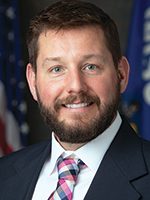
Rep. Elijah Behnke
Sponsored bills
Maddy summaryAB 70 creates a formal "affidavit of disclaimer" process for parents to voluntarily terminate parental rights in adoption cases. It sets strict timing rules (e.g., no execution before 120 hours post-birth or after the child's first birthday), requires mandatory counseling for minors, and specifies that mothers can revoke the disclaimer within 72 hours, while fathers can revoke until 72 hours after execution or 120 hours post-birth, whichever is later. The affidavit must include specific disclosures about legal rights, child support, and the child's status, and is irrevocable after set deadlines unless obtained through fraud or duress. This directly affects parents (including minors), adoption agencies, and courts handling adoption proceedings in Wisconsin.
Maddy summaryAB 56 requires all state agencies, local governments, and public schools to display the national motto "In God We Trust" in specific locations. Public buildings must show it on a poster, framed document, or wall (at least 11x14 inches, in English, and visible to the public), while schools must display it in every classroom starting in the 2026-27 school year. The bill mandates these displays within six months of the law taking effect, with detailed size, format, and visibility requirements. It directly affects public school districts, charter schools, and all state/local government buildings.
Maddy summaryAB 69 amends Wisconsin law to expand the sales and use tax exemption for residential electricity and natural gas to cover the winter months of November through April. Currently, the exemption applies only to certain months, but this bill adds those six winter months to the list of qualifying periods for residential energy purchases. The change directly affects homeowners and renters who purchase electricity or natural gas for home use during these months, removing the tax on those purchases. The bill is a straightforward policy adjustment to the existing tax code, not a new program or funding measure.
Maddy summaryAB 60 modifies how local governments must phrase property tax referendum questions on ballots. It requires specific language detailing the dollar impact of a tax increase on a median single-family home in the district, including a good faith estimate and the property value used in calculations. This applies to referendums seeking to exceed existing property tax limits for school districts, municipalities, or other political subdivisions. The bill mandates that ballot questions include these concrete financial details to help voters understand the cost of proposed tax increases.
Maddy summaryAJR 16 is a ceremonial resolution designating May 1 of each year as "St. Joseph the Worker Day" in Wisconsin. It honors St. Joseph’s legacy as a working father and recognizes the dignity of all Wisconsin workers, urging the state to hold annual celebrations on this day. The resolution does not create new laws, taxes, or obligations - it is purely symbolic, aiming to publicly appreciate workers’ contributions to families and communities. It directly affects no individuals or entities but seeks to foster statewide recognition of laborers.
Maddy summaryAB 133 modifies Wisconsin's laws governing investment securities under the Uniform Commercial Code. It repeals outdated provisions about where securities laws apply (sections 408.110 (2)(a-d), (5-6), and 409.305 (1)(c)) and clarifies that assets held by securities intermediaries (like banks or brokers) belong to investors (entitlement holders), not the intermediary itself. The bill specifically changes priority rules to ensure investors' claims take precedence over creditor claims if a securities intermediary cannot cover all obligations. This directly affects securities intermediaries and their investor clients by strengthening investor protections in financial asset holdings. The changes take effect four months after publication.
Maddy summaryAB 91 requires first-class city school districts to maintain at least 25 school resource officers (SROs) during school hours, before/after school, and at events starting January 2024, with mandatory 40-hour training for SROs. It mandates a cost-sharing agreement where school districts cover 75% and cities cover 25% of SRO-related expenses. School districts and cities must formally agree on implementation and provide certifications to avoid state funding withholdings of up to 20% for non-compliance. The bill directly affects first-class cities and their school districts, creating specific administrative and financial obligations tied to SRO staffing.
Maddy summaryAB 42 prevents local governments (like cities or counties) from banning residents from keeping up to four chickens or quail on residential properties, including for property owners and owner-occupied rentals. Local units may still require permits, ask for neighbor notifications, set reasonable rules for coop locations, ban roosters, or enforce cleanliness standards. The bill specifically exempts condominiums, which remain subject to their own governing documents. This law directly affects homeowners and renters in residential zones seeking to keep small flocks for personal use.
Maddy summaryAJR 9 is a Wisconsin Assembly Joint Resolution honoring Bob Uecker, the longtime Milwaukee Brewers radio broadcaster and entertainer, for his 69-year career in baseball. The resolution recognizes his contributions as a broadcaster, actor (including "Mr. Belvedere" and "Major League"), philanthropist, and community figure, citing his 54-year tenure with the Brewers and his cultural impact. It does not create new laws or affect any policies - it is a symbolic tribute passed by the Wisconsin Legislature to memorialize his legacy. The resolution extends condolences to his family and acknowledges his widespread influence on baseball fans and Wisconsin.