

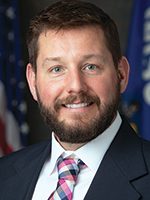
Photo of Elijah Behnke
R Wisconsin Assembly · District 6 On the 2026 ballot

Rep. Elijah Behnke

Compare
Total votes
569
all sessions
Attendance
99%
4 missed
Near the chamber average
With party
98%
of cast votes
Near the chamber average
Bipartisan score
1%
crosses aisle rarely
Near the chamber average
Sponsored
861
bills & resolutions
Near the chamber average
Committees
6
assignments
861 bills and resolutions

Sponsored bills

Total
861
Primary
861
Co-sponsor
0
This page
861
matching current filters
Primary AB 794
Failed · Wisconsin Assembly · Lead sponsor
Relating to: independent contractor healthcare workers and healthcare worker platforms.

Maddy summaryAB 794 clarifies that healthcare workers using digital platforms to book shifts at facilities remain independent contractors - not employees - under specific conditions. The bill requires platforms to meet 15 criteria, such as allowing workers to freely accept/reject shifts, set their own rates, avoid mandatory availability, and not restrict other work. It directly affects healthcare workers and platforms connecting them to facilities, ensuring they retain contractor status if all conditions are met. The law explicitly excludes these workers from employee protections under certain statutes, focusing solely on shifts booked through compliant platforms.

Failed Mar 23, 2026 0 co-sponsors
Primary AB 791
Failed · Wisconsin Assembly · Lead sponsor
Relating to: intentionally sending false text messages to 911 and providing a penalty.

Maddy summaryAB 791 makes it illegal to intentionally send false text messages to 911 reporting a non-existent emergency. It directly affects individuals who send such deceptive messages, imposing fines ($100-$600) or up to 90 days in jail for a first offense. For repeat offenses within four years, the penalty escalates to a Class H felony charge. The bill targets misuse of emergency services by adding specific penalties for text-based false reports, which previously lacked clear legal consequences. This law aims to deter non-emergency text spam that wastes critical resources.

Failed Mar 23, 2026 0 co-sponsors
Primary AB 792
Failed · Wisconsin Assembly · Lead sponsor
Relating to: excluding costs funded by referenda from shared costs for the purpose of determining general equalization aids for school districts. (FE)

Maddy summaryAB 792 modifies how Wisconsin calculates state funding for public school districts by excluding certain costs funded through local voter-approved referenda (like bond elections) from the "shared cost" formula. This directly affects school districts receiving state equalization aid, as it prevents referendum-funded expenses from reducing their state aid eligibility. The bill adds specific rules to exclude referendum-authorized levies and related debt service from the calculation, ensuring districts aren’t penalized for using locally raised funds. These changes aim to align funding formulas with how school districts actually finance projects through voter-approved measures.

Failed Mar 23, 2026 0 co-sponsors
Primary AB 758
Failed · Wisconsin Assembly · Lead sponsor
Relating to: sales tax exemption certificates for the sale of precious metal bullion. (FE)

Maddy summaryAB 758 modifies Wisconsin tax statutes to remove the requirement for sellers to obtain exemption certificates when selling precious metal bullion that qualifies for existing tax exemptions under specific sections (like 77.54(5)(a)3.). This directly affects businesses selling precious metal bullion (e.g., gold or silver coins/bars) that meet these exemption criteria. The key change simplifies tax administration by eliminating the need for sellers to collect and verify proof of exemption for these transactions. The bill does not alter the tax exemption status itself but streamlines the process for qualifying sales.

Failed Mar 23, 2026 0 co-sponsors
Primary AB 762
Failed · Wisconsin Assembly · Lead sponsor
Relating to: creating a WisKids savings account program within the college savings program. (FE)

Maddy summaryAB 762 creates the WisKids Savings Account Program, automatically depositing $25 into college savings accounts for Wisconsin children born or adopted in the state who reside there before age 10. The program uses birth records to identify eligible children, with parents able to opt out within 30 days of receiving notice. The state limits total annual deposits to $2 million across all accounts. This new initiative operates separately from existing college savings programs under Wisconsin law.

Failed Mar 23, 2026 0 co-sponsors
Primary AB 761
Failed · Wisconsin Assembly · Lead sponsor
Relating to: funding for the department of financial institutions from the college savings program trust fund and making an appropriation. (FE)

Maddy summaryAB 761 redirects $2 million annually from the college savings program trust fund to the Department of Financial Institutions. It directs the department to deposit funds into college savings accounts for children born or adopted in the state, residing there, and designated as beneficiaries under existing law. These deposits cover qualified higher education expenses for the children. The bill also appropriates additional funds ($446,900 for 2025-26, $317,900 for 2026-27) to administer this program and fund an additional full-time position.

Failed Mar 23, 2026 0 co-sponsors
Primary AJR 1
Failed · Wisconsin Assembly · Lead sponsor
Relating to: requiring photographic identification to vote in any election (second consideration).

Maddy summaryAJR 1 is a constitutional amendment requiring voters to present valid photo identification to cast a ballot in any election. It directly affects all voters in state elections, specifying that acceptable ID must be issued by the state, federal government, a federally recognized tribal entity, or a college/university in the state. The bill mandates the legislature to define acceptable ID types and establish exceptions, while allowing voters without ID on election day to cast a provisional ballot and submit ID later. This proposal, on second consideration after a 2023 rejection, would be submitted to voters in April 2025 if approved.

Failed Mar 23, 2026 0 co-sponsors
Primary AJR 3
Failed · Wisconsin Assembly · Lead sponsor
Relating to: proclaiming January 2025 as Human Trafficking Awareness and Prevention Month in the state of Wisconsin.

Maddy summaryAJR 3 is a symbolic resolution that officially recognizes January 2025 as "Human Trafficking Awareness and Prevention Month" in Wisconsin. It does not create new laws or allocate funding but aims to raise public awareness about human trafficking, highlighting its prevalence across all 72 Wisconsin counties and its impact on vulnerable groups like youth and individuals with disabilities. The resolution aligns with broader state and national efforts to combat trafficking through education and community engagement. As a procedural resolution, it focuses solely on designation and awareness, with no direct policy changes or obligations for state agencies.

Failed Mar 23, 2026 0 co-sponsors
Primary AB 3
Passed · Wisconsin Assembly · Lead sponsor
Relating to: incorporating cursive writing into the state model English language arts standards and requiring cursive writing in elementary grades. (FE)

Maddy summaryAB 3 requires Wisconsin schools to incorporate cursive writing into the state English language arts curriculum standards and mandates that all elementary schools teach cursive writing as a core skill. Specifically, it requires public schools, charter schools, and private schools participating in parental choice programs to ensure students can write legibly in cursive by the end of fifth grade. The law applies to all elementary grades (K-5) and takes effect by July 1, 2026, though it excludes union high school districts. This policy change directly affects elementary school curricula across Wisconsin, requiring a specific skill-based objective in language arts education.

Passed Mar 23, 2026 0 co-sponsors
Primary AB 6
Passed · Wisconsin Assembly · Lead sponsor
Relating to: requiring a school board to spend at least 70 percent of its operating expenditures on direct classroom expenditures and annual pay increases for school administrators. (FE)

Maddy summaryAB 6 requires school districts to spend at least 70% of their operating funds on direct classroom expenditures (including teacher salaries, instructional supplies, athletic programs, and cocurricular activities) and annual pay increases for school administrators. School boards that fall below this threshold must increase classroom spending by 2% each year until reaching 70%. If a district violates the requirement, the state will deduct the shortfall amount from its state aid payments, and if necessary, order property tax reductions for residents. The bill applies to all school districts starting July 1, 2026, with related contract rules taking effect immediately upon publication.

Passed Mar 23, 2026 0 co-sponsors
Showing 151 to 160 of 861 bills
Previous 1 … 15 16 17 … 87 Next