

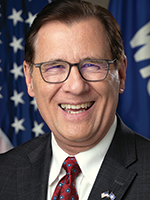
Photo of Dave Murphy
R Wisconsin House · District 56

Rep. Dave Murphy

Compare
Total votes
583
all sessions
Attendance
100%
of floor votes
Near the chamber average
With party
99%
of cast votes
Near the chamber average
Bipartisan score
0%
crosses aisle rarely
Near the chamber average
Sponsored
1,508
bills & resolutions
Near the chamber average
Committees
5
assignments
1,508 bills and resolutions

Sponsored bills

Total
1,508
Primary
1,508
Co-sponsor
0
This page
1,508
matching current filters
Primary AB 445
Signed into law · Wisconsin House · Lead sponsor
Relating to: registers of deeds, transportation project plats, and providing a penalty. (FE)

Maddy summaryAB 445 updates procedures for county registers of deeds regarding property records and transportation project maps (plats). It revises how documents are numbered, indexed, and recorded - requiring unique sequential numbers for each document and clarifying "legal description" definitions for property records. These changes directly affect county offices handling property deeds, mortgages, and transportation project plats, streamlining administrative processes without altering fees or substantive rights. The bill focuses on procedural consistency in record-keeping across statutes.

Signed into law Apr 9, 2026 0 co-sponsors
Primary AB 373
Signed into law · Wisconsin House · Lead sponsor
Relating to: creating a refundable individual income tax credit for the parent of a stillbirth and making an appropriation. (FE)

Maddy summaryAB 373 creates a refundable $2,000 individual income tax credit for parents who experience a stillbirth in the state, as documented by a fetal death report. The credit is refundable, meaning parents who owe less in income tax than the credit amount will receive the difference as a cash payment from state funds. Eligibility requires the stillbirth to meet state reporting criteria (per §69.18), and rules specify $2,000 for joint filers per stillbirth or $1,000 each for unmarried parents or separate filers. The credit must be claimed within the standard tax filing deadline and cannot be used by nonresidents or for partial tax years.

Signed into law Apr 9, 2026 0 co-sponsors
Primary AB 374
Signed into law · Wisconsin House · Lead sponsor
Relating to: compliance with the federal Electoral Count Reform Act. (FE)

Maddy summaryAB 374 updates election procedures to align with the federal Electoral Count Reform Act. It modifies deadlines for handling ballots and canvassing results, requiring municipal clerks to deliver presidential election ballots to county clerks by 9 a.m. on the Saturday after the election (instead of Monday). The bill also clarifies processes for reconciling absentee and in-person ballots to prevent double-voting and mandates public canvassing of election results by specific deadlines, including a 5 p.m. Friday deadline for presidential elections. These changes directly affect local election officials managing municipal and presidential elections.

Signed into law Apr 9, 2026 0 co-sponsors
Primary AB 910
Passed · Wisconsin House · Lead sponsor
Relating to: the amounts of fines and fees state agencies are authorized or required to impose by law. (FE)

Maddy summaryAB 910 requires state agencies to adjust fines and fees for inflation every three years. Agencies must report current amounts, calculate inflation-adjusted values using the consumer price index, and recommend whether to increase, decrease, or maintain fees based on inflation. This applies to all state agencies collecting fees for services or penalties (like driver’s license fees or permit charges), affecting individuals who pay these fees. Agencies can spread increases over up to four years and must consider their service costs when recommending changes. The bill establishes a regular process to keep fee levels aligned with inflation, rather than allowing them to become outdated.

Passed Apr 6, 2026 0 co-sponsors
Primary AB 992
Failed · Wisconsin House · Lead sponsor
Relating to: requirements for proposed administrative rules that impose costs. (FE)

Maddy summaryAB 992 revises cost thresholds for administrative rule reviews, lowering the trigger point from $10 million to $4 million in projected costs for businesses, local governments, and individuals over two years. It prohibits agencies from splitting a single rule into multiple rules to avoid this cost analysis requirement. Agencies must halt rulemaking if costs exceed the threshold unless they modify the rule to reduce costs, then re-evaluate. This directly affects state agencies creating regulations and entities bearing compliance costs.

Failed Apr 6, 2026 0 co-sponsors
Primary AB 130
Signed into law · Wisconsin House · Lead sponsor
Relating to: exempting certain persons from PFAS enforcement actions under the spills law. (FE)

Maddy summaryAB 130 exempts specific groups from certain PFAS enforcement actions under Wisconsin's spills law if they allow the state to clean up contaminated land at no cost to them. It directly affects landowners, fire departments, airports, wastewater spreaders, and waste facilities that handled PFAS-contaminated materials legally. The bill creates exemptions for those who spread permitted biosolids, owned land where such spreading occurred, used PFAS in emergency response (per federal rules), accepted PFAS waste, or own property not responsible for the contamination origin. This applies only to enforcement sections related to PFAS contamination under the spills law, not all PFAS regulations.

Signed into law Apr 6, 2026 0 co-sponsors
Primary AB 1004
Signed into law · Wisconsin House · Lead sponsor
Relating to: prohibiting education employers from entering into certain agreements related to information about alleged immoral conduct by an employee and civil immunity for information provided to a prospective employer.

Maddy summaryAB 1004 prohibits school boards, charter school governing boards, and participating private school entities (referred to as "education employers") from entering agreements that suppress information about alleged immoral conduct by employees, hinder reporting of such conduct, or require removing substantiated allegations from records. The bill also grants civil immunity to education employers who provide information about an employee’s conduct - including alleged immoral conduct - to a prospective employer upon request. This immunity supplements existing legal protections for employment references. The law aims to ensure transparency in employee conduct records while protecting schools from liability when sharing verified information with new employers.

Signed into law Apr 3, 2026 0 co-sponsors
Primary AB 907
Signed into law · Wisconsin House · Lead sponsor
Relating to: requirements for state lottery drawings. (FE)

Maddy summaryAB 907 updates state lottery drawing procedures by requiring all drawings to use random selection methods (via mechanical, electrical, or computerized systems) and mandating annual independent audits. The bill repeals outdated rules and creates new requirements for the lottery department to ensure drawing randomness and security. These changes directly affect the state lottery operations, requiring them to verify processes through external audits each year. The law focuses on transparency and technical safeguards without altering lottery prizes or participation rules.

Signed into law Apr 3, 2026 0 co-sponsors
Primary AB 856
Signed into law · Wisconsin House · Lead sponsor
Relating to: repealing unconstitutional provisions related to operating while intoxicated.

Maddy summaryAB 856 repeals and amends specific sections of state law related to operating while intoxicated (OWI) that were deemed unconstitutional by the U.S. Supreme Court. The bill primarily affects drivers of all-terrain vehicles (ATVs), utility terrain vehicles, and motorboats who face penalties for OWI or refusal to submit to chemical tests. Key changes include adjusting penalty tiers for repeat offenses (e.g., fines of $300-$1,100 for one prior conviction, up to $2,000 for four or more), clarifying when refusal constitutes a violation, and adding provisions for "additional chemical tests" for ATV/boat operators involved in accidents. The bill also revises procedures for law enforcement officers requesting tests and providing required information. These changes aim to align the statutes with constitutional standards while maintaining enforcement mechanisms for impaired operation.

Signed into law Apr 3, 2026 0 co-sponsors
Primary AB 768
Signed into law · Wisconsin House · Lead sponsor
Relating to: operation of drones over certain utility facilities and providing a penalty.

Maddy summaryAB 768 restricts drone operations near critical utility facilities by prohibiting flights below 300 feet within 500 feet of water reclamation plants, power plants/substations, telecom facilities, or public water systems. Exceptions allow facility owners, local governments, and commercial operators (complying with FAA rules) to operate drones for maintenance, inspections, or official business. The bill also requires law enforcement to seize drone footage during violations and transfer it to relevant local agencies for enforcement. This directly affects drone operators near these infrastructure sites while aiming to protect public safety and facility security.

Signed into law Apr 3, 2026 0 co-sponsors
Showing 61 to 70 of 1,508 bills
Previous 1 6 7 8 151 Next