

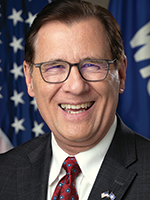
Photo of Dave Murphy
R Wisconsin Assembly · District 56

Rep. Dave Murphy

Compare
Total votes
717
all sessions
Attendance
100%
of floor votes
Near the chamber average
With party
99%
of cast votes
Near the chamber average
Bipartisan score
0%
crosses aisle rarely
Near the chamber average
Sponsored
1,508
bills & resolutions
Near the chamber average
Committees
5
assignments
1,508 bills and resolutions

Sponsored bills

Total
1,508
Primary
1,508
Co-sponsor
0
This page
1,508
matching current filters
Primary AB 908
Passed · Wisconsin Assembly · Lead sponsor
Relating to: government service delivery improvements. (FE)

Maddy summaryAB 908 requires state agencies to improve how they deliver public services (like tax filings or business licensing) by creating new standards for accessibility, efficiency, and customer feedback. It mandates agencies to designate a lead official to develop implementation plans, collect public input, and measure service quality using metrics like wait times and ease of access. The Secretary of State must appoint a coordinator to oversee cross-agency efforts and establish guidelines for service delivery channels (in-person, digital, phone, etc.). Annual reports to the legislature will track progress on these improvements.

Passed Mar 23, 2026 0 co-sponsors
Primary AB 909
Passed · Wisconsin Assembly · Lead sponsor
Relating to: an enterprise-wide data and efficiency study. (FE)

Maddy summaryAB 909 creates a joint legislative steering committee to conduct a state-wide study of data sharing practices across government agencies. The committee will hire an external firm to assess current data management systems, identify barriers to efficient data sharing, and recommend improvements like standardized frameworks or an enterprise data office. The study must evaluate best practices from other states and identify high-value use cases for better data collaboration. The committee must submit its final report with recommendations by December 31, 2026, to the legislature. This bill focuses on improving internal government efficiency through data standardization, not on direct policy changes affecting the public.

Passed Mar 23, 2026 0 co-sponsors
Primary AB 974
Passed · Wisconsin Assembly · Lead sponsor
Relating to: a public affairs network trust fund, grants to the WisconsinEye Public Affairs Network, and making an appropriation. (FE)

Maddy summaryAB 974 establishes a permanent "public affairs network fund" to provide annual grants to WisconsinEye, the public affairs network broadcasting state government proceedings. The bill creates a new trust fund using state appropriations, donations, and interest earnings, which will fund WisconsinEye’s operating costs for live broadcasts, civic events, and free online archives of unedited government proceedings. WisconsinEye must meet specific requirements, including appointing legislative designees to its board, focusing coverage on official government business, and providing continuous free public access to broadcasts and archives. If WisconsinEye ceases operations, it must repay all grant funds to the state and transfer its archives to the state historical society.

Passed Mar 23, 2026 0 co-sponsors
Primary AB 990
Failed · Wisconsin Assembly · Lead sponsor
Relating to: personal financial literacy high school graduation requirement.

Maddy summaryAB 990 would require Wisconsin high school students to earn at least 0.5 credits in personal financial literacy to graduate. The bill specifies that this course must cover topics like money management, saving/investing, credit/debt, and risk management. Schools could award credit for approved programs offered by financial institutions through school-based branches, as determined by the school board. This requirement would apply to students in high school grades once the law is enacted.

Failed Mar 23, 2026 0 co-sponsors
Primary AB 995
Passed · Wisconsin Assembly · Lead sponsor
Relating to: the effective date of administrative rules and the effective period of emergency rules.

Maddy summaryAB 995 modifies state law governing when administrative rules and emergency rules take effect. It changes the default effective date for administrative rules to the first day of the 7th month after publication (previously 6 months) and extends the maximum duration for emergency rules from 150 to 180 days. These changes directly affect state agencies creating rules and the public subject to those regulations. The bill provides clearer timelines for when rules become enforceable and how long emergency rules may remain in effect without further legislative action.

Passed Mar 23, 2026 0 co-sponsors
Primary AB 994
Passed · Wisconsin Assembly · Lead sponsor
Relating to: review by state agencies of administrative rules and enactments; an expedited process for repealing rules an agency no longer has the authority to promulgate; and the rule-making authority of certain agencies. (FE)

Maddy summaryAB 994 creates an expedited process for state agencies to repeal outdated regulations they no longer have legal authority to enforce. It defines "restricted agencies" as those inactive for 10+ years or delinquent in required reporting, requiring them to submit reports before proposing new rules. The bill establishes a new petition process where agencies can request the Joint Committee for Review of Administrative Rules to approve rule repeals, bypassing standard rulemaking steps for "unauthorized" rules. This directly affects state agencies managing obsolete regulations, streamlining removal of outdated rules without full legislative review. The change aims to reduce regulatory clutter by making it easier to eliminate rules no longer legally supported.

Passed Mar 23, 2026 0 co-sponsors
Primary AB 963
Passed · Wisconsin Assembly · Lead sponsor
Relating to: social media accounts for minors and providing a penalty.

Maddy summaryAB 963 requires large social media platforms (with $1 billion+ annual revenue) to identify users under 18 and obtain parental permission before collecting their personal data. After a user spends 25 hours on the platform within six months, companies must estimate age with 80% confidence; if uncertain, they must treat the user as a minor. Platforms must then get verifiable parental consent for data collection, including location, browsing history, and biometric information. This bill directly affects minors under 18 in the state and major social media companies operating there, focusing on data handling rather than restricting access to platforms.

Passed Mar 23, 2026 0 co-sponsors
Primary AB 912
Failed · Wisconsin Assembly · Lead sponsor
Relating to: an audiovisual recording of a child’s statement admitted as evidence.

Maddy summaryAB 912 amends Wisconsin law to allow audiovisual recordings of children's statements as evidence in court for children aged 12 to 18 (previously 12-16). The bill requires recordings to begin before the child's statement is made and directs courts to consider factors like the child's age and the interests of justice when admitting such evidence. It specifically raises the upper age limit for admissibility from 16 to 18 years old. This change directly affects children involved in legal cases where their recorded statements might be used as evidence. The bill does not alter how recordings are made but adjusts the eligibility criteria and court considerations.

Failed Mar 23, 2026 0 co-sponsors
Primary AB 991
Failed · Wisconsin Assembly · Lead sponsor
Relating to: allowing employment of minors in the operation of a pizza-dough roller. (FE)

Maddy summaryAB 991 allows minors aged 16 or older to operate pizza-dough rollers in restaurants, provided specific safety features are met. The bill directly affects minor workers in food service establishments using these machines and requires employers to ensure the equipment includes enclosed gears, microswitches that stop the machine if parts are removed, and safeguards preventing fingers or clothing from getting caught. Minors may not perform setup, adjustment, repair, oiling, or cleaning of the rollers. The law aligns with federal safety standards (29 CFR 570.62) and focuses solely on this specific equipment, not broader minor employment rules.

Failed Mar 23, 2026 0 co-sponsors
Primary AB 965
Failed · Wisconsin Assembly · Lead sponsor
Relating to: artificial intelligence systems that simulate humanlike relationships with children and providing a penalty.

Maddy summaryAB 965 prohibits operators of AI chatbots designed to simulate ongoing, humanlike relationships with children (under 18 in the state) from making them available without specific safety measures. The bill requires these "companion chatbots" to avoid encouraging self-harm, illegal activity, sexual content, or prioritizing a child’s feelings over safety, while excluding standard customer service tools. Violations could result in civil penalties up to $25,000 per day or private lawsuits by affected children or parents for damages. The law takes effect after January 1, 2027, with a transition period for operators unaware a user is a child.

Failed Mar 23, 2026 0 co-sponsors
Showing 121 to 130 of 1,508 bills
Previous 1 … 12 13 14 … 151 Next