

Maddy summaryThis bill creates a new Office of Civil Legal Aid overseen by a nine-member Civil Legal Aid Board to provide legal representation for residential tenants facing eviction. The legislation establishes a right to appointed counsel at state expense for tenants in eviction actions, requiring landlords to include notices about this right in rental agreements and eviction notices. A nine-member board, appointed by the state supreme court with at least five being licensed attorneys, would oversee program operations, manage budgets, and appoint lawyers to represent tenants who request assistance. The bill also authorizes funding for the office and sets up procedures for tenants to request appointed counsel by appearing in court or contacting the clerk before the eviction hearing date.
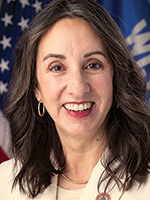
Rep. Lee Snodgrass
Sponsored bills
Maddy summaryThis bill adjusts how Wisconsin calculates and distributes state funding for special education costs and general school aid. It modifies the reimbursement rate for special education expenses, allowing the state to distribute up to 100 percent of eligible costs rather than a lower fixed percentage. The legislation also increases the general school aid appropriation for the 2026-27 fiscal year by approximately $446 million to support public school districts. These changes directly affect school districts and the state Department of Public Instruction by altering how funds are allocated and calculated for educational programs.
Maddy summaryThis bill modifies state election law to require disclosure of a donor's job and employer address when they contribute more than $100 to various political committees during a calendar year. The change applies to contributions made to candidates, political parties, legislative committees, action committees, independent expenditure groups, recipients, referendum committees, and recall committees. Under current rules, this information is only required for contributions exceeding $200, so the bill lowers that threshold to increase transparency in political fundraising. The amendment affects individuals who make these contributions and the committees that receive them by mandating additional reporting details.
Maddy summaryThis bill creates new criminal penalties for intentionally obstructing access to reproductive health service facilities or places of religious worship. It defines prohibited actions as using force, threats, or physical obstruction to injure, intimidate, or interfere with people seeking or providing reproductive health services, or to damage property at these locations. Violations are classified as a Class A misdemeanor for first offenses and a Class I felony for repeat offenses. The law also establishes civil remedies allowing affected individuals or entities to sue for damages, injunctive relief, and attorney fees, with the option to receive statutory damages of up to $25,000 per violation. Additionally, the bill modifies existing tort claim limitations to exclude cases covered under this new statute.
Maddy summaryThis bill amends Wisconsin statutes to increase penalties for repeat offenders convicted of operating a motor vehicle while intoxicated. It directly affects individuals with two or more prior DWI convictions within a 10-year period, as well as those with a lifetime history of alcohol-related driving offenses. The key changes include mandating longer license revocations ranging from one to two years, adjusting fine amounts, and establishing specific eligibility timelines for obtaining occupational licenses after revocation periods. The legislation also clarifies how prior convictions and suspensions are counted toward triggering these enhanced penalties, while allowing counties to offer reduced minimum jail sentences if offenders successfully complete alcohol and drug treatment programs.
Maddy summaryAB 1178 amends Wisconsin statutes to update definitions and procedures for regional transit authorities, ensuring they are recognized as eligible entities for various state programs including highway relocation orders, right-of-way applications, and employer classifications for employee benefits. The bill creates new funding mechanisms by establishing appropriation accounts to collect and distribute taxes imposed by transit authorities that choose to levy them, with a portion of those revenues retained for administrative costs. Additionally, the legislation clarifies which organizations qualify as municipalities and employers under existing laws, explicitly including transit authorities created under the specified chapter while excluding cultural arts districts from certain employer definitions. This bill does not mandate tax collection but provides the legal framework for transit authorities to adopt resolutions imposing taxes if they choose to do so.
Maddy summaryAB 1008 clarifies eligibility for Wisconsin's child care subsidy program (Wisconsin Shares) by expanding "relative" definitions to include "like-kin" caregivers. It allows non-relatives who provide care as family (e.g., close family friends) to qualify for subsidies if they meet specific criteria, such as having a court order and receiving payments under certain statutes. The bill also adjusts income calculations for eligibility, including court-ordered support payments exceeding $1,250 monthly. This directly affects caregivers of children under 13 (or 19 if disabled) who seek child care assistance through Wisconsin Shares.
Maddy summaryAB 1023 creates a dedicated $500,000 annual appropriation (for 2025-26 and 2026-27) specifically for training and technical assistance for tribal child care providers. The bill directs the Department of Children and Families to use this funding to contract with agencies or award grants aimed at improving the quality of child care services provided by tribal organizations. This funding is separate from other child care funding streams and must be used exclusively for these tribal provider support activities. The bill directly affects tribal child care programs in Wisconsin by providing a new, dedicated resource for their professional development and operational support.
Maddy summaryAB 999 clarifies that employees of the University of Wisconsin Hospitals and Clinics Authority (UWHCA) are covered under collective bargaining agreements. The bill amends specific statutes (including 40.02, 40.05, and 111.02) to explicitly include UWHCA employees in provisions governing union dues, sick leave conversion, and bargaining unit structures. This ensures UWHCA staff have the same collective bargaining rights as other state employees covered under Chapter 111. The changes directly affect UWHCA employees by integrating them into existing labor frameworks without creating new rights. The bill focuses on administrative alignment within current state labor laws.
Maddy summaryAssembly Resolution 12 designates February 28, 2026, as Rare Disease Day in Wisconsin to raise awareness about rare diseases, which affect millions of Americans including Wisconsin residents. The resolution acknowledges challenges like delayed diagnosis and limited treatment access for conditions impacting fewer than 200,000 people. It aligns with a national observance organized by the National Organization for Rare Disorders (NORD) and serves as a symbolic gesture without creating new laws or funding.