

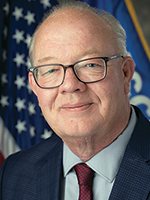
Photo of Todd Novak
R Wisconsin Assembly · District 51 On the 2026 ballot

Rep. Todd Novak

Compare
Total votes
807
all sessions
Attendance
99%
11 missed
Near the chamber average
With party
98%
of cast votes
Near the chamber average
Bipartisan score
1%
crosses aisle rarely
Near the chamber average
Sponsored
879
bills & resolutions
Near the chamber average
Committees
5
assignments
879 bills and resolutions

Sponsored bills

Total
879
Primary
879
Co-sponsor
0
This page
879
matching current filters
Primary AJR 71
Failed · Wisconsin Assembly · Lead sponsor
Relating to: honoring Jerry Apps for his contributions to Wisconsin’s heritage.

Maddy summaryThis joint resolution (AJR 71) is a ceremonial honor recognizing Jerry Apps for his decades-long contributions to Wisconsin's heritage. It specifically acknowledges his work as a 4-H advocate, UW-Madison professor, author of over 50 books on Wisconsin history and rural life, and recipient of numerous awards. The resolution has no legal effect or policy changes - it solely serves to formally honor his legacy through legislative recognition. It was introduced by multiple legislators and referred to the Rules Committee.

Failed Mar 23, 2026 0 co-sponsors
Primary AB 348
Failed · Wisconsin Assembly · Lead sponsor
Relating to: the minimum age of assistant child care teachers.

Maddy summaryAB 348 lowers the minimum age for assistant child care teachers in Wisconsin from 17 or 18 to 16 years old, directly affecting licensed child care centers hiring these staff. To qualify, individuals must complete early childhood education training (e.g., two college credits, a department-approved course, or an approved program) within six months. The bill maintains current rules that assistant teachers may only provide sole supervision during specific times (like opening/closing hours or naptime) if a qualified child care teacher is present on-site. It does not change requirements for child care teachers themselves.

Failed Mar 23, 2026 0 co-sponsors
Primary AB 190
Failed · Wisconsin Assembly · Lead sponsor
Relating to: obtaining attorney fees and costs under the state’s public records law when an authority voluntarily or unilaterally releases a contested record after an action has been filed in court.

Maddy summaryAB 190 modifies state public records law to allow requesters who win partial victories to recover attorney fees. Specifically, it enables fee recovery when a government agency voluntarily releases a contested record *after* a lawsuit is filed, and a court determines the lawsuit was a substantial factor in that release. This directly affects public record requesters who successfully pressure agencies to disclose documents through litigation without a full court judgment. The bill creates a clear mechanism for fee awards in these specific scenarios, avoiding the need for a formal court order on the record's disclosure.

Failed Mar 23, 2026 0 co-sponsors
Primary AB 141
Failed · Wisconsin Assembly · Lead sponsor
Relating to: provisional social worker certificates and licenses.

Maddy summaryAB 141 creates a temporary "provisional" pathway for social work licensure in Wisconsin, directly affecting individuals who have taken but not passed the required national social work exam. It allows these applicants to obtain a provisional certificate or license (valid for 36 months) while completing supervised practice, requiring 37.5 hours of supervision (including 25 hours of in-person one-on-one) over their first 2,000 hours of practice. The bill specifies that provisional credentials cannot be renewed and transition to full certification only after verified completion of supervised practice and meeting other requirements under Section 457.08(6). This change streamlines the process for entry-level social workers to gain practical experience while working toward full licensure.

Failed Mar 23, 2026 0 co-sponsors
Primary AB 360
Failed · Wisconsin Assembly · Lead sponsor
Relating to: small law enforcement agency grant pilot program. (FE)

Maddy summaryAB 360 creates a grant program to help small law enforcement agencies (those with 25 or fewer full-time officers) address staffing shortages. Agencies can apply for grants to cover costs of preparatory training for future officers and up to six months of on-the-job training for new recruits, provided they have high vacancy rates (20%+) or upcoming retirements. Recipients must commit to working at the agency for one year after training, and agencies may exclude new recruits from staffing maintenance requirements for six months. The program runs for 18 months after all funds are distributed, with repayment required if commitments aren't met.

Failed Mar 23, 2026 0 co-sponsors
Primary AB 17
Passed · Wisconsin Assembly · Lead sponsor
Relating to: creating an employee ownership conversion costs tax credit, a deduction for capital gains from the transfer of a business to employee ownership, and an employee ownership education and outreach program. (FE)

Maddy summaryAB 17 creates tax incentives to encourage business transitions to employee ownership. It provides a credit covering 70% of conversion costs (up to $100,000) for worker-owned cooperatives and 50% (up to $100,000) for employee stock ownership plans (ESOPs), plus a deduction for capital gains tax on business transfers to these models. The bill directly affects business owners in Wisconsin who convert their companies to employee ownership structures, requiring employee ownership to exceed 50% to qualify. It also establishes an education program to support these transitions, aiming to make such conversions more financially accessible.

Passed Mar 23, 2026 0 co-sponsors
Primary AB 392
Failed · Wisconsin Assembly · Lead sponsor
Relating to: creating a Task Force on Missing and Murdered African American Women and Girls and making an appropriation. (FE)

Maddy summaryAB 392 creates a state Task Force focused on addressing the crisis of missing and murdered African American women and girls in Wisconsin. The task force will develop recommendations to improve responses, prevention efforts, and support services for this community. The bill includes a funding appropriation to cover the task force’s operational costs. It was introduced by multiple legislators and referred to the Committee on Criminal Justice and Public Safety for further review.

Failed Mar 23, 2026 0 co-sponsors
Primary AR 8
Failed · Wisconsin Assembly · Lead sponsor
Relating to: commemorating the victims of the Abundant Life Christian School tragedy, supporting the students, staff, families, and community of Abundant Life Christian School, and condemning violence.

Maddy summaryThis Assembly Resolution (AR 8) commemorates the victims of the December 16, 2024, Abundant Life Christian School tragedy in Wisconsin, specifically honoring Erin West and Rubi Vergara who died and supporting the six injured students and staff. It formally sends condolences to their families, expresses ongoing support for the school community, and condemns the violence that caused the tragedy. The resolution calls on Wisconsin residents to unite against all forms of violence but does not create new laws or allocate funding. As a symbolic gesture, it directly affects the Abundant Life Christian School community and all Wisconsin school communities impacted by violence.

Failed Mar 23, 2026 0 co-sponsors
Primary AB 250
Failed · Wisconsin Assembly · Lead sponsor
Relating to: funding for the War Memorial Center and making an appropriation. (FE)

Maddy summaryAB 250 allocates $9 million annually from the Veterans Affairs budget to fund war memorials in populous counties. Memorial boards must provide a full matching contribution to request funds, which can cover operations, maintenance, construction, or facility improvements. Boards must report annually to the legislature on fund usage and remaining balances. The bill creates a formal process for memorial boards to access state funding while requiring transparency in how funds are spent.

Failed Mar 23, 2026 0 co-sponsors
Primary AB 161
Failed · Wisconsin Assembly · Lead sponsor
Relating to: governmental restrictions based on the energy source of a motor vehicle or other device.

Maddy summaryAB 161 prohibits state agencies and local governments from restricting the sale, use, or purchase of motor vehicles or other devices based on their energy source (e.g., electric, gasoline, hydrogen). It specifically allows governments to set their own purchasing policies for their own fleets but bans restrictions on consumer or commercial use. The bill directly affects state/local governments, businesses selling vehicles/devices, and residents using such products. It creates a clear rule that energy source cannot be a factor in regulatory decisions.

Failed Mar 23, 2026 0 co-sponsors
Showing 81 to 90 of 879 bills
Previous 1 … 8 9 10 … 88 Next