

Maddy summaryAB 118 creates a state-funded pilot program to help farmers transition to managed grazing systems, allocating $500,000 annually from the environmental fund. The program provides grants covering technical assistance, infrastructure (like fencing and water systems), and incentives during the first three years of implementing new or improved grazing practices on marginal lands (e.g., flood-prone or steep areas). Grants are limited to $40,000 per farmer, with payments phased over three years (75% upfront, then 12.5% each subsequent year). The bill directly affects farmers adopting forage-based managed grazing and requires the Department of Agriculture to support this transition through a new staff position. It does not fund existing grazing systems, focusing only on new implementations or enhancements that improve conservation and financial outcomes.
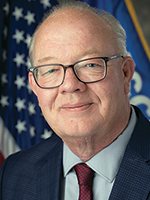
Rep. Todd Novak
Sponsored bills
Maddy summaryAB 298 creates grants for technical colleges to develop and share digital maps of their buildings with local law enforcement. It requires these "interactive critical mapping data" systems to include specific details like building numbers, floors, and room locations - without needing additional software purchases by first responders. The grants, administered by the Office of School Safety, aim to improve emergency response coordination during incidents. This directly affects technical colleges (via district boards) and law enforcement agencies that receive the mapping data.
Maddy summaryAB 303 creates a new state grant program to fund crisis intervention services for people contacting the national 988 Suicide and Crisis Lifeline from within the state. The bill requires the state department to award grants to organizations providing crisis care coordination to individuals who call or text 988. This directly affects crisis service providers that serve callers within the state's geographic boundaries. The key mechanism is a state-funded grant program administered by the department to support these organizations, ensuring consistent access to crisis care for 988 users. The bill does not change the 988 hotline's operation but provides state funding to support local crisis response services.
Maddy summaryAB 299 requires the University of Wisconsin (UW) System Board to contract with a mental health service provider for virtual counseling and support for students at UW institutions with 30,000 or fewer full-time undergraduate students (as counted April 1 annually). The services must work alongside existing campus mental health programs, operate beyond standard business hours, and include proven clinical support and licensed professionals experienced with college students. Vendors must have at least five years of higher education mental health experience and provide software enabling collaboration with campus staff. The board must annually report student usage statistics system-wide and by institution to the legislature.
Maddy summaryAB 260 establishes a two-year pilot program providing school-centered mental health services to at-risk students and families in two schools per year (one rural, one urban/suburban). The program requires schools to already offer some behavioral health resources and agree to surveys/data sharing. It funds full-time therapists and family coaches to deliver year-round, evidence-based services - including in-school therapy, family coaching on mental health support, and connections to community health resources - while measuring impacts on students' mental health symptoms, academic performance, and basic needs like housing or food. A report on outcomes must be submitted to the legislature after the pilot ends.
Maddy summaryAB 26 corrects a misleading title and focuses on background check procedures, not juror protection. The bill requires agencies (like child welfare departments) to verify final court dispositions for certain serious crimes within 5 years by contacting courts, if background checks indicate potential violations. It specifically targets offenses including battery (e.g., sections 940.20, 940.202) and threats listed in statutes. This affects agencies conducting background checks for employment or services, ensuring they confirm pending or recent convictions before making decisions.
Maddy summaryAB 233 amends Wisconsin law to expand funding for child advocacy centers by adding two new recipients: the Lakeshore Regional Child Advocacy Center in Sheboygan County and a statewide "Child Advocacy Centers of Wisconsin" entity. It authorizes $17,000 annually per center for education, training, and quality assurance activities related to child maltreatment response. The bill directly affects existing centers (like those in Milwaukee, Kenosha, and Racine Counties) and the newly added entities by securing their grant funding from the Department of Justice’s existing appropriation. The policy change specifies concrete funding recipients and mechanisms without altering eligibility criteria for current centers.
Maddy summaryAB 83 prohibits state and local governments from restricting the sale or use of motor vehicles based on their energy source (e.g., gasoline, electric, or hydrogen). It also extends this rule to other energy-powered devices, such as power tools or generators, if their significant functions rely on that energy source. The law explicitly allows government agencies to prioritize electric vehicles for their own fleets when purchasing. This ensures public policies do not discriminate against specific vehicle or device types based on energy use.
Maddy summaryAB 63 authorizes the Wisconsin Health and Educational Facilities Authority (WHEFA) to provide working capital loans to participating health, educational, and nonprofit institutions for operating expenses. It expands WHEFA's ability to make loans for facility projects, requiring security like mortgages and limiting loan amounts to project costs or approved working capital. The bill permits out-of-state projects only if they include a substantial Wisconsin component, as determined by WHEFA. It also sets salary caps for WHEFA's executive staff based on state pay scales for specific leadership roles.
Maddy summaryAB 279 creates a state grant program to help municipalities and eligible nonprofits recruit new residents from outside the state. The program provides grants (capped at $500,000 per municipality annually) to cover costs of talent recruitment initiatives, with half the funds paid upfront and the second half released only if half the target number of relocating households is met. Households must earn at least $55,000 annually, live outside the state when applying, and commit to relocating to qualify for incentives. Recipients must submit detailed semiannual reports tracking applications, approved households, costs, incomes, and economic impacts like tax revenue.