

Maddy summaryAB 974 establishes a permanent "public affairs network fund" to provide annual grants to WisconsinEye, the public affairs network broadcasting state government proceedings. The bill creates a new trust fund using state appropriations, donations, and interest earnings, which will fund WisconsinEye’s operating costs for live broadcasts, civic events, and free online archives of unedited government proceedings. WisconsinEye must meet specific requirements, including appointing legislative designees to its board, focusing coverage on official government business, and providing continuous free public access to broadcasts and archives. If WisconsinEye ceases operations, it must repay all grant funds to the state and transfer its archives to the state historical society.
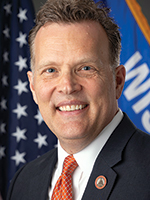
Rep. Andrew Hysell
Sponsored bills
Maddy summaryAB 976 clarifies how tax credits for low-income housing projects are claimed by business entities. It modifies rules so partnerships, limited liability companies, and tax-option corporations cannot claim the credit directly; instead, their members or shareholders (including insurers who are part of such entities) may claim it based on the entity's eligible costs. The bill requires entities to calculate and distribute credit amounts to members/shareholders, with specific allocation rules for ownership interests or written agreements. It directly affects housing developers, investors, and insurers involved in low-income housing projects financed through tax-exempt bonds in the state. The changes standardize credit allocation across multiple tax code sections without altering eligibility or credit amounts.
Maddy summaryAB 736 requires state correctional facilities and county jails to provide free, nontoxic menstrual products to all inmates with active menstrual cycles. It mandates facilities to offer at least three verified brands each of tampons (with plastic applicator), pads, and reusable menstrual cups from a published list of nontoxic products. The bill defines "nontoxic" as free from harmful chemicals and requires facilities to sanitize reusable cups as needed. This directly affects incarcerated people who menstruate, ensuring access to essential hygiene products without cost. The law applies to all state prisons, county jails, and houses of correction in the state.
Maddy summaryAB 724 requires the Department of Corrections to create a public, interactive website that updates complaint data from state correctional institutions every 72 hours. The system must display the total annual complaints per facility and show all complaint details broken down by category (without personal information about inmates or staff). The bill appropriates $70,000 for fiscal year 2025-26 to establish the system and $30,000 for 2026-27 to operate it. This affects state correctional institutions (which must submit data) and the public (which gains access to the searchable complaint information).
Maddy summaryAB 747 regulates hemp-derived cannabinoid products like delta-8, delta-9, and delta-10 THC gummies or edibles. It requires third-party lab testing for potency, safety (e.g., pesticides, heavy metals), and THC content (max 0.3% or federal max 1%), mandates clear labeling with batch numbers and manufacturer details, and bans sales to people under 21. The bill excludes prescription drugs and certain CBD products governed by separate laws. Businesses must provide test results via QR codes or labels at point of sale.
Maddy summaryAB 731 requires state and county correctional facilities to provide inmates and juveniles with minimum weekly telecommunications access at no cost, including 180 minutes of phone calls, 60 minutes of video calls, and 100 text messages. It directly affects individuals in state prisons, juvenile correctional facilities, and county jails by mandating these service levels, which must be maintained or improved from existing access levels. The bill establishes funding through specific appropriations ($4.46 million for adult inmates, $517,500 for juveniles) and requires counties to join a state telecommunications contract or report why they don’t, with the state reimbursing counties for costs if they opt out. It also prohibits using telecom services to replace in-person visitation and bans charging inmates for services beyond the minimums.
Maddy summaryAB 780 replaces Wisconsin's dry cleaner environmental response program with the "Revitalize Wisconsin program," which provides $3 million annually to help clean up contaminated properties. The program directly assists property owners (called "innocent landowners") who didn't cause pollution at sites known as "brownfields" (abandoned or underused properties with environmental risks). It funds cleanup costs, waste removal, and sampling to address health and environmental threats, with funds drawn from the environmental fund. The bill also repeals outdated provisions and creates new rules for administering these cleanup grants.
Maddy summaryAB 765 creates a state bonding program to fund lead service line replacement for private water users connected to public water systems. It authorizes up to $274.95 million in state bonds (increasing previous limits) and allocates $200 million from bond proceeds to provide forgivable loans covering up to 50% of replacement costs for homeowners. The bill directly affects private residents with lead pipes by reducing their financial burden for replacing hazardous infrastructure. Key provisions include the new bonding authority and the specific allocation for forgivable loans to address public health concerns related to lead in drinking water.
Maddy summaryAB 770 allocates $500,000 annually from the general fund for the Groundwater Coordinating Council's activities, specifically for the Department of Natural Resources and the University of Wisconsin System. The bill creates a new statutory funding line (20.370 (4) (cf)) to support ongoing council operations under existing laws (ss. 15.347(13) and 160.50). This appropriation applies to both the 2025-26 and 2026-27 fiscal years, directly funding the council's coordination work related to groundwater management. The bill does not change groundwater regulations but ensures dedicated funding for the council's existing responsibilities.
Maddy summaryAB 769 creates a new grant program to fund food waste reduction pilot projects, allocating $100,000 annually for fiscal years 2025-26 and 2026-27. The grants support projects focused on preventing food waste, redirecting surplus food to hunger relief organizations, and composting food waste. The Department of Agriculture must prioritize proposals serving low-income census tracts (below statewide median income) without grocery stores. The bill also authorizes the department to create rules for administering the program. This directly affects local pilot projects and hunger relief organizations in underserved communities.