

Maddy summaryAB 655 requires courts to order drivers convicted of two or more reckless speeding violations (exceeding speed limits by 20+ mph) within five years to install a speed limiter on their vehicles. The law applies specifically to "Class D" vehicles and mandates that the device prevent operation above a set speed, with financial hardship exceptions for low-income individuals. Courts must order the speed limiter installation, maintenance, and removal costs (capped at 50% for qualifying low-income drivers), and violations of this order carry fines up to $600 or imprisonment. The bill creates a state program using existing ignition interlock infrastructure to manage provider rules, reporting, and enforcement under sections 343.347 and 347.414.
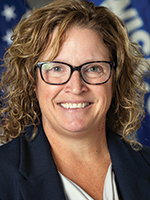
Rep. Joan Fitzgerald
Sponsored bills
Maddy summaryAB 570 redirects remaining scholarship funds to public school districts when students switch schools. If a student withdraws from a private school under a parental choice program, the Special Needs Scholarship Program, or an independent charter school during a school year and enrolls in a public school district, the state department must pay the unused scholarship amount to that district instead of the original school. This applies to all specified programs and covers the remainder of the school year's funding. The bill takes effect on July 1, 2026. It directly affects students transferring programs, public school districts receiving funds, and the state's scholarship payment process.
Maddy summaryAB 635 requires the state environmental department to notify county health departments, tribal health departments, and county land conservation departments within 7 business days whenever groundwater protection standards or PFAS standards are exceeded. The bill creates a formal notification system to alert affected local governments and adjacent counties that might face negative impacts, with notices available for public review under state law. This law directly affects local health and land management agencies in counties where water contamination breaches are confirmed, ensuring timely public awareness of groundwater safety issues.
Maddy summaryAB 97 extends health coverage under Wisconsin's Medicaid program (Medical Assistance) for postpartum women from 60 days to 365 days after pregnancy, directly affecting pregnant and postpartum women who qualify for the program. The bill changes eligibility rules to ensure coverage continues without regard to income changes during this extended period. It also adds a provision allowing women with family incomes above 300% of the poverty line to qualify if their income is spent on medical care or health insurance premiums. This policy update aims to provide longer-term health coverage for new mothers during a critical postpartum period.
Maddy summaryAB 263 requires disability insurance policies and self-insured health plans to cover diagnostic breast examinations and supplemental screenings for individuals at increased breast cancer risk, as defined by National Comprehensive Cancer Network guidelines or breast density (per American College of Radiology standards). It mandates coverage without copays or deductibles for these specific screenings, including diagnostic exams for abnormalities and supplemental screenings for high-risk patients. The bill applies to all affected plans, ensuring coverage regardless of symptoms and prohibiting cost-sharing for these services. This directly impacts patients with dense breast tissue, family history, or other risk factors, as well as the insurers and employers offering these health plans.
Maddy summaryAB 476 creates a new legal right for employees to sue employers or co-workers for creating an "abusive work environment" that causes physical or psychological harm. It defines "abusive conduct" as repeated verbal abuse, threats, sabotage of work, or exploitation of health conditions - excluding single incidents unless exceptionally severe. Employees can seek remedies like medical costs, back pay, or front pay through a civil lawsuit filed within one year of the abusive conduct, while also prohibiting retaliation for reporting abuse or participating in investigations. The law directly affects employees experiencing such conduct and employers/co-workers who engage in it, with specific procedures requiring notification to the department for certain claims.
Maddy summaryThis bill reduces the required disability rating for veterans to qualify for the property tax credit from 100% to 70% or higher. It allows veterans with service-connected disabilities rated at least 70% to claim a credit proportional to their disability percentage (e.g., a 70% rating would yield 70% of the full credit amount). Surviving spouses of eligible veterans also qualify under these updated terms. The change directly affects veterans and surviving spouses with service-connected disabilities below 100% but at or above 70%.
Maddy summaryAB 688 creates a temporary Shared Revenue Advisory Council to review and recommend improvements to how Wisconsin distributes supplemental county and municipal aid. The council, composed of legislative leaders, local association representatives, and the revenue secretary, must study revenue variations, evaluate current distribution formulas, and propose fairer methods for 2027 and beyond. It requires the council to submit recommendations by January 2027, including a formula that maintains or increases aid for all counties/municipalities and accounts for population and equalized value changes. The bill also establishes a new funding mechanism: starting in 2026, payments will adjust annually based on tax revenue changes (using $16.2575 million as the base for 2026-27) and include a population-based supplement for larger cities. This directly affects all Wisconsin counties and municipalities receiving supplemental aid under existing statutes.
Maddy summaryAB 692 organizes the administration of existing county and municipal sales taxes in Wisconsin. It creates new administrative structures for local governments to manage tax revenues collected under statutes 77.70 (counties) and 77.702 (municipalities), specifically designating 0.75% of collected tax revenue for administrative purposes. The bill requires local governments to follow specific procedures for adopting or repealing tax ordinances (e.g., submitting certified copies to the revenue secretary 120 days in advance) and limits refund claims to four years after repeal. It directly affects counties and municipalities that impose local sales taxes, ensuring consistent handling of these funds within state tax administration.
Maddy summaryAB 680 prohibits the sale of intoxicating hemp products to individuals under age 21. It defines "intoxicating hemp products" as those containing specific cannabinoids (like delta-8 THC) above certain thresholds (e.g., over 0.3% concentration for solids, 1mg per 12oz beverage). Retailers must verify age, use child-resistant packaging, display age warnings, and provide QR codes linking to product testing certificates. This applies only to products that can cause intoxication, not all hemp products (which remain legal with under 0.3% THC).