

Maddy summaryAB 477 changes the age threshold for issuing a Missing Child Alert from under 10 years to under 12 years. It directly affects minors under 12 who are believed to be incapable of returning home without assistance due to a physical or mental condition, disability, or inability to navigate safely. The bill amends the statute to adjust the age requirement while maintaining the existing criteria for qualifying alerts. This is a technical adjustment to the alert system's eligibility rules, not a new program or policy. The change aims to expand the alert coverage to include older minors who may still require urgent assistance.
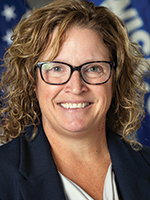
Rep. Joan Fitzgerald
Sponsored bills
Maddy summaryAB 654 creates a public information campaign to reduce aggressive driving behaviors like excessive speeding, illegal racing, and fleeing police. The bill allocates $500,000 over two fiscal years ($250,000 annually) for the campaign, which must run for 1-2 years and prioritize areas with the highest incidents of such driving. It requires using billboards, radio, TV, and digital ads, while prioritizing local contractors and featuring stories from affected individuals like young drivers and families. The campaign targets high-risk drivers and must partner with community organizations to influence behavior, without making specific policy changes to traffic laws.
Maddy summaryAJR 109 is a symbolic joint resolution honoring Wisconsin's Hispanic and Latino veterans. It formally recognizes their service and sacrifices throughout U.S. military history, including specific references to the Borinqueneers unit and General Richard Cavazos. The resolution expresses the Wisconsin Legislature's gratitude through a formal statement, acknowledging these veterans' contributions without creating new programs or altering laws. This is a commemorative gesture, not a policy change, and directly affects no individuals or entities through legislative action.
Maddy summaryAB 357 proposes a grant program to provide funding for technical education equipment at community colleges and vocational programs. It would directly affect these educational institutions by enabling them to purchase new or updated equipment for training in fields like advanced manufacturing and IT. The bill establishes a competitive grant process administered by the state workforce agency, with funding allocated based on program needs and student enrollment. Currently in committee review after its introduction and public hearing, the bill has received a fiscal estimate but has not yet been enacted.
Maddy summaryAB 559 creates annual payments to municipalities and counties where energy storage facilities (like batteries or pumped hydro) or liquefied natural gas (LNG) storage facilities are located. For energy storage facilities, payments equal $2,000 per megawatt of capacity, split between the local city/village/town and county. For LNG facilities, payments are based on 3-6 mills of the facility’s property value, also split between the local jurisdiction and county. The bill ensures these payments continue even if some facility units shut down, and funds come from a public utility account. It directly affects local governments hosting these facilities and utility companies owning them.
Maddy summaryAB 653 creates a state-funded program to improve safety at high-risk intersections. It directs the Department of Transportation to provide local governments (cities and counties) with funding for safety upgrades at signalized and stop-sign intersections with excessive crash rates. The program prioritizes intersections in the 10% of counties with the worst crash records from 2019-2024 data, using $6 million in new annual funding. This directly affects local governments managing highways by enabling them to apply for grants or reimbursements for intersection safety improvements.
Maddy summaryAB 637 requires private postsecondary schools in the state to derive at least 20% of their annual revenue from non-federal sources in two out of their three most recent fiscal years to enroll state residents. This applies directly to private colleges and universities seeking to admit students who live in the state. The bill defines "annual revenue" and "federal funds" specifically and grants the state education department authority to create implementing rules. The requirement will take effect for the 2028-29 academic year.
Maddy summaryAB 638 requires private postsecondary schools seeking state approval (or renewal) to maintain a reserve fund equal to 25% of their highest annual revenue over the past five years (or projected first-year revenue for new schools). This fund protects students if schools commit fraud, fail to deliver promised education services, or close unexpectedly. Schools must also pay a $3 student protection fee for every $1,000 of their annual revenue, with fee collection stopping once the fund exceeds $5 million. The bill directly affects private colleges operating in the state, creating a financial safety net for students through mandatory reserves and a fee-based fund.
Maddy summaryAB 632 imposes a moratorium on issuing permits for mining sulfide ore bodies (mineral deposits where metals mix with sulfide minerals) until two conditions are verified. Specifically, the department must confirm that similar mining operations in the U.S. or Canada have operated for at least 10 years without polluting groundwater or surface water from acid drainage or heavy metals, and that similar closed mines have remained pollution-free for 10 years. This applies to all permit applications, regardless of when they were submitted, and remains in effect until the verification requirements are met. The bill directly affects mining companies seeking permits for sulfide ore mining projects in the state.
Maddy summaryAB 626 allows drivers and ID card holders to obtain electronic copies of their licenses and identification cards from the state department. It permits displaying these electronic copies on phones or devices during traffic stops, while ensuring officers cannot view other phone content. The bill adds a $10 fee for electronic copies (separate from standard card fees) and clarifies that physical copies remain subject to different fee rules. This directly affects drivers who choose electronic formats and the state department managing license issuance.