

Maddy summaryThis bill updates Wisconsin election laws to require political committees to report specific spending details when they make mass communications, such as sending 500 or more identical emails, making 500 or more identical phone calls, or distributing 500 or more identical printed materials. It defines mass communications as messages sent during the 60 days before an election that clearly reference a certified candidate and are intended to appeal for or against their vote. Committees including political action committees, independent expenditure committees, and legislative campaign committees must file registration statements and detailed reports about these expenditures within 10 business days of making the communication or exceeding spending thresholds. The changes apply to any group supporting or opposing candidates in elections and aim to increase transparency around campaign spending on large-scale outreach efforts.
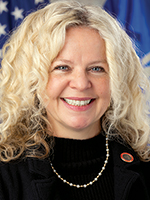
Rep. Brienne Brown
Sponsored bills
Maddy summaryThis bill modifies state election law to require disclosure of a donor's job and employer address when they contribute more than $100 to various political committees during a calendar year. The change applies to contributions made to candidates, political parties, legislative committees, action committees, independent expenditure groups, recipients, referendum committees, and recall committees. Under current rules, this information is only required for contributions exceeding $200, so the bill lowers that threshold to increase transparency in political fundraising. The amendment affects individuals who make these contributions and the committees that receive them by mandating additional reporting details.
Maddy summaryThis bill updates Wisconsin's campaign finance laws by creating new definitions for mass communications, including mass distribution, mass electronic communication, and mass telephoning, each requiring at least 500 pieces of substantially identical material or messages. It modifies how coordinated expenditures are defined for express advocacy and mass communications, specifying that coordination occurs when a candidate or their party exercises control over or engages in substantial discussions regarding the content, timing, or other aspects of a communication. The legislation also establishes reporting requirements for coordinated mass communications made during the 60-day period before an election, requiring political committees to report expenditures and candidate committees to report them as contributions. These changes directly affect political action committees, independent expenditure committees, and candidates by clarifying what constitutes coordinated spending and how such spending must be reported under existing contribution limits and source restrictions.
Maddy summaryThis bill creates new criminal penalties for intentionally obstructing access to reproductive health service facilities or places of religious worship. It defines prohibited actions as using force, threats, or physical obstruction to injure, intimidate, or interfere with people seeking or providing reproductive health services, or to damage property at these locations. Violations are classified as a Class A misdemeanor for first offenses and a Class I felony for repeat offenses. The law also establishes civil remedies allowing affected individuals or entities to sue for damages, injunctive relief, and attorney fees, with the option to receive statutory damages of up to $25,000 per violation. Additionally, the bill modifies existing tort claim limitations to exclude cases covered under this new statute.
Maddy summaryThis bill amends Wisconsin statutes to increase penalties for repeat offenders convicted of operating a motor vehicle while intoxicated. It directly affects individuals with two or more prior DWI convictions within a 10-year period, as well as those with a lifetime history of alcohol-related driving offenses. The key changes include mandating longer license revocations ranging from one to two years, adjusting fine amounts, and establishing specific eligibility timelines for obtaining occupational licenses after revocation periods. The legislation also clarifies how prior convictions and suspensions are counted toward triggering these enhanced penalties, while allowing counties to offer reduced minimum jail sentences if offenders successfully complete alcohol and drug treatment programs.
Maddy summaryThis bill updates Wisconsin statutes to allow hospitals, fire stations, emergency medical services stations, and law enforcement agencies to install newborn infant safety devices for surrendering babies. The law defines these devices as wall-mounted units with separate exterior and interior access points and requires them to be monitored 24 hours a day with surveillance cameras. It also permits parents unable to reach a designated surrender location to call 911 for assistance in relinquishing custody of their newborn. The bill establishes specific operational requirements for facilities that choose to use these devices, including regular physical checks and alarm system testing.
Maddy summaryAB 1178 amends Wisconsin statutes to update definitions and procedures for regional transit authorities, ensuring they are recognized as eligible entities for various state programs including highway relocation orders, right-of-way applications, and employer classifications for employee benefits. The bill creates new funding mechanisms by establishing appropriation accounts to collect and distribute taxes imposed by transit authorities that choose to levy them, with a portion of those revenues retained for administrative costs. Additionally, the legislation clarifies which organizations qualify as municipalities and employers under existing laws, explicitly including transit authorities created under the specified chapter while excluding cultural arts districts from certain employer definitions. This bill does not mandate tax collection but provides the legal framework for transit authorities to adopt resolutions imposing taxes if they choose to do so.
Maddy summaryThis bill clarifies the rules for selling alcoholic beverages in public parks operated by counties or municipalities in Wisconsin. It specifies that such sales must be conducted by county or municipal officers or employees under rules or regulations approved by the governing body. The legislation also reinforces that municipalities cannot sell alcohol except under the specific conditions outlined for public parks and existing municipal stores. This change provides clearer legal authority for local governments to manage alcohol sales in their public spaces.
Maddy summaryAB 1008 clarifies eligibility for Wisconsin's child care subsidy program (Wisconsin Shares) by expanding "relative" definitions to include "like-kin" caregivers. It allows non-relatives who provide care as family (e.g., close family friends) to qualify for subsidies if they meet specific criteria, such as having a court order and receiving payments under certain statutes. The bill also adjusts income calculations for eligibility, including court-ordered support payments exceeding $1,250 monthly. This directly affects caregivers of children under 13 (or 19 if disabled) who seek child care assistance through Wisconsin Shares.
Maddy summaryAB 1023 creates a dedicated $500,000 annual appropriation (for 2025-26 and 2026-27) specifically for training and technical assistance for tribal child care providers. The bill directs the Department of Children and Families to use this funding to contract with agencies or award grants aimed at improving the quality of child care services provided by tribal organizations. This funding is separate from other child care funding streams and must be used exclusively for these tribal provider support activities. The bill directly affects tribal child care programs in Wisconsin by providing a new, dedicated resource for their professional development and operational support.