

Maddy summaryThis bill creates a new Office of the Public Intervenor within the state insurance commissioner's office to help individuals with insurance claims, policies, and appeals for medical procedures and medications. It establishes rules requiring insurers to process disability insurance claims within reasonable timeframes, provide detailed explanations for claim denials, and disclose when artificial intelligence is used in claim decisions. The office can levy assessments on insurers based on their premium volume to fund its operations and conduct audits of claims denial practices. Additionally, the bill prohibits specific insurer practices such as using vague policy terms, stalling claim reviews, or allowing non-physician personnel to determine medical necessity.
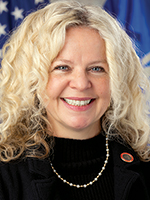
Rep. Brienne Brown
Sponsored bills
Maddy summaryThis bill establishes a new basic health plan for individuals with household incomes below 200 percent of the poverty line and creates a purchase option program allowing eligible people with higher incomes to buy coverage through the state program instead of private insurance. The program would offer benefits similar to existing state coverage, include tax credits for eligible participants, and set premium rates comparable to managed care plans while requiring federal waivers to implement. It also directs the creation of a state-based insurance exchange where individuals can access these purchase options and grants officials authority to create rules needed for implementation. The bill requires a report on federal waiver status and economic analyses by March 2027 before the program can be fully launched.
Maddy summaryThis bill requires health insurance plans, including those for government employees and public schools, to cover prosthetic limbs and custom orthotic braces when deemed medically necessary by a licensed healthcare provider. The law defines prostheses as devices that replace missing limbs and custom orthotic braces as personalized devices that correct or support musculoskeletal conditions, ensuring coverage includes materials, instruction, and repairs under specific circumstances. Coverage must match or exceed federal standards and apply to replacement or repair when medically needed due to changes in the patient's condition or when repair costs exceed 60 percent of replacement costs. The bill also mandates that plans maintain access to at least two in-network providers in the state and requires written explanations for any coverage denials based on medical necessity.
Maddy summaryThis bill proposes to update the legal definition of a political action committee (PAC) for campaign finance purposes in the state statutes. It would classify a group as a PAC if it spends more than $1,000 in a 12-month period on express advocacy, referendum support or opposition, or contributions to candidates, legislative committees, or political parties. The definition specifically excludes fundraising and administrative expenses from the spending calculation. This change would affect how organizations are categorized and regulated under campaign finance laws. The bill was introduced in March 2026 but failed to pass the Senate.
Maddy summaryThis bill would allow corporations, cooperatives, labor organizations, and federally recognized American Indian Tribes to make contributions to segregated political funds, but only up to a total of $12,000 per calendar year. The law currently prohibits these entities from contributing to most political committees, with this change creating a specific exception for segregated funds. The bill does not permit these groups to contribute to independent expenditure committees or referendum committees. This provision would apply to both foreign and domestic corporations as well as the other specified organizations.
Maddy summaryThis bill creates a grant program to help Wisconsin municipalities and community organizations earn Leadership in Energy and Environmental Design (LEED) certifications for their buildings. The Department of Administration would administer the program, awarding grants specifically for LEED certification costs. The legislation appropriates $1 million for the 2025-26 fiscal year to fund these grants. The bill also establishes the legal framework for the program within state statutes.
Maddy summaryThis bill proposes to repeal a specific section of the state statutes that governs how members of the legislature manage and preserve their personal records and correspondence. By removing this provision, the legislation would eliminate the current legal requirements for legislators to maintain and archive their official documents and communications. The change directly affects state legislators who would no longer be subject to the specific record-keeping rules outlined in the repealed statute. This is a procedural amendment that modifies existing legislative record management policies without adding new obligations or restrictions.
Maddy summaryThis bill amends Wisconsin campaign finance laws to establish specific contribution limits for individuals, committees, and political parties supporting candidates for various state offices. It sets maximum donation amounts that differ based on the office being sought, ranging from $500 for state representatives to $43,000 for governor, while also defining contribution caps for political action committees and other persons not subject to individual limits. The legislation creates new statutory sections to organize these limits and adjusts the calculation method for local office contributions based on population size, capping donations at $2,500 per jurisdiction.
Maddy summaryThis bill adjusts how Wisconsin calculates and distributes state funding for special education costs and general school aid. It modifies the reimbursement rate for special education expenses, allowing the state to distribute up to 100 percent of eligible costs rather than a lower fixed percentage. The legislation also increases the general school aid appropriation for the 2026-27 fiscal year by approximately $446 million to support public school districts. These changes directly affect school districts and the state Department of Public Instruction by altering how funds are allocated and calculated for educational programs.
Maddy summaryThis bill defines who qualifies as a "qualified applicant" for buyer identification cards, which are used to purchase motor vehicles without paying sales tax. It expands the list of eligible individuals to include licensed dealers, wholesalers, salvage dealers from other jurisdictions, school districts, and their employees. The changes are administrative and clarify existing categories without altering tax rates or creating new programs. The bill was introduced in the 2026 legislature but failed to pass during committee review.