

Maddy summaryAB 1081 adjusts payment rates for opioid treatment programs using medication-based care to match Medicare rates for comparable services starting in 2027. It also sets new staffing requirements, including a medical director with addiction medicine experience who must be present 40% of dosing time (reduced to 20% for the first 60 days of operation), and mandates one counselor for every 55 enrolled patients. The bill changes admission rules for minors, requiring documented failed detox attempts and written parental consent, while adding requirements for initial physical exams and Hepatitis/HIV testing with patient consent. These provisions directly affect all Wisconsin opioid treatment programs providing medication-assisted therapy.
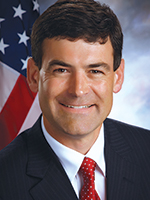
Rep. Tony Kurtz
Sponsored bills
Maddy summaryAB 819 allows health care providers to offer discounts of up to 15% for prompt payment of fees by individuals covered under disability insurance policies. It directly affects health care providers serving patients with such coverage and requires providers to: (1) post discount policies online, (2) limit discounts to avoid collection costs, and (3) not shift discount costs to other patients or advertise discounts publicly. The bill does not require providers to offer discounts but prohibits them from reducing coinsurance/deductibles under disability insurance terms, except for these structured prompt payment discounts. It also ensures discounts comply with federal law and do not override existing provider contracts with insurers.
Maddy summaryAJR 127 is a proposed constitutional amendment that would prohibit the governor from using a partial veto to create or increase any tax or fee. If approved by voters, it would amend the state constitution to restrict the governor's partial veto power specifically regarding tax or fee increases. This change would directly affect the governor's authority when reviewing budget bills containing tax or fee provisions. The amendment is currently moving toward a voter referendum in November 2026, following legislative approval. It does not change current law but would require voter ratification to become effective.
Maddy summaryAB 990 would require Wisconsin high school students to earn at least 0.5 credits in personal financial literacy to graduate. The bill specifies that this course must cover topics like money management, saving/investing, credit/debt, and risk management. Schools could award credit for approved programs offered by financial institutions through school-based branches, as determined by the school board. This requirement would apply to students in high school grades once the law is enacted.
Maddy summaryAB 983 requires the Department of Transportation (DOT) to notify local governments, school districts, and tribes before selling surplus land, giving them 60 days to express interest in acquiring it for public use. If they respond, the DOT must offer the land at appraised value for general public use, or at a reduced price if the land is needed for transportation or infrastructure projects. The bill also mandates that buyers provide a plan for the public use and agree to permanent restrictions ensuring the land remains for that purpose. This change affects counties, municipalities, school districts, and federally recognized tribes that may seek to acquire DOT surplus land. The policy directly alters the DOT's land sale process to prioritize public ownership over general public sales.
Maddy summaryAB 817 increases the state reimbursement for certified veteran organizations providing military funeral honors from $50 to $100 per funeral. It directly affects local veteran groups certified by the department to perform these honors. The bill amends statute 45.60(2) to allow this higher reimbursement amount from a specific state fund, covering costs incurred by these organizations. The change applies to all military funerals in the state where honors are provided.
Maddy summaryAB 747 regulates hemp-derived cannabinoid products like delta-8, delta-9, and delta-10 THC gummies or edibles. It requires third-party lab testing for potency, safety (e.g., pesticides, heavy metals), and THC content (max 0.3% or federal max 1%), mandates clear labeling with batch numbers and manufacturer details, and bans sales to people under 21. The bill excludes prescription drugs and certain CBD products governed by separate laws. Businesses must provide test results via QR codes or labels at point of sale.
Maddy summaryAB 712 clarifies the sales tax exemption for personal farm property or household goods sold at auctions online. It defines an "auction event" for internet sales as the consecutive days winning bids are selected (not just when property is available), while maintaining a limit of five or fewer such auctions per year by the same auctioneer at one location. This primarily affects small-scale auctioneers selling personal items online, ensuring they meet the exemption criteria. The bill updates definitions to explicitly include internet bidding periods without changing the exemption's core eligibility rules.
Maddy summaryAB 720 requires health insurance plans - including defined network plans, preferred provider plans, and government self-insured plans - to cover emergency ambulance services provided by non-participating ambulance providers. It mandates payment at the lowest of three rates: a mutually agreed rate, a local governmental rate, or 350% of the Medicare rate for the same area. Plans must pay ambulance providers directly within 30 days for clean claims, cannot impose additional costs on enrollees beyond standard cost-sharing, and must provide clear explanations for denied claims. The bill excludes air ambulance services and applies to all health insurance plans covering emergency medical services.
Maddy summaryAB 710 expands Wisconsin's child care subsidy program (Wisconsin Shares) to include tribal-regulated child care providers operating under tribal authority in Indian country. It creates a new eligibility category for providers who meet federal child care standards, have a tribal regulatory attestation, and have an agreement with the state. This change allows families to choose these tribal providers when accessing state-funded child care assistance, directly affecting tribal child care programs and families seeking subsidized care. The bill modifies existing statutes to ensure these providers can receive state payments under the same terms as other licensed providers.