

Maddy summaryAB 604 would require Wisconsin's Department of Health Services to request a federal Medicaid waiver to provide pre-release medical coverage for incarcerated individuals eligible for Medicaid. It specifically covers case management, medication-assisted treatment for substance use disorders, and a 30-day supply of prescription medications for up to 90 days before release. This bill directly affects incarcerated people who qualify for Medicaid, aiming to improve continuity of care upon reentry. The waiver request must be submitted by January 1, 2027, to allow state and federal reimbursement for these services. The bill focuses on concrete policy changes to expand healthcare access during a critical transition period.
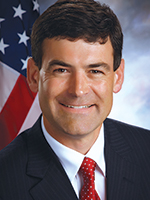
Rep. Tony Kurtz
Sponsored bills
Maddy summaryAB 866 revises rules for county sheriff offices and undersheriff appointments across the state. It creates new requirements for appointing an undersheriff (who must be a certified law enforcement officer and county resident), clarifies succession rules when the sheriff is absent or incapacitated, and ensures deputies returning from undersheriff roles retain their prior pay and seniority. The bill directly affects county sheriffs, undersheriffs, county clerks handling vacancy procedures, and deputy sheriffs. Key provisions include mandating written appointment records, defining when an undersheriff acts as sheriff, and requiring counties to return deputies to their previous positions after undersheriff service.
Maddy summaryAB 905 creates a new penalty for threatening healthcare providers, staff, or their family members when the threat is related to their work. It specifically targets threats made knowing the victim is a healthcare worker (current or former) or a family member, and the threat occurs in response to actions taken at a healthcare facility or by a provider acting in their official capacity. The bill defines "health care facility" and "health care provider" using existing statutory terms to clarify the scope of protection. This law directly affects healthcare workers and their families by establishing criminal penalties for targeted threats connected to their professional roles.
Maddy summaryAB 813 amends Wisconsin's Opportunity Attraction and Promotion Program, which provides grants through the Wisconsin Economic Development Corporation (WEDC), to allow funding for non-public events that attract national exposure or boost economic growth - such as private conferences or industry gatherings - under specific conditions. The bill creates a new provision (3)(cm) limiting such non-public event funding to 25% of annual program funds, requiring WEDC to prioritize events during tourist off-seasons or economic downturns, and banning funding for regularly scheduled events. It also mandates that applicants secure non-state matching funds equal to the grant amount and requires WEDC to submit annual reports detailing all funded projects and their projected economic impact. This directly affects event organizers and businesses applying for WEDC grants to attract major opportunities to Wisconsin.
Maddy summaryAB 155 designates a specific segment of U.S. Highway 12 in Lake Delton, Sauk County, as the "Tom Diehl Memorial Highway." The bill requires the state transportation department to officially mark this portion of the highway with the memorial name. This is a commemorative designation with no substantive policy changes or financial impact beyond signage. It directly affects the highway location in Lake Delton and honors Tom Diehl through the naming.
Maddy summaryAB 659 modifies Wisconsin's tuition benefit policies for veterans and their families. It reduces the required residency period from 5 to 3 consecutive years in the state before enrollment for veterans themselves and their dependents (spouses or children) to qualify for tuition exemptions or grants at University of Wisconsin System schools, technical colleges, or private nonprofit institutions. The bill applies to veterans who served honorably, died on duty or from service-connected disabilities, or have a 30% service-connected disability rating, and to dependents who meet the revised residency requirement. It does not change eligibility for veterans who were Wisconsin residents at the time of military entry. The policy change takes effect for the first semester or session beginning after the bill's effective date.
Maddy summaryAB 822 modifies Wisconsin's local roads improvement program for town road projects. It exempts projects under $65,000 from requiring registered engineer certification, sets a minimum 10-year design life for funded improvements (requiring professional review for shorter assessments), and prevents counties from contracting with towns for road work they've already estimated. The bill creates new deadlines for towns to submit applications to county facilitators and establishes committees to review funding requests. These changes directly affect towns seeking road funding, counties managing projects, and county highway commissioners handling contracts.
Maddy summaryAB 1009 creates a framework for local governments to establish "tourism promotion improvement districts" to fund tourism marketing and infrastructure. It directly affects hotels and motels within designated districts, requiring at least 50% of room owners to petition for creation and approve an operating plan detailing improvements, activities, and financing. Key provisions include setting a 5-year maximum assessment period (10 years for renewals), capping fees for payment processing at 5%, and mandating public hearings before district approval. The bill enables districts to fund tourism promotions and infrastructure (like visitor centers) through business assessments, with all details of costs and benefits outlined in the approved operating plan.
Maddy summaryAB 1007 amends the definition of "veteran at risk" in Wisconsin law to explicitly include active-duty members of the U.S. armed forces, National Guard, or military reserves who have service-related physical or mental health conditions. The bill clarifies that a person qualifies as "at risk" based on information provided in a report about such conditions. This change directly affects military service members and veterans who may be identified through the existing veterans at risk alert system. The amendment refines the eligibility criteria for the system without creating new programs or funding.
Maddy summaryAB 1006 amends Wisconsin law to create a new definition of "veteran" specifically for state veterans benefits eligibility. It defines a veteran as a current or former National Guard member who completed their initial obligated service term and received an honorable or general discharge under honorable conditions. This change directly expands eligibility for state veterans benefits to include qualifying National Guard members who previously might not have met the existing definition. The bill does not alter benefit amounts or other eligibility criteria beyond this definition update.