

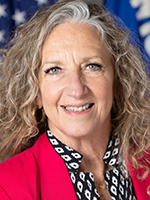
Photo of Karen DeSanto
D Wisconsin Assembly · District 40 On the 2026 ballot

Rep. Karen DeSanto

Compare
Total votes
245
all sessions
Attendance
100%
of floor votes
Near the chamber average
With party
97%
of cast votes
Near the chamber average
Bipartisan score
1%
crosses aisle rarely
Near the chamber average
Sponsored
157
bills & resolutions
Near the chamber average
Committees
3
assignments
157 bills and resolutions

Sponsored bills

Total
157
Primary
157
Co-sponsor
0
This page
157
matching current filters
Primary AB 852
Failed · Wisconsin Assembly · Lead sponsor
Relating to: farmland preservation implementation grants, maximum acres of agricultural enterprise areas, indexing the farmland preservation tax credit for inflation, and making an appropriation. (FE)

Maddy summaryAB 852 establishes new grants for local governments to implement farmland preservation plans, including activities like updating zoning, creating farmland agreements, and monitoring compliance. It also requires the state to automatically adjust the farmland preservation tax credit for inflation annually using agricultural price data, ensuring the credit keeps pace with rising costs. These changes directly affect Wisconsin farmers who claim the tax credit and local governments (counties, cities, tribes) that receive implementation grants. The bill creates specific funding mechanisms through the working lands fund and sets eligibility criteria for grant recipients based on plan alignment and project effectiveness.

Failed Mar 23, 2026 0 co-sponsors
Primary AB 889
Failed · Wisconsin Assembly · Lead sponsor
Relating to: creating the Wisconsin Climate Corps program, granting rule-making authority, and making an appropriation. (FE)

Maddy summaryAB 889 establishes the Wisconsin Climate Corps program to create climate-focused job opportunities for workers aged 16-30, with at least 50% from underserved communities. The program funds projects like restoring natural lands, weatherizing homes for energy efficiency, and building community gardens, administered by a board overseeing contracts with nonprofit managers. Key requirements include paying workers $15/hour, providing housing stipends ($100/week), and gold-level health insurance. Sponsors (local governments, tribes, or nonprofits) must submit annual reports, and completed projects require permanent plaques identifying them as Wisconsin Climate Corps initiatives. The bill appropriates state funds for grants to approved projects under this framework.

Failed Mar 23, 2026 0 co-sponsors
Primary AB 888
Failed · Wisconsin Assembly · Lead sponsor
Relating to: green jobs training program grants, providing an exemption from emergency rule procedures, and making an appropriation.

Maddy summaryAB 888 creates a new state-funded program providing $1.5 million annually in grants to public or private organizations for training workers in green jobs. Green jobs are defined as roles in renewable energy (like solar/wind) or environmental services that conserve resources or benefit the environment. Organizations receiving grants must provide matching funds, and the Department of Workforce Development will track outcomes like employment rates and wage changes for participants. The funding comes from the state's workforce development budget and requires annual reporting on program impact.

Failed Mar 23, 2026 0 co-sponsors
Primary AB 834
Failed · Wisconsin Assembly · Lead sponsor
Relating to: courtroom supports for and sealing the identifying information of child victims and child witnesses of human trafficking crimes. (FE)

Maddy summaryThis bill requires courts to automatically seal personal details (like names or photos) of child victims and witnesses in human trafficking cases. It prohibits public disclosure of this information unless a court holds a hearing considering the child's safety and decides disclosure serves justice. Courts must also provide necessary support services - such as private testimony rooms or emotional support - to protect the child's well-being during proceedings. These changes directly protect children involved in trafficking cases from potential harm while ensuring fair legal processes.

Failed Mar 23, 2026 0 co-sponsors
Primary AB 873
Failed · Wisconsin Assembly · Lead sponsor
Relating to: funding for crime victim services and making an appropriation. (FE)

Maddy summaryAB 873 increases annual funding for crime victim services by $17,101,350 for both fiscal years 2025-26 and 2026-27, totaling $34.2 million over two years. It specifically allocates $4,025,800 to convert 17 existing full-time positions (FED) to permanent positions (GPR) within the Department of Justice. This funding directly supports state-run crime victim services programs that assist individuals impacted by crime. The bill makes no changes to eligibility or service scope - only increases the budget for existing programs.

Failed Mar 23, 2026 0 co-sponsors
Primary AB 974
Passed · Wisconsin Assembly · Lead sponsor
Relating to: a public affairs network trust fund, grants to the WisconsinEye Public Affairs Network, and making an appropriation. (FE)

Maddy summaryAB 974 establishes a permanent "public affairs network fund" to provide annual grants to WisconsinEye, the public affairs network broadcasting state government proceedings. The bill creates a new trust fund using state appropriations, donations, and interest earnings, which will fund WisconsinEye’s operating costs for live broadcasts, civic events, and free online archives of unedited government proceedings. WisconsinEye must meet specific requirements, including appointing legislative designees to its board, focusing coverage on official government business, and providing continuous free public access to broadcasts and archives. If WisconsinEye ceases operations, it must repay all grant funds to the state and transfer its archives to the state historical society.

Passed Mar 23, 2026 0 co-sponsors
Primary AB 736
Failed · Wisconsin Assembly · Lead sponsor
Relating to: free menstrual products for inmates of state correctional institutions or county jails or houses of correction. (FE)

Maddy summaryAB 736 requires state correctional facilities and county jails to provide free, nontoxic menstrual products to all inmates with active menstrual cycles. It mandates facilities to offer at least three verified brands each of tampons (with plastic applicator), pads, and reusable menstrual cups from a published list of nontoxic products. The bill defines "nontoxic" as free from harmful chemicals and requires facilities to sanitize reusable cups as needed. This directly affects incarcerated people who menstruate, ensuring access to essential hygiene products without cost. The law applies to all state prisons, county jails, and houses of correction in the state.

Failed Mar 23, 2026 0 co-sponsors
Primary AB 744
Failed · Wisconsin Assembly · Lead sponsor
Relating to: free state park admission for veterans and gold star families. (FE)

Maddy summaryAB 744 would provide free vehicle access to Wisconsin state parks for veterans and gold star families. The bill creates a new statute allowing any vehicle (excluding motor buses) occupied by a veteran - verified using the federal definition in 38 USC 101 - or a family member meeting gold star lapel button criteria (per 10 USC 1126) to enter parks without paying admission fees. It directly affects eligible veterans and surviving family members of service members who died in combat. The policy change removes a fee requirement for these groups when entering parks by private vehicle, with proof of eligibility required at the park entrance. The bill is currently in committee review after its December 2025 introduction.

Failed Mar 23, 2026 0 co-sponsors
Primary AB 733
Failed · Wisconsin Assembly · Lead sponsor
Relating to: recreational opportunities and structured programming for inmates in state correctional institutions and county jails and houses of correction. (FE)

Maddy summaryAB 733 requires state prisons and county jails to provide inmates with minimum weekly hours of recreational activities and structured programming. State facilities must offer 21-35 hours weekly (depending on staffing levels), prioritizing education, job training, reentry planning, and wellness programs. County jails must provide at least 10 hours weekly starting 31 days into confinement, increasing to 21-35 hours after 90 days if staffing meets thresholds. Exceptions allow temporary reductions during lockdowns or solitary confinement, limited to 10 consecutive days.

Failed Mar 23, 2026 0 co-sponsors
Primary AB 765
Failed · Wisconsin Assembly · Lead sponsor
Relating to: bonding for lead service line replacement and granting bonding authority. (FE)

Maddy summaryAB 765 creates a state bonding program to fund lead service line replacement for private water users connected to public water systems. It authorizes up to $274.95 million in state bonds (increasing previous limits) and allocates $200 million from bond proceeds to provide forgivable loans covering up to 50% of replacement costs for homeowners. The bill directly affects private residents with lead pipes by reducing their financial burden for replacing hazardous infrastructure. Key provisions include the new bonding authority and the specific allocation for forgivable loans to address public health concerns related to lead in drinking water.

Failed Mar 23, 2026 0 co-sponsors
Showing 51 to 60 of 157 bills
Previous 1 … 5 6 7 … 16 Next