

Maddy summaryAB 500 bans corporal punishment in all public and private schools, defining it as intentional physical pain used for discipline (e.g., paddling or slapping). The bill prohibits school staff from using such punishment on students but allows reasonable force for safety under new school policies. Schools must adopt policies clarifying when force is permitted, excluding individualized education programs and athletic training. This directly affects all public and private schools and their staff in the state.

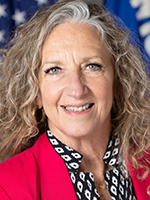
Rep. Karen DeSanto
Sponsored bills
Maddy summaryAB 1012 establishes a family and medical leave insurance program that would allow eligible workers to take up to 14 weeks of leave per year to care for a newborn, newly adopted child, or family member with a serious health condition, or to address certain family military needs. The bill would require employers with 50 or more employees to provide this leave, funded through a new family and medical leave insurance trust fund. It defines "family member" broadly to include spouses, domestic partners, parents, children, siblings, and other close relatives or people in close association with the employee. The legislation also sets specific limits on leave availability, including a maximum of 6 weeks for certain family situations and 8-14 weeks for combined reasons within a 12-month period.
Maddy summaryThis bill proposes establishing an annual Education Foundation Day in Wisconsin on May 13, 2026, to recognize the role of over 350 education foundations in supporting public schools. The legislation aims to acknowledge how these foundations provide supplemental funding for programs, build community connections, and create endowments that traditional budgets cannot support. It does not create new funding or change existing laws, but rather designates a specific date to honor the contributions of these organizations. The measure was introduced in the 2026 Wisconsin Legislature but failed to advance after being referred to the Committee on Rules.
Maddy summaryThis bill authorizes the creation of emergency services districts in Wisconsin and grants these districts the authority to levy property taxes and impose special charges to fund their operations. It also allows emergency services districts to issue debt to finance capital projects. The legislation amends state statutes to clarify how emergency services district board members are elected, specifying ballot procedures and candidate limits for these districts. Additionally, the bill outlines how election costs for emergency services districts are shared between the districts and local governments when voting occurs.
Maddy summaryThis bill amends Wisconsin's Special Needs Scholarship Program to require private schools to implement individualized education programs or services plans for students with disabilities, as modified by agreement between the school and the parent. It mandates that private schools provide all records related to these program implementations within five days of receiving a request from the resident school board. The changes take effect starting with the 2026-27 school year, ensuring greater transparency and accountability in how private schools serving students with disabilities manage their educational plans.
Maddy summaryAB 847 creates a state grant program providing $1.6 million annually to counties and tribes for mental health diversion programs. These programs offer alternatives to prosecution and incarceration for low-to-medium risk individuals with mental illness who interact with the criminal justice system, including deferred prosecution and restorative justice services. Eligible programs must provide holistic treatment (mental health care, housing, employment support), avoid including violent offenders, and collaborate with courts, prosecutors, and mental health providers. Counties receiving grants must submit annual reports on program impact, including effects on jail populations and participant outcomes, and comply with state audits. The bill aims to reduce incarceration costs, improve public safety, and address mental health needs through evidence-based approaches.
Maddy summaryAB 790 creates a dedicated "Water Fund for Our Future" with an initial $250 million transfer from the general fund. The fund establishes a rapid response account to cover clean water-related costs during natural disasters or public health emergencies, including remediation and assistance for affected individuals. A new joint committee oversees fund spending, reviewing requests for funding (excluding non-clean-water uses) and recommending approvals to the finance committee. All funds must be used exclusively for clean water activities, with specific rules for disbursement and oversight.
Maddy summaryThis bill establishes a comprehensive clean energy framework requiring Wisconsin to achieve 100 percent clean electricity production and net-zero carbon emissions by 2050. It creates a new Office of Sustainability and Clean Energy within the Department of Administration to develop and update an economy-wide decarbonization roadmap using sector-based modeling. The legislation sets specific interim targets for carbon-free electricity, including 50 percent by 2030, 65 percent by 2035, 80 percent by 2040, 90 percent by 2045, and full carbon-free status by 2050. State agencies must consider purchasing renewable energy from providers with long-term contracts, though the requirements do not apply if generation is not technically feasible or cost-effective. The bill also provides funding for technology implementation and defines carbon-free resources to include hydroelectric power alongside other renewable sources.
Maddy summaryThis bill establishes a state assistance program to help smaller municipalities, specifically 3rd and 4th class cities, villages, and towns, upgrade their water infrastructure to meet federal water quality standards. The program would provide grants covering up to 50 percent of project costs, with the Department of Natural Resources responsible for administering applications, setting eligibility criteria, and prioritizing projects based on established rules. An appropriation of $10 million is included for the 2025-26 fiscal year to fund these assistance payments, and the department must approve all project plans and specifications before funds are released.
Maddy summaryAB 854 creates a grant program funded by taxes on vapor products to support violence prevention efforts. It directs $30,000 for fiscal year 2025-26 and $120,000 for 2026-27 toward local health departments or tribal health centers. These entities can use the funds to run violence prevention programs or award grants to community organizations, but they cannot distribute money to law enforcement agencies or any groups working with them. The bill specifies that applications for these grants must be submitted by June 30 each year.