

Maddy summaryAB 426 establishes clear rules for election observer access during voting and recounts. It requires election officials to designate observation areas 3-8 feet from voting tables and ensures all observers (like candidates' representatives) have uniform, nondiscriminatory access to every election stage, including absentee voting, ballot counting, and recounts. Officials who violate these rules face penalties of up to $1,000 or 90 days in jail. The bill directly affects election clerks, inspectors, and canvassers who must implement these procedures.
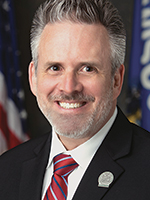
Rep. David Steffen
Sponsored bills
Maddy summaryAB 678 requires Wisconsin school boards to adopt a policy by July 2026 governing appropriate communication between school employees and volunteers (acting in their official capacity) and students. The policy must cover all communication methods and content, both during and outside school hours, and specify consequences for violations. It directly affects school district staff, volunteers, and students by establishing clear standards for professional interactions. The bill creates a new statutory requirement (120.12(30)) without dictating specific communication rules, leaving implementation to individual school boards.
Maddy summaryAB 645 creates grants to help school district consortia (groups of two or more school boards) assess the feasibility of merging districts or sharing grade levels. It allows reimbursement of up to $25,000 per group for costs like financial analyses and population studies related to consolidation or sharing agreements. To qualify, a group must provide proof that all member school boards have approved resolutions supporting the study. The bill does not fund actual consolidation but provides initial support for planning.
Maddy summaryAB 395 requires school buses to be equipped with audiovisual recording devices to capture events during transportation. This mandate directly affects school districts and bus operators, who must install and maintain the devices. The key provision specifies that the recording systems must capture both audio and visual footage inside and around the bus, with data retention and privacy safeguards outlined in the bill. The legislation focuses on enhancing transparency during student transportation without specifying additional safety outcomes.
Maddy summaryAB 494 extends Wisconsin's research income tax credit carryover period from 15 to 50 taxable years. This change allows businesses that claim the credit but cannot fully use it in a single year to carry forward unused credits for up to five decades. The policy directly affects Wisconsin businesses eligible for the research tax credit, providing greater flexibility to offset future tax liabilities. The bill primarily modifies tax code sections (71.07 and 71.28) to implement this extended carryover period.
Maddy summaryAB 675 prohibits noncompete clauses that restrict medical practitioners from working for more than 24 consecutive months after beginning employment. It also makes all noncompete agreements void if a medical practitioner’s employment is terminated by their employer. The bill applies to physicians, physician assistants, psychologists, and advanced practice nurses (including certified nurse prescribers and registered nurses). New or modified employment contracts after the law’s effective date must comply with these restrictions.
Maddy summaryAB 158 modifies Wisconsin's worker's compensation rules for mental injuries (specifically PTSD) among certain public safety professionals. It adds emergency medical responders, emergency medical services practitioners, correctional officers, emergency dispatchers, coroners, medical examiners, and medicolegal investigation staff to the list of workers eligible for mental injury claims. The bill requires these claims to meet additional conditions to be compensable, specifically for mental injuries not accompanied by physical harm. This change affects how these essential public safety workers access benefits for work-related PTSD under Wisconsin's worker's compensation system.
Maddy summaryAB 97 extends health coverage under Wisconsin's Medicaid program (Medical Assistance) for postpartum women from 60 days to 365 days after pregnancy, directly affecting pregnant and postpartum women who qualify for the program. The bill changes eligibility rules to ensure coverage continues without regard to income changes during this extended period. It also adds a provision allowing women with family incomes above 300% of the poverty line to qualify if their income is spent on medical care or health insurance premiums. This policy update aims to provide longer-term health coverage for new mothers during a critical postpartum period.
Maddy summaryAB 275 modifies state law to require government agencies to pay legal fees and costs when a court rules that an administrative rule is invalid (e.g., because it violates the constitution or was improperly created). It specifically directs that these costs - awarded to successful challengers - be paid from designated state funds under statutes 20.865(1)(a), (g), or (q). The bill applies to challenges involving agency rules or guidance documents and ensures fees are limited to the scope of the rule validity challenge. This change affects state agencies (who must cover costs) and individuals or groups challenging agency rules (who can recover legal expenses).
Maddy summaryAB 693 allows hunters in Wisconsin's designated central and southern farmland zones to offer legally taken deer to meat processing facilities in exchange for local business gift cards. The processed meat must then be provided to food distribution services (as defined by state law) that supply food pantries. This bill creates a new legal pathway for connecting hunting harvests with food assistance programs through a specific gift-card exchange mechanism. It directly affects hunters in those zones, meat processors, and food pantries receiving donated meat. The policy change streamlines how donated venison from legal hunts can reach food pantries via this structured process.