

Maddy summaryAB 151 creates a legal presumption that courts should prioritize custody arrangements allowing children to spend roughly equal time with each parent, whenever feasible. This applies to all custody cases filed after the bill's effective date, directly affecting parents and judges determining physical placement. The law requires courts to assume equal time is in the child's best interest unless they find, based on evidence, that it isn't - considering factors like geographic separation between households. The bill modifies Wisconsin's custody statute to make this equal-time presumption the starting point for court decisions, with specific attention to practical realities like distance between parents' homes.
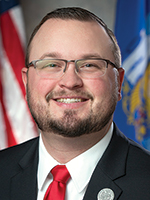
Rep. Alex Dallman
Sponsored bills
Maddy summaryAB 259 creates a new misdemeanor offense for entering or remaining on a campground without permission from the operator. It directly affects visitors who enter or stay on licensed campground property without consent. The law allows campground operators to issue written requests for individuals to leave, and failing to comply results in fines up to $100 or up to 30 days in jail. This bill specifically applies to campgrounds and camping resorts licensed under state law, clarifying that standard trespass laws do not cover campground occupants or guests.
Maddy summaryAB 83 prohibits state and local governments from restricting the sale or use of motor vehicles based on their energy source (e.g., gasoline, electric, or hydrogen). It also extends this rule to other energy-powered devices, such as power tools or generators, if their significant functions rely on that energy source. The law explicitly allows government agencies to prioritize electric vehicles for their own fleets when purchasing. This ensures public policies do not discriminate against specific vehicle or device types based on energy use.
Maddy summaryAB 164 standardizes terminology across Wisconsin's unemployment insurance system, replacing "unemployment insurance" with "reemployment assistance" in state laws to align with federal programs. It creates a new Division of Reemployment Assistance within the Department of Workforce Development and clarifies responsibilities for home care workers, requiring placement agencies to inform consumers about who pays federal social security taxes, state reemployment assistance contributions, and worker compensation insurance. The bill ensures home care consumers aren't unexpectedly liable for these costs if agencies fail to provide required notices, and establishes mechanisms for recovering costs from agencies when they do. These changes primarily affect home care workers, placement agencies, and state agencies administering unemployment benefits.
Maddy summaryAB 161 prohibits state agencies and local governments from restricting the sale, use, or purchase of motor vehicles or other devices based on their energy source (e.g., electric, gasoline, hydrogen). It specifically allows governments to set their own purchasing policies for their own fleets but bans restrictions on consumer or commercial use. The bill directly affects state/local governments, businesses selling vehicles/devices, and residents using such products. It creates a clear rule that energy source cannot be a factor in regulatory decisions.
Maddy summaryAB 284 streamlines the management of state construction projects by raising the cost threshold for mandatory project enumeration from $1 million to $2 million. It requires quarterly budget reports for projects needing increases, sets a 6-month deadline for the Claims Board to resolve certain construction claims, and mandates state agencies to collaborate with energy conservation contractors on pilot projects. The bill also clarifies responsibilities for utility costs in contracts, modifies bidding procedures, and transfers $32 million from the general fund to the state building trust fund for infrastructure. These changes primarily affect state agencies, the building commission, and contractors managing public construction projects.
Maddy summaryAB 214 modifies Wisconsin town government procedures for appointing clerks and treasurers. It allows towns with 2,500+ residents to combine these roles under new rules, including immediate implementation when both positions become vacant or upon vacancy in one role. The bill updates deputy appointment rules (removing residency requirements) and adjusts highway discontinuance timelines. These changes primarily affect municipal officials in Wisconsin towns operating under the specified statutes.
Maddy summaryThis bill designates a specific overpass on I-39 over STH 82 in Oxford, Marquette County as the "Greg Quinn and Larry Millard Memorial Bridge" to honor two firefighters who died in the line of duty. The state must install signs identifying the bridge, but only using private donations - no state funds may be used for the signs or their maintenance. The bill is purely commemorative and does not create new policy or affect public services.
Maddy summaryAB 625 requires state agencies to withhold 10-50% of certain homelessness program grants for at least 9 months. Service providers receiving these grants must demonstrate improved outcomes - like increased housing retention, job placement, or reduced homelessness returns - compared to a base year to receive the withheld funds. The bill mandates detailed reporting on program data and client outcomes, including housing stability metrics and demographic information. It directly affects organizations funded through specific homelessness grant programs under state statutes.
Maddy summaryAB 327 increases the empty weight limit for utility terrain vehicles (UTVs) from 3,000 pounds to 3,500 pounds under Wisconsin law. This change directly affects UTV operators and manufacturers by expanding the regulatory threshold for vehicles classified as UTVs (excluding golf carts, dune buggies, and tracked vehicles). The bill amends two sections of statutes to reflect this updated weight limit, which applies to vehicles originally manufactured with that weight capacity and designed primarily for off-highway use. The bill passed committee recommendations in November 2025 and is currently pending further legislative action.