

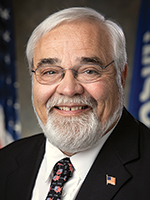
Photo of Jeff Mursau
R Wisconsin Assembly · District 36 On the 2026 ballot

Rep. Jeff Mursau

Compare
Total votes
811
all sessions
Attendance
99%
7 missed
Near the chamber average
With party
99%
of cast votes
Near the chamber average
Bipartisan score
0%
crosses aisle rarely
Near the chamber average
Sponsored
1,656
bills & resolutions
Near the chamber average
Committees
5
assignments
1,656 bills and resolutions

Sponsored bills

Total
1,656
Primary
1,656
Co-sponsor
0
This page
1,656
matching current filters
Primary AB 54
Failed · Wisconsin Assembly · Lead sponsor
Relating to: utilization management controls for antipsychotic prescription drugs under the Medical Assistance program. (FE)

Maddy summaryAB 54 prohibits the state department from requiring prior authorization or other utilization management controls for FDA-approved antipsychotic prescription drugs under the Medical Assistance program. This directly affects Medicaid beneficiaries who rely on these medications, removing barriers to accessing prescribed antipsychotic treatments. The bill creates a new statute section explicitly stating that utilization management controls (such as step therapy or prior approval) cannot be imposed on these specific drugs. The policy change aims to streamline access to necessary antipsychotic medications without altering drug approval standards.

Failed Mar 23, 2026 0 co-sponsors
Primary AB 329
Failed · Wisconsin Assembly · Lead sponsor
Relating to: operation of all-terrain and utility terrain vehicles, off-highway motorcycles, and snowmobiles and revision of the Department of Transportation highway maintenance manual.

Maddy summaryAB 329 clarifies and updates regulations for all-terrain vehicles (ATVs), utility terrain vehicles (UTVs), off-highway motorcycles, and snowmobiles. It creates new definitions for terms like "bridge," "culvert," "dune buggy," and "navigable waterway" to standardize language in traffic laws. Key provisions require ATVs to have one headlamp/tail lamp and UTVs to have two of each, prohibit operation without functioning lights, and specify rules for crossing bridges/culverts (e.g., 1,000 feet or less, with local ordinances). The bill also adds exceptions for emergency use and defines patrol vehicles used by law enforcement. This directly affects ATV/UTV operators, emergency responders, and local governments managing roadway access.

Failed Mar 23, 2026 0 co-sponsors
Primary AB 393
Passed · Wisconsin Assembly · Lead sponsor
Relating to: school bus operation by drivers over 70 and drivers with medical conditions.

Maddy summaryAB 393 modifies restrictions on school bus drivers over 70 years old and those with certain medical conditions, allowing them to operate school buses under new medical review requirements. The bill requires school districts to implement a standardized medical evaluation process for qualifying drivers. This directly affects school bus drivers in these categories and their employers. The legislation is currently in the Assembly Transportation Committee after recent amendments.

Passed Mar 23, 2026 0 co-sponsors
Primary AB 519
Failed · Wisconsin Assembly · Lead sponsor
Relating to: the appointment of a guardian ad litem in a proceeding to grant reasonable visitation rights to a nonparent. (FE)

Maddy summaryAB 519 requires courts to appoint a court-appointed advocate (guardian ad litem) for a minor child in any family court case where a nonparent (such as a grandparent or close family friend) petitions for reasonable visitation rights under statute 767.43 and has legally established standing to file the petition. This mandate applies specifically to cases involving nonparent visitation requests, ensuring the child’s best interests are represented by an independent advocate. The bill takes effect for all such petitions filed on or after its effective date, creating a new procedural requirement in family court proceedings.

Failed Mar 23, 2026 0 co-sponsors
Primary AB 49
Failed · Wisconsin Assembly · Lead sponsor
Relating to: a minor’s authority to consent to health care.

Maddy summaryAB 49 allows minors aged 14 or older who are unaccompanied youth (homeless youth without parental supervision) to consent to medically necessary health care without parental permission. To qualify, a minor must be verified as unaccompanied by specific professionals like school counselors, shelter staff, or social workers. The bill defines "medically necessary care" as treatment meeting established medical standards, including safety, effectiveness, and cost-efficiency. Healthcare providers following this law are protected from liability for providing such care, though the law does not override existing mandatory reporting requirements or other minor consent rights under Chapter 51.

Failed Mar 23, 2026 0 co-sponsors
Primary AB 135
Failed · Wisconsin Assembly · Lead sponsor
Relating to: the right to repair motor vehicles and providing a penalty. (FE)

Maddy summaryAB 135 requires vehicle manufacturers to provide owners and repair shops with free, unrestricted access to vehicle data (like diagnostics) and critical repair information (tools, manuals, parts specs) needed to fix cars. It prohibits manufacturers from using technological barriers (like encrypted data) or legal barriers (such as forcing owners to use dealer-approved parts) to limit repair choices. The bill directly affects car owners, independent repair shops, and aftermarket parts companies by ensuring they can access necessary information without fees or manufacturer-imposed restrictions. Manufacturers must also stop mandating specific brands of parts or tools in repair guides, though they can still recommend options with clear disclaimers. This law aims to make vehicle repairs more accessible and affordable by removing artificial barriers.

Failed Mar 23, 2026 0 co-sponsors
Primary AB 491
Failed · Wisconsin Assembly · Lead sponsor
Relating to: video monitoring or recording in residential care centers for children and youth, group homes, and shelter care facilities.

Maddy summaryAB 491 allows residential care centers for children and youth, group homes, and shelter care facilities to use video surveillance in common areas, entrances, and exits without a child’s consent, provided they inform the child and their parent, guardian, or legal custodian. Facilities must adopt a safety monitoring policy that may include such video use and are prohibited from replacing one-on-one supervision for high-risk children with video alone. Video recordings are kept confidential (not public) but may be reviewed by the department, with exceptions for public inspection mirroring existing confidentiality rules. The bill applies directly to these child care facilities and the children they serve.

Failed Mar 23, 2026 0 co-sponsors
Primary AB 283
Failed · Wisconsin Assembly · Lead sponsor
Relating to: making certain child care expenditures eligible for the business development tax credit. (FE)

Maddy summaryAB 283 expands Wisconsin's business development tax credit to include specific child care costs incurred by employers for their employees. It allows businesses to claim a tax credit covering up to 15% of eligible expenses, such as capital costs to start a child care program, operational costs, reimbursements for employee child care, purchased child care slots, and contributions to dependent care flexible spending accounts. This directly affects businesses operating in Wisconsin that provide child care benefits to employees, making these costs deductible under the existing tax credit program. The bill modifies tax code sections to define these eligible expenses and sets the effective date for taxable years beginning after December 31, 2024.

Failed Mar 23, 2026 0 co-sponsors
Primary AB 389
Failed · Wisconsin Assembly · Lead sponsor
Relating to: indication of veteran status of certain service members on operators’ licenses or identification cards. (FE)

Maddy summaryAB 389 would require California's Department of Motor Vehicles to add a visible symbol or notation on driver's licenses and identification cards to indicate veteran status for certain service members. It directly affects veterans who have received an honorable discharge or have a service-connected disability, allowing them to visibly identify their military service. The key provision mandates that the DMV create and implement this indicator on state-issued IDs, with the specific symbol to be determined by the agency. The bill is currently pending in the Assembly, having recently received a fiscal estimate and added co-authors.

Failed Mar 23, 2026 0 co-sponsors
Primary AB 643
Failed · Wisconsin Assembly · Lead sponsor
Relating to: the establishment of November 11 as a day on which the offices of the agencies of state government are closed. (FE)

Maddy summaryAB 643 establishes November 11 (Veterans Day) as a state holiday when all state government offices must close. It directly affects state government employees (excluding limited-term staff) by adding Veterans Day as a recognized paid personal holiday, in addition to their existing 9-10 annual paid holidays. The bill amends statutes to include November 11 in the list of holidays requiring office closures and creates a new provision specifying that employees earn one additional paid personal holiday each year specifically for Veterans Day. This change clarifies the holiday schedule and ensures Veterans Day is treated as a standard paid holiday for state employees.

Failed Mar 23, 2026 0 co-sponsors
Showing 221 to 230 of 1,656 bills
Previous 1 … 22 23 24 … 166 Next